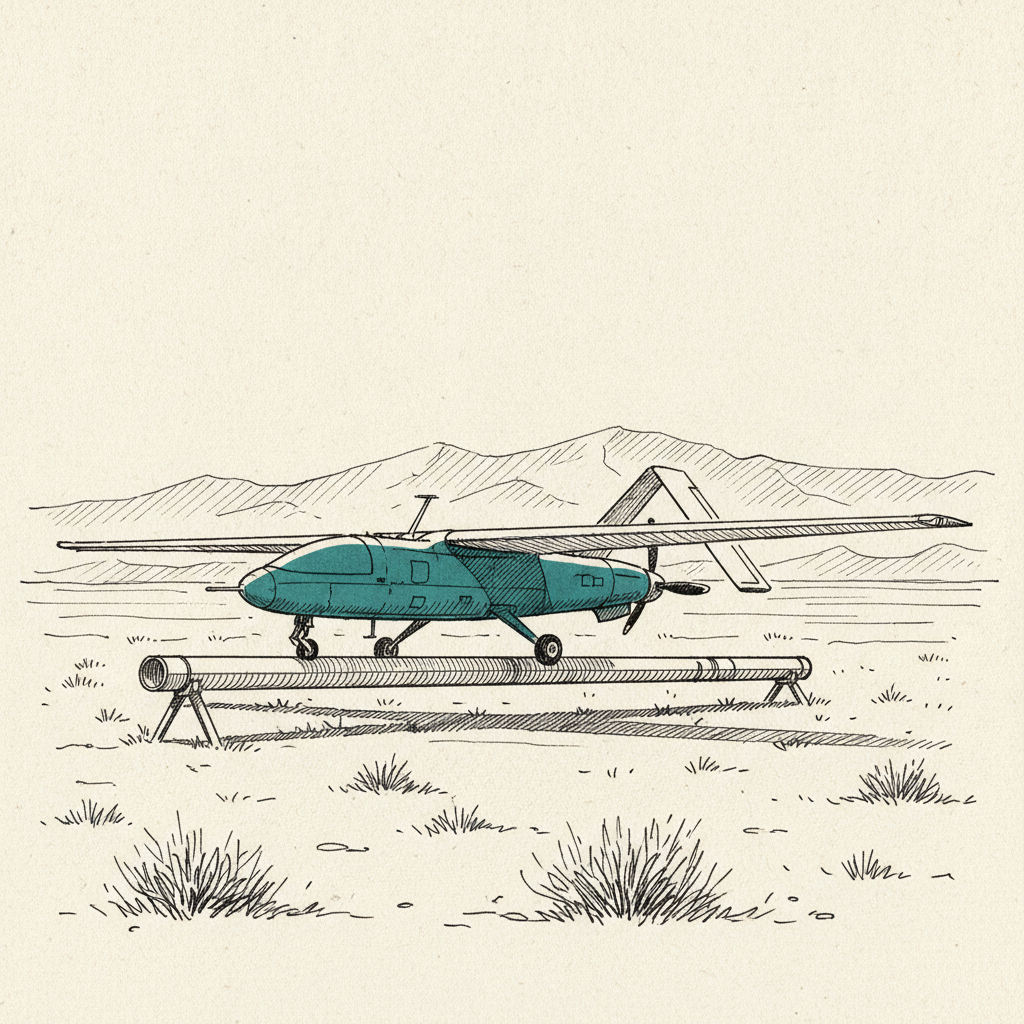
MQM-170 Outlaw
Griffon Aerospace small target and surrogate reconnaissance drone used by all four US armed services.
On 29 October 2026 Iran's Revolutionary Guards said their electronic-warfare unit seized a US MQM-170 Outlaw west of Hormuz and landed it. They said it had flown from "the coast of a regional country"; nobody has confirmed the claim.
Last refreshed: 29 October 2026 · Appears in 1 active topic
Timeline for MQM-170 Outlaw
IRGC Navy says mines hit three tankers
Iran Conflict 2026Background
Griffon Aerospace builds the MQM-170 Outlaw. It entered service in 2004, and more than 2,200 have been built. It is chiefly an aerial target for air-defence training and can also act as a surrogate reconnaissance aircraft. The US Army, Navy, Marine Corps and Air Force all use it. The current version is the MQM-170C Outlaw G2.
On 29 October 2026 Iran's Revolutionary Guards claimed to have seized one in flight west of the strait of Hormuz. Their statement said the drone's data showed it had launched from "the coast of a regional country", which accuses a Gulf neighbour of hosting the flight without naming one. No one has confirmed the capture.
What is the MQM-170 Outlaw drone?
Who uses the MQM-170 Outlaw?
Did Iran capture a US MQM-170 Outlaw drone?



Written with AI from Lowdown's published reporting. Not individually reviewed by an editor. Updated 29 October 2026. Editorial standards.