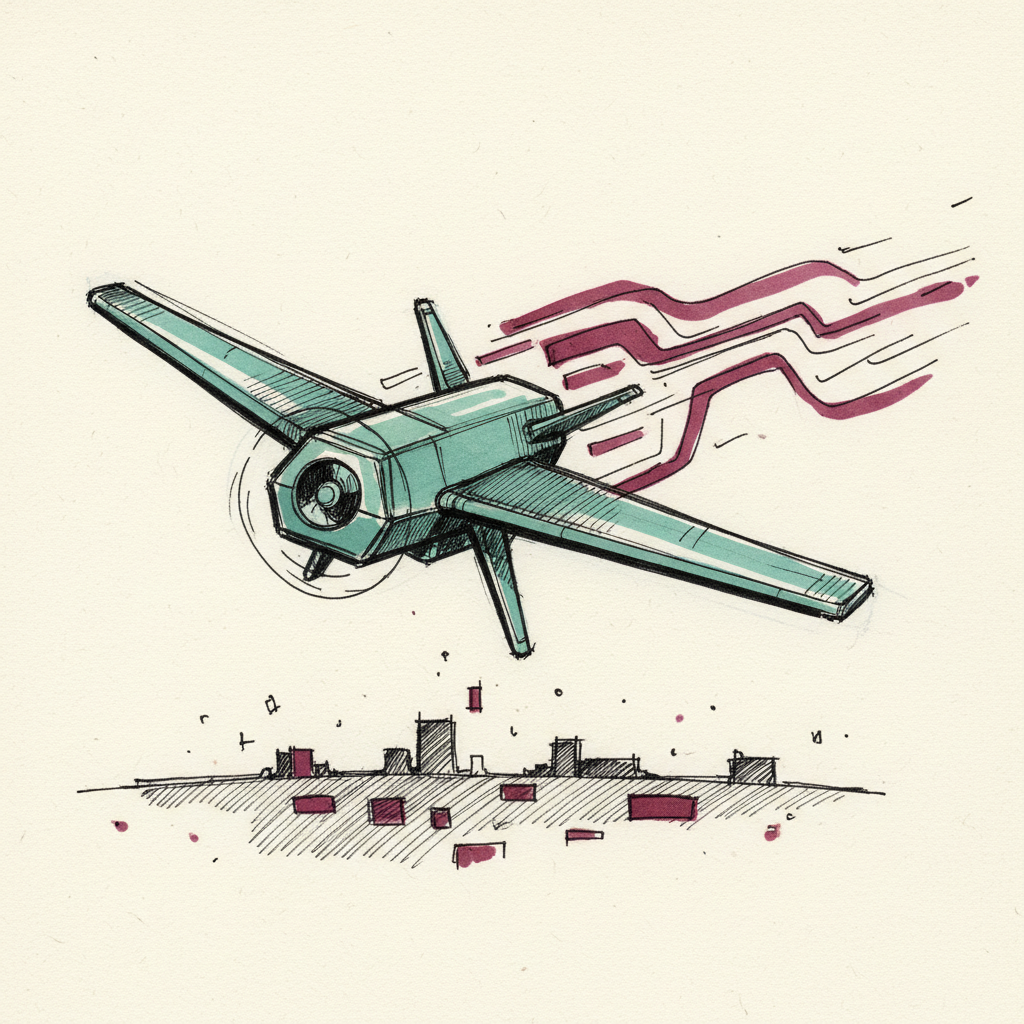
Molniya-2
Russian approx. $300 loitering munition; low-cost attritable strike drone in Ukraine.
Last refreshed: 30 April 2026 · Appears in 1 active topic
How can Ukraine defend against $300 drones when interceptors cost 100x as much?
Timeline for Molniya-2
Mentioned in: Alabuga recruits drone brigade on Telegram
Drones: Industry & DefenceProfiled at $300 per unit against the Lancet's $50,000 unit cost
Drones: Industry & Defence: CSIS: Russia's AI drones run mostly on US chipsBackground
Molniya-2 is a Russian loitering munition with an estimated unit cost of approximately $300, representing the low-cost attritable tier of Russia's drone arsenal. At this price, Molniya-2 can be deployed in saturation swarms that overwhelm point-defence systems whose interceptors cost orders of magnitude more, creating a cost-exchange dynamic that has become one of the defining economic pressures of the Ukraine war.
At $300 per unit, even a 50% attrition rate on launch is economically sustainable for the attacker while imposing disproportionate costs on the defender. Counter-UAS systems designed around $50,000-plus interceptors face an acute cost asymmetry against platforms in this price tier. Molniya-2 sits alongside the better-known Shahed family in Russia's layered strike strategy, but at a cost point designed specifically to exhaust short-range interceptor stocks.
How cheap are Russian Molniya drones?
What is the Molniya-2 drone and how much does it cost?
How does the Molniya-2 compare to the Lancet drone?
Why is a $300 drone a serious threat to Western air defences?
What chips does Russia use in its drone ecosystem?


Written with AI from Lowdown's published reporting. Not individually reviewed by an editor. Updated 30 April 2026. Editorial standards.