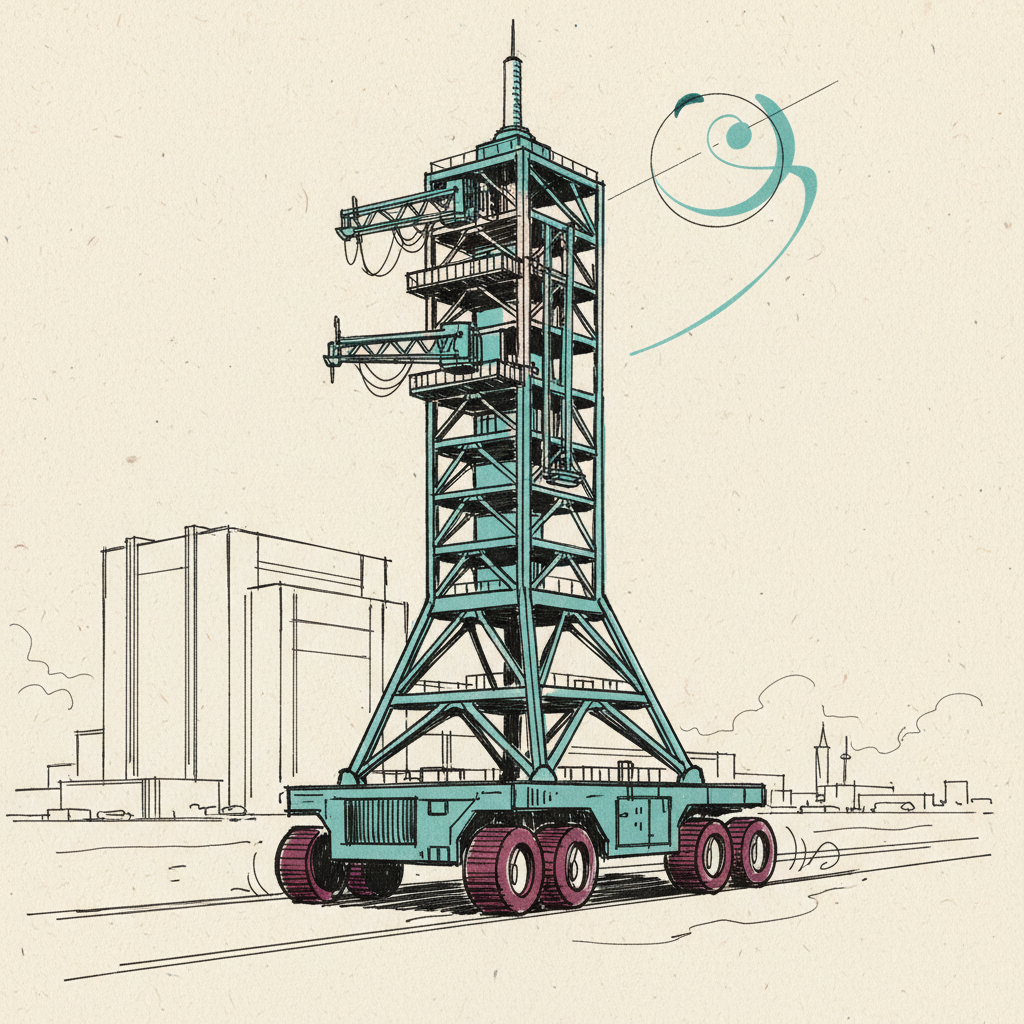
Mobile Launcher 1
NASA's 380-foot launch tower; rolled from Pad 39B to the VAB on 16 April for Artemis III repairs.
Last refreshed: 17 April 2026 · Appears in 1 active topic
Why did NASA's launch tower leave the pad the week after Artemis II splashdown?
Timeline for Mobile Launcher 1
Five open Orion items, no fix dates
Artemis II Moon MissionMentioned in: Launcher rolls back from Pad 39B
Artemis II Moon MissionBackground
Mobile Launcher 1 began its four-mile transit from Launch Pad 39B to the Vehicle Assembly Building at 08:11 EDT on 16 April 2026, atop crawler-transporter 2. Repairs ahead of Artemis III stacking include flame hole panels, elevators, pneumatic panels, and umbilicals. The pad absorbed 8.8 million pounds of thrust from Artemis II booster ignition at launch.
Mobile Launcher 1 is the 380-foot steel tower and base that supports the Space Launch System during assembly, rollout, and launch. It was built to support the Constellation programme and substantially modified for SLS at a cost running into hundreds of millions of dollars. It holds the SLS rocket, provides CREW access, and routes propellants, power, and data to the vehicle during processing.
The rollback is a physical signal of programme pace: Artemis III hardware is already arriving at KSC by barge and is inside the Operations and Checkout Building, but Mobile Launcher 1 must complete its repair cycle before it can stack the next rocket. The launch schedule depends on both repair timelines and the five open Orion engineering items closing before stack integration.
What is NASA's Mobile Launcher?
Why did the Mobile Launcher roll back to the VAB after Artemis II?
How much thrust did Artemis II put on the launch tower?
