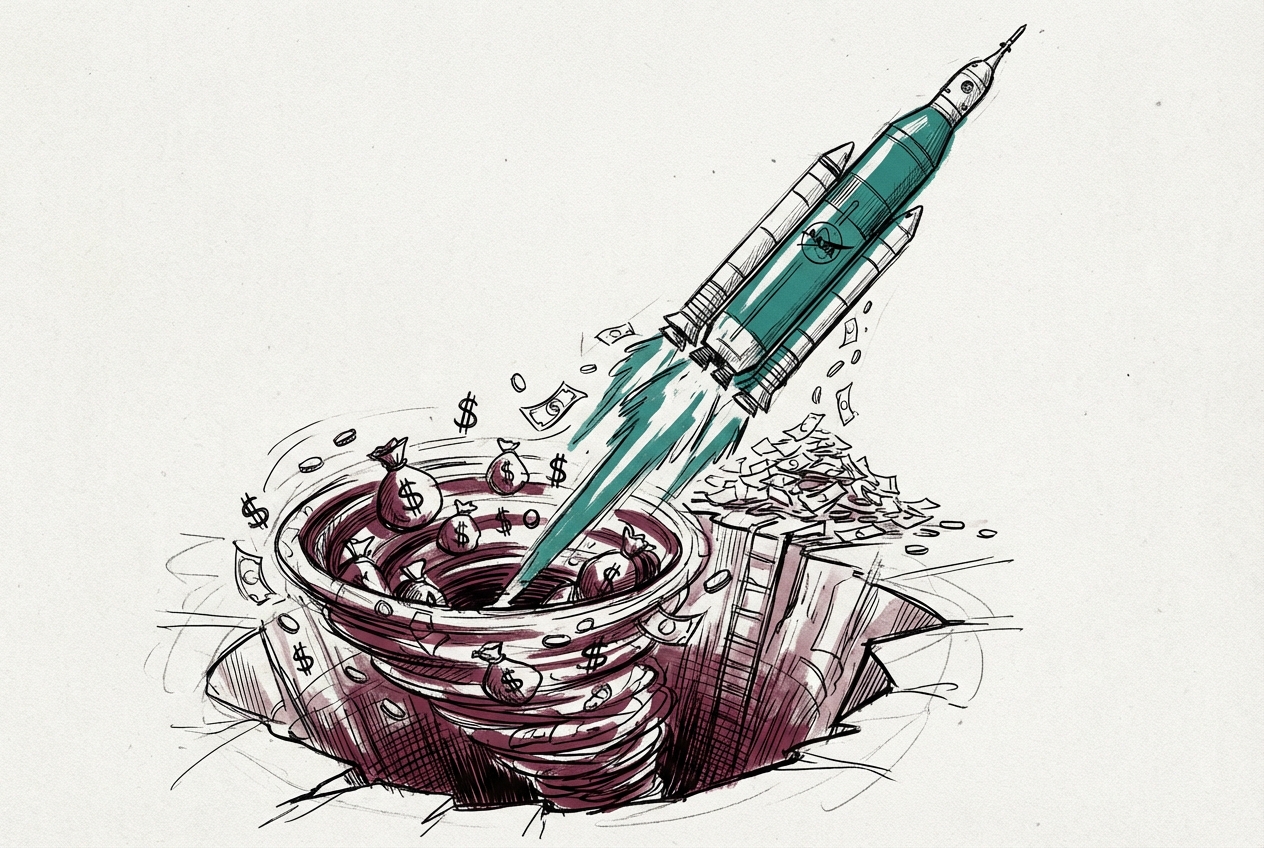
Can the $4 billion-per-flight SLS rocket survive competition from Starship?
Timeline for Space Launch System
Mentioned in: Five open Orion items, no fix dates
Artemis II Moon MissionArtemis III core stage ships Monday
Artemis II Moon MissionMentioned in: Moran rejects White House NASA cut
Artemis II Moon MissionMentioned in: Lockheed Martin discloses 286 reusable Orion components ahead of NASA
Artemis II Moon MissionBudget guts NASA science 47% on splashdown day
Artemis II Moon MissionBackground
The Space Launch System successfully launched Artemis II on 1 April 2026, placing the Orion capsule and four CREW members on a translunar trajectory for the first crewed Moon mission in over fifty years. The Block 1 variant used for Artemis II produces 8.8 million pounds of thrust at liftoff, making it the most powerful rocket NASA has ever flown.
SLS is a government-owned heavy-lift launch vehicle derived largely from Space Shuttle hardware: its core stage uses four RS-25 engines (former shuttle main engines) and TWIN solid rocket boosters. Each flight costs approximately $4 billion all-in. In February 2026, NASA Administrator Jared Isaacman cancelled the planned Block 1B and Block 2 upgrades, freezing SLS capability at its current configuration. Congress responded by mandating $1.025 billion per year in SLS funding through FY2029, preventing any near-term programme cancellation.
SLS sits at the centre of a cost-versus-capability debate. SpaceX Starship, if it achieves full operational status, could offer higher payload capacity at a fraction of the cost, undermining the political and industrial rationale for continuing SLS beyond the legislated missions.
How powerful is the Space Launch System?
Why does the SLS cost so much?
Is the SLS being cancelled?
How does SLS compare to SpaceX Starship?


