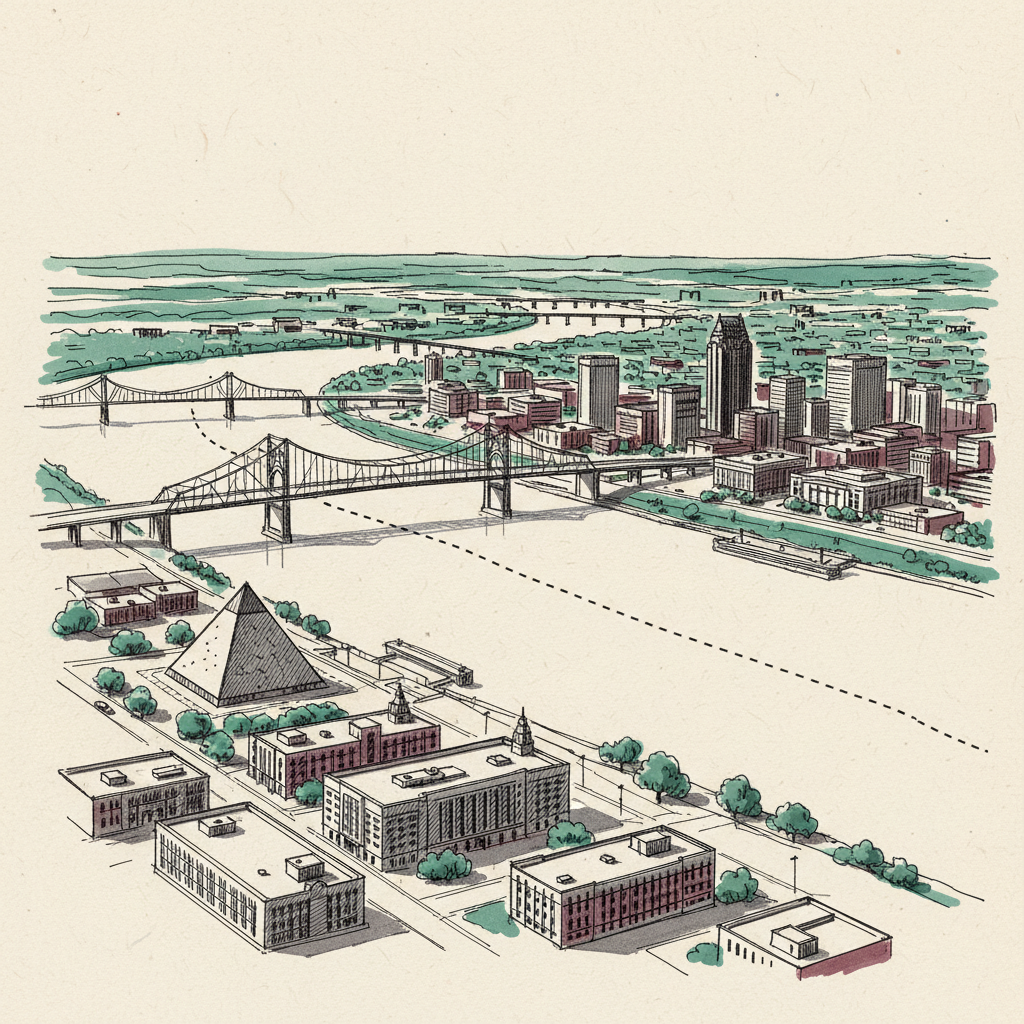
Memphis
Tennessee's largest city, carved across three congressional districts by the 7 May 2026 map.
Memphis, Tennessee's largest Black-majority city, lost its only congressional seat when Governor Bill Lee's new map split it three ways on 7 May 2026, and a federal panel declined to block that map on 23 July.
Last refreshed: 26 July 2026 · Appears in 1 active topic
Did Tennessee just gerrymander away Memphis's only Black congressional seat?
Timeline for Memphis
Tennessee map survives its first test
US Midterms 2026Mentioned in: Callais draws out a Black incumbent
US Midterms 2026Tennessee signs map carving Memphis three ways
US Midterms 2026Background
Memphis is the largest majority-Black city in Tennessee, in Shelby County in the state's south-west, with a population of approximately 620,000. It has a long history of electing Black representatives to Congress, having returned an African American representative continuously since Harold Ford Sr. first won the seat in 1974.
The city's redistricting fits a recurring national pattern: distributing an urban core across several surrounding, more rural districts to dilute its voting bloc. In Memphis's case the Shelby County line is the geographic mechanism, and the technique mirrors the one Florida applied around its own Democratic-held urban seats days before Tennessee's map was signed.
The Cato Institute has cited the Tennessee map as evidence that the DOJ's voter-data programme and state-level redistricting form a coordinated strategy to limit minority political power in urban centres, making Memphis a reference case for how the technique plays out in practice.
Its Black-majority seat was carved apart
Memphis was split three ways across Tennessee's 5th, 8th and 9th congressional districts when Governor Bill Lee signed the state's new map on 7 May 2026, eliminating the majority-Black 9th District that Steve Cohen and his predecessors had held continuously since Harold Ford Sr. won it in 1974.
A three-judge federal panel declined to block the redraw on 23 July, ruling it was driven by party advantage rather than race, the defence available under Rucho v. Common Cause; the underlying vote-dilution trial continues even as the map stands for November.
Why was Memphis split into three congressional districts?
What happens to Steve Cohen's congressional seat after the Memphis redistricting?
How many Republican House seats does the Tennessee map add?
Did Memphis's redrawn congressional map survive its first court challenge?
Written with AI from Lowdown's published reporting. Not individually reviewed by an editor. Updated 26 July 2026. Editorial standards.