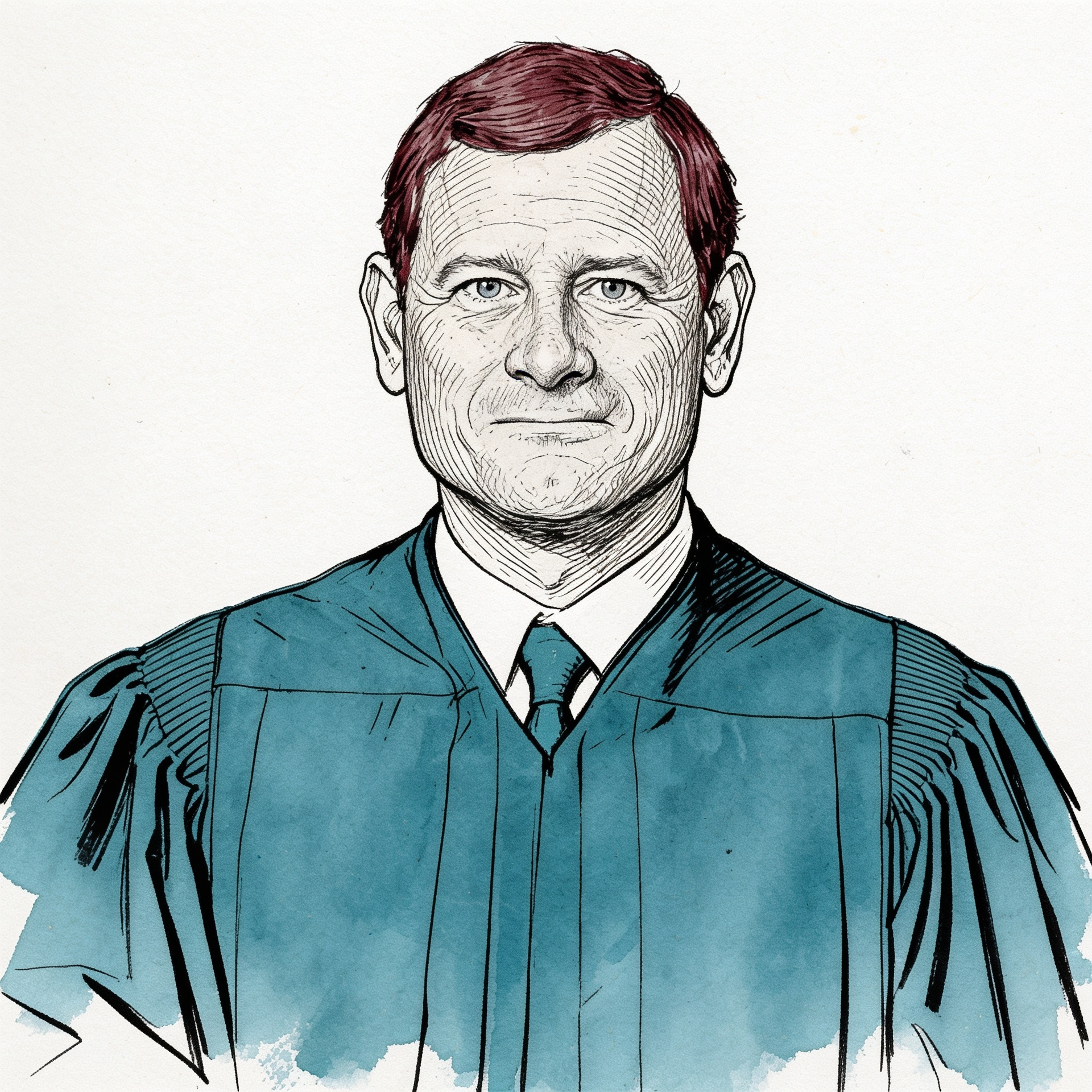
John Roberts
Chief Justice of the United States since 2005.
Last refreshed: 17 October 2026 · Appears in 1 active topic
Why did the Chief Justice pause a court order over TV ad prices?
Timeline for John Roberts
Paused the 4th Circuit order on 8 October
US Midterms 2026: Supreme Court keeps parties' ad discountJoined Barrett's majority, crossing the Court's usual ideological line
US Midterms 2026: Court keeps late mail ballots countingBackground
John Roberts has been Chief Justice of the United States since 2005. In October 2026 he handled the first stage of FCC v. Brown (26A476), the fight over whether party committees may buy broadcast airtime at the discounted rate candidates get. On 8 October, acting as Circuit Justice for the 4th Circuit, he issued an administrative stay pausing that court's order that the Federal Communications Commission rule on a challenge to its March guidance by noon the next day. The full Court granted a stay on 14 October; Justices Sonia Sotomayor and Ketanji Brown Jackson would have refused it.
President George W. Bush nominated Roberts in 2005 to succeed William Rehnquist, for whom he had once clerked. He was 50, the youngest Chief Justice since John Marshall. He previously sat on the US Court of Appeals for the DC Circuit.
The 2026 term put several election-law cases before his Court. Roberts joined Amy Coney Barrett's 5-4 majority in Watson v. RNC, which let Mississippi count mail ballots postmarked by election day and received up to five business days later. A day later the Court struck the federal caps on party-candidate coordinated spending 6-3 in NRSC v. FEC, the ruling that turned the candidate ad rate into a question for party money.
Why did John Roberts join the mail ballot ruling?
When did John Roberts become Chief Justice?
What is John Roberts' judicial philosophy?
What was the vote count in Watson v RNC?
What did John Roberts do in FCC v. Brown?
Who nominated John Roberts as Chief Justice?
How did John Roberts vote in Watson v. RNC?



Written with AI from Lowdown's published reporting. Not individually reviewed by an editor. Updated 17 October 2026. Editorial standards.