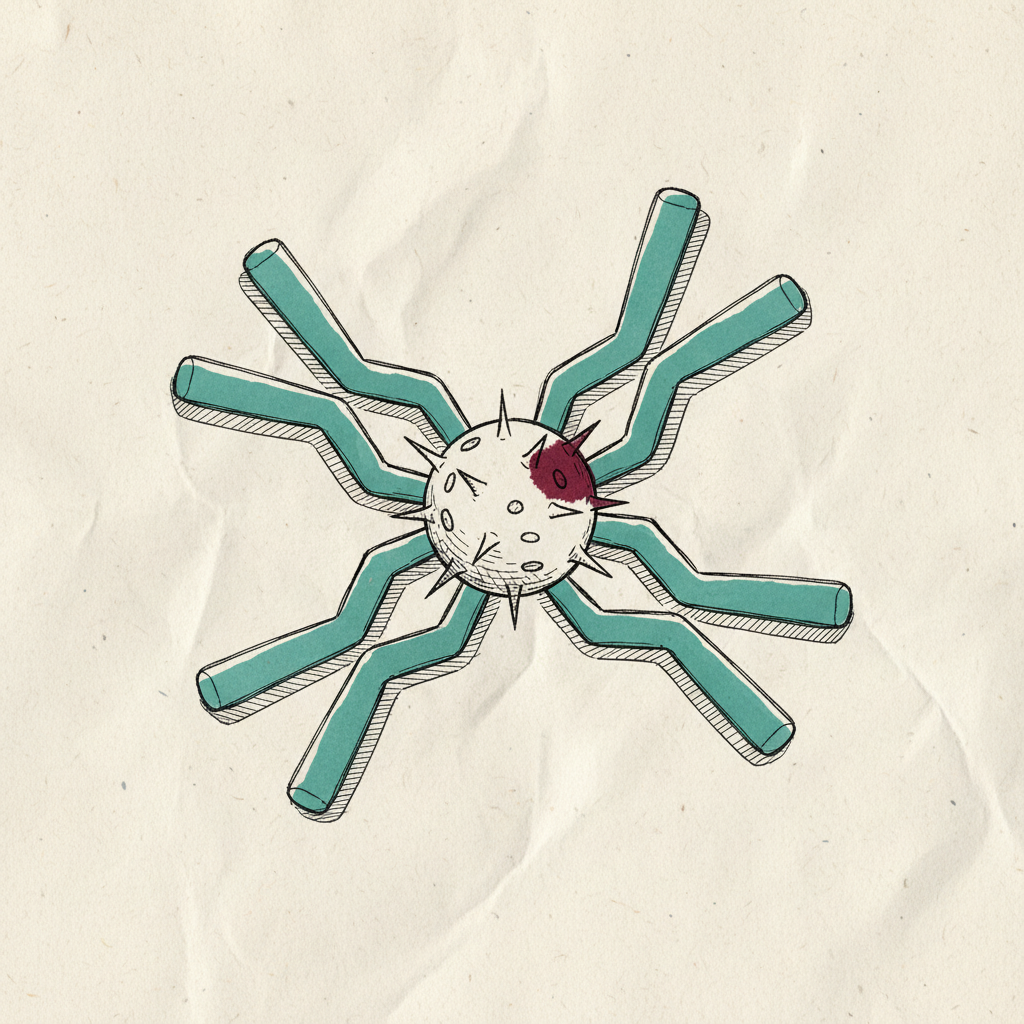
Inmazeb
Regeneron's triple Ebola monoclonal antibody cocktail; FDA-approved 2020 for Zaire only; not effective against Bundibugyo.
One component of Inmazeb, the antibody maftivimab, entered a WHO-sponsored Bundibugyo Ebola trial as REGN3479 from 13 June 2026, even though the full FDA-approved cocktail remains legally confined to Zaire ebolavirus patients with no cross-reactivity data published for Bundibugyo.
Last refreshed: 31 July 2026 · Appears in 1 active topic
If Inmazeb worked in the 2018 Ebola outbreak, why can't it be used in 2026?
Timeline for Inmazeb
Mentioned in: CEPI puts a Bundibugyo vaccine in trials
Pandemics and BiosecurityMentioned in: First Ebola treatment trial goes live
Pandemics and BiosecurityLicensed Ebola therapeutic targeting only the Zaire species
Pandemics and Biosecurity: Mentioned in: Only Ebola treatment still cannot doseMentioned in: CEPI and GAVI commit $112m, no treatment yet
Pandemics and BiosecurityMentioned in: Ebola passes 1,000 cases in DRC
Pandemics and BiosecurityBackground
Inmazeb is a triple monoclonal antibody cocktail (atoltivimab, maftivimab and odesivimab-ebgn) developed by Regeneron Pharmaceuticals and approved by the FDA in October 2020 for Zaire ebolavirus. In the PALM randomised trial run during the 2018-20 DRC Kivu outbreak, it produced a case-fatality rate of about 34%, against roughly 49% for the predecessor cocktail ZMapp, and became one of two monoclonals WHO recommends as preferred Zaire ebolavirus therapy.
The three antibodies bind distinct epitopes on the Zaire glycoprotein, a target that differs enough from Bundibugyo's glycoprotein that the licensed cocktail does not bind it effectively; there is no Bundibugyo efficacy in Inmazeb's approval package. One component, maftivimab (REGN3479), has shown preclinical cross-neutralisation of Zaire, Bundibugyo and Sudan viruses in laboratory studies, a scientific signal rather than an approved therapy.
That signal became clinically relevant in the 2026 Bundibugyo outbreak: REGN3479 was paired with MBP134 and obeldesivir in a WHO-sponsored trial that became the outbreak's first authorised therapeutic intervention on 16 June 2026, and dosed its first patient on 2 July. The full Inmazeb cocktail itself remains held in the US Strategic National Stockpile as a Category A biodefence countermeasure, applicable only to Zaire ebolavirus.