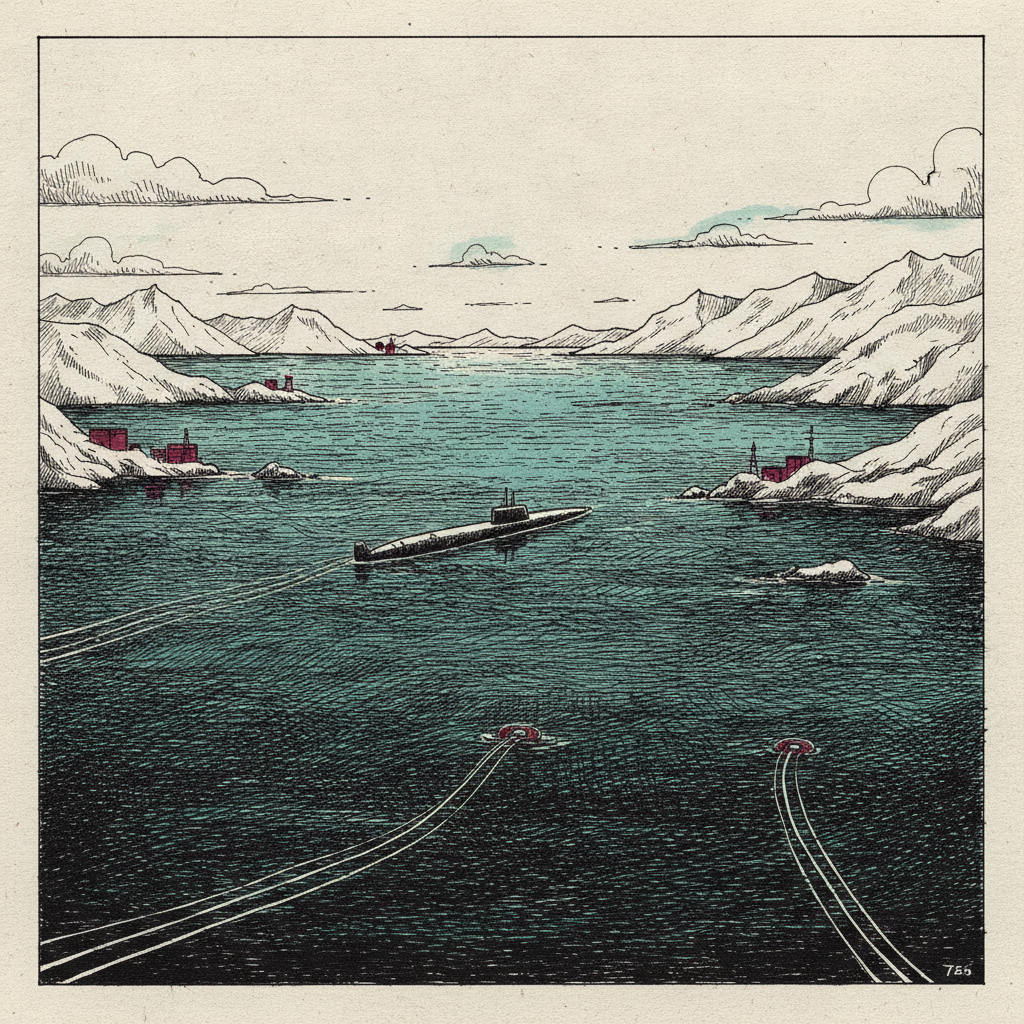
GIUK gap
North Atlantic sea corridor between Greenland, Iceland and UK; critical for both Russian submarine transit and transatlantic internet cables.
NATO launched Task Force X-Arctic on 6 June 2026 to give the GIUK gap its first persistent seabed surveillance since Cold War-era SOSUS hydrophone arrays were decommissioned in the 1990s.
Last refreshed: 24 July 2026 · Appears in 1 active topic
Why is the gap between Greenland, Iceland and the UK the most watched seabed in the world right now?
Timeline for GIUK gap
NATO sends robot fleet to the Arctic
Autonomous Systems: Land & SeaBackground
The GIUK gap is the maritime chokepoint formed by sea lanes between Greenland, Iceland and the United Kingdom, the primary corridor through which Russian submarines must transit to reach the open Atlantic. Around 18 active submarine cable systems route through the gap, carrying roughly 97% of transatlantic internet traffic.
During the Cold War, NATO's SOSUS hydrophone arrays gave persistent tracking of Soviet submarines here at a lifecycle cost of roughly $2bn over 30 years, before budget cuts wound the network down between 1991 and 1998. By 2020 IISS assessed NATO maritime patrol aircraft coverage had fallen to fewer than six sorties a day, down from 24 at Cold War peak, a gap the 2023 Balticconnector pipeline rupture and BT Shetland cable severing, both attributed to anchor drag near Russian naval exercises, exposed as a monitoring blind spot.
NATO's Task Force X-Arctic, launched 6 June 2026 aboard NRV Alliance, is the alliance's attempt to restore that surveillance using DIANA-selected uncrewed systems. The gap recurs across Lowdown's coverage of European energy security, the Russia-Ukraine war and maritime autonomy alike, given its dual role as military chokepoint and critical-infrastructure corridor.
What is the GIUK gap and why does NATO monitor it?
Why did NATO stop watching the GIUK gap after the Cold War?
What internet cables run through the GIUK gap?
How is NATO using drones to monitor the GIUK gap in 2026?

