Galle
Sri Lankan port city where an Iranian frigate sank and a warship was interned.
Last refreshed: 30 March 2026
How did a Sri Lankan heritage port become a flashpoint in the Iran conflict?
Timeline for Galle
Sri Lanka interns IRIS Bushehr, 208 crew
Iran Conflict 2026Served as the closest port as IRIS Bushehr approached with engine failure
Iran Conflict 2026: IRIS Bushehr approaches Sri LankaWitnessed the IRIS Dena sinking 40 nautical miles to its south
Iran Conflict 2026: Iran warship IRIS Dena sunk, Sri LankaBackground
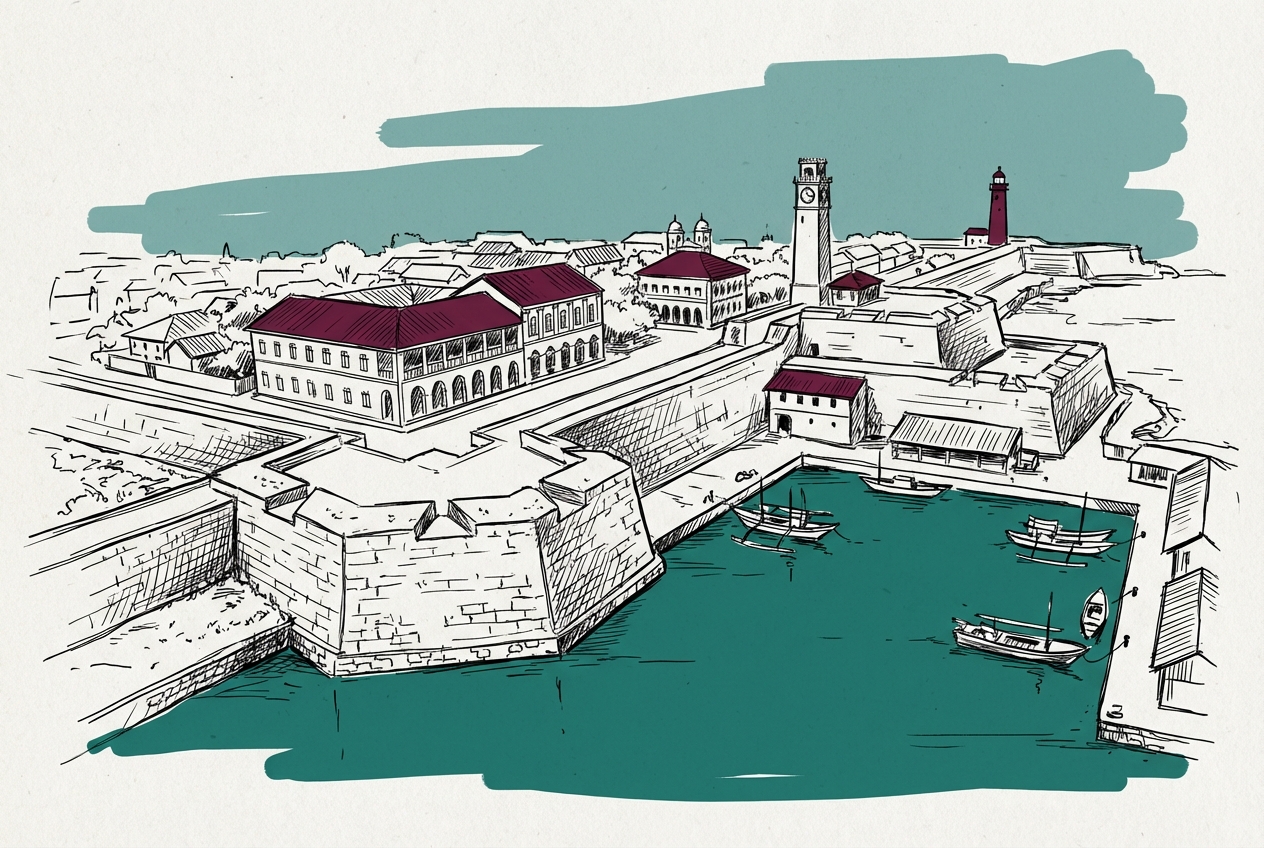
Galle is Sri Lanka’s southernmost major port, a UNESCO World Heritage city on the island’s southwestern tip, roughly 120 km south of Colombo. Fortified by the Dutch in 1663, Galle Fort remains one of the best-preserved colonial fortifications in Asia, and the natural deep-water harbour has served Indian Ocean trade routes for centuries.
Galle sits at the centre of two unprecedented Iranian naval incidents in Sri Lanka. On 18 March 2026, IRIS Dena sank approximately 40 nautical miles south of the city, the first Iranian warship lost in action since 1988. Sri Lanka launched a rescue operation and recovered 32 critically wounded sailors . A second vessel, IRIS Bushehr, then approached reporting engine trouble and was refused port access .
Sri Lanka formally interned IRIS Bushehr and its 208-strong crew under the 1907 Hague Conventions, holding Colombo in an extraordinary diplomatic position for the conflict’s duration . The city’s position astride major shipping lanes transforms a heritage tourism drawcard into a flashpoint in a live naval war.
What is Galle, Sri Lanka?
Where did the Iranian frigate IRIS Dena sink?
Why was an Iranian warship interned in Sri Lanka?
Is Galle near the Iran conflict zone?


