Expediency Discernment Council
Iranian constitutional council that mediates legislative disputes and advises The Supreme Leader.
On 10 August 2026, Expediency Discernment Council remained Iranian arbitration body advising The Supreme Leader; relevant to IRGC-government disputes.
Last refreshed: 11 August 2026 · Appears in 1 active topic
Who actually settles disputes between Iran's IRGC and civilian government?
Timeline for Expediency Discernment Council
Mentioned in: Rezaei takes over Iran's security council
Iran Conflict 2026Mentioned in: Pakistani F-16s reinforce Saudi airspace mid-war
Iran Conflict 2026Mentioned in: Khamenei recovering, governing by audio conference
Iran Conflict 2026Mentioned in: Two dead in Ramat Gan; 61st IRGC wave
Iran Conflict 2026Mentioned in: Israel destroys Khamenei jet in Tehran
Iran Conflict 2026Background
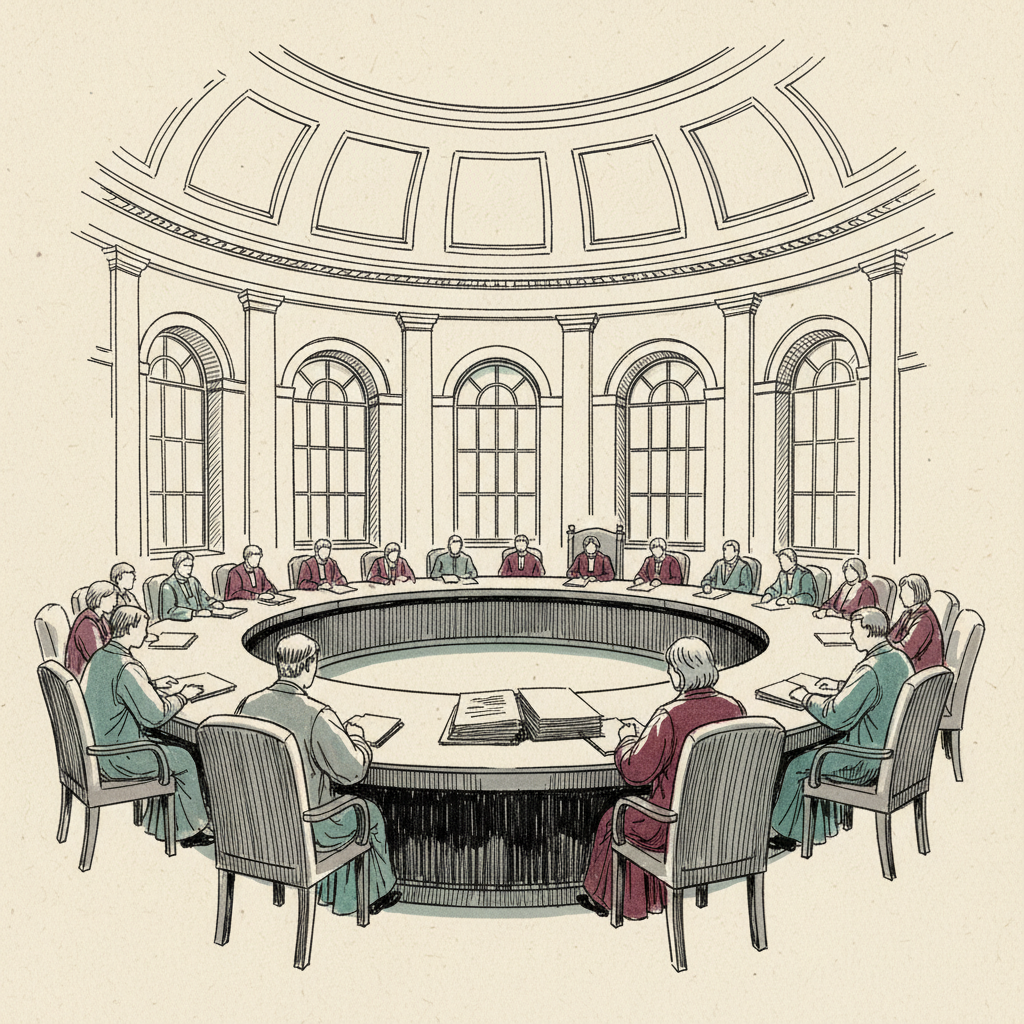
The Expediency Discernment Council (Majma-e Tashkhis-e Maslahat-e Nezam) is an Iranian constitutional advisory body that arbitrates disputes between the Majlis (Parliament) and the Guardian Council, and advises The Supreme Leader on matters of state interest. It is one of five bodies that sit at the apex of the Islamic Republic's governance structure, appointed entirely by The Supreme Leader. In the 2026 conflict it has appeared in Lowdown coverage primarily as context for the institutional setting in which IRGC and government positions diverge.
The Council's secretary through much of the 2026 war period has been Mohsen Rezaei, a former IRGC commander-in-chief and presidential candidate, whose dual background gives the Council a line into both the civilian government and the security establishment. The Council does not have operational authority over IRGC actions but its advisory role to The Supreme Leader means it is positioned to influence how the leadership understands the civilian-military split.
In the broader context of the Iran war, the Expediency Council's importance is structural rather than operational: it is one of the mechanisms through which Khamenei manages competing institutional interests. As Khamenei governs by audio conference following his 28 February injuries, the Council's advisory role takes on added significance in keeping internal coherence within a fragmented command structure. The event record includes and.
What is Iran's Expediency Discernment Council?
Who is in charge of Iran if Khamenei is incapacitated?
Why does Iran have an Expediency Discernment Council?
What changed for Mohsen Rezaei in August 2026?
Written with AI from Lowdown's published reporting. Not individually reviewed by an editor. Updated 11 August 2026. Editorial standards.