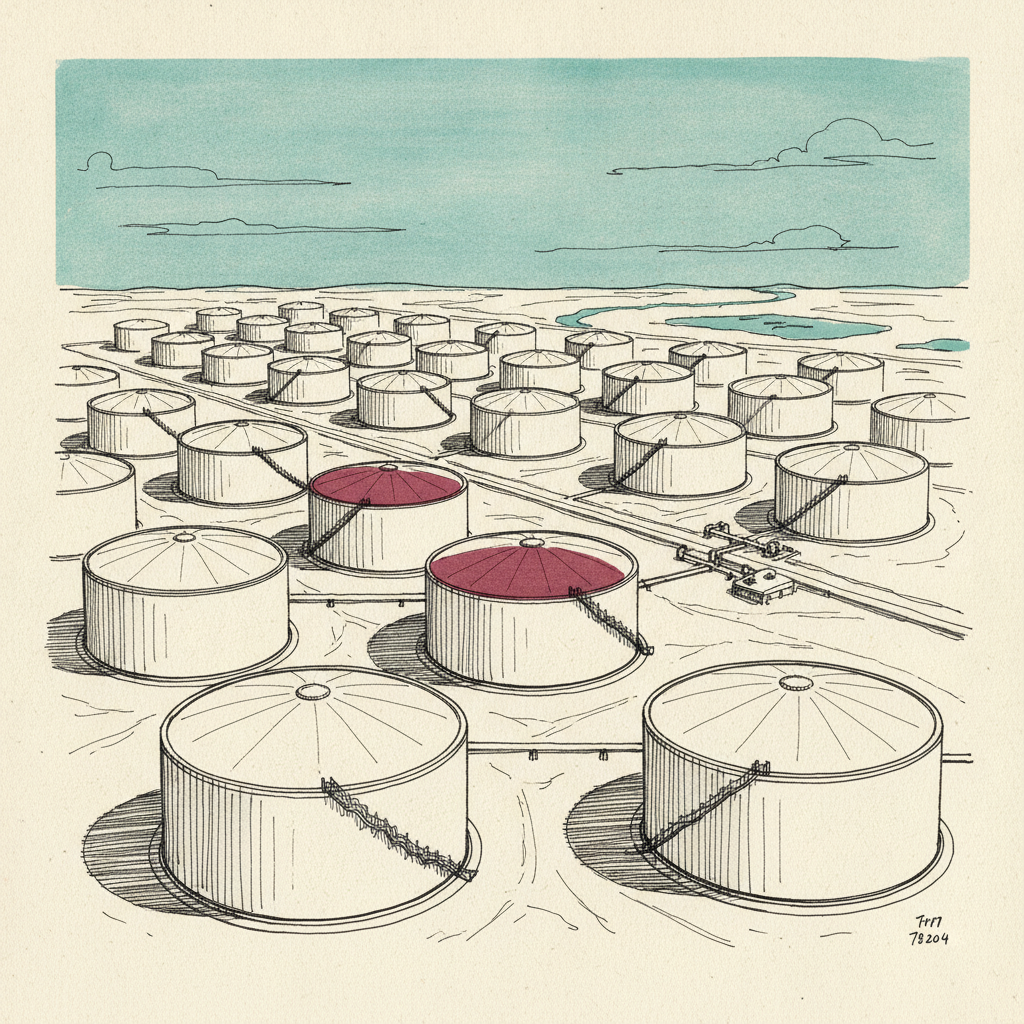
Cushing
Cushing, Oklahoma is the delivery point for the WTI futures contract.
Cushing's WTI spot price spiked to $91.74 a barrel on 24 July, up $8.31 on the week, before draining back to $79.57 by 3 August as the geopolitical premium behind it receded.
Last refreshed: 3 August 2026 · Appears in 1 active topic
WTI at Cushing spiked $8.31 in a week, then gave it nearly all back; why?
Timeline for Cushing
Mentioned in: Brent sheds 4.88% on called-off strike
European Oil MarketsHosted the WTI spot benchmark that hit $91.74 a barrel
European Oil Markets: US crude drew 7.2mb as WTI round-trippedBackground
Cushing, Oklahoma is the physical delivery point for the West Texas Intermediate futures contract: the location where WTI contracts are settled by transfer of oil in storage tanks rather than cash alone. That mechanical role, not any single week's price move, is why the town recurs constantly in coverage of the US crude market.
Because delivery happens there, Cushing's spot price and its storage levels function as the cleanest weekly gauge of US crude tightness. When stocks at the hub draw down, the spot price there tends to strengthen relative to other pricing points, and when stocks build the reverse holds.
That is why Cushing, rather than a refining region or a coastal export terminal, is the reference point analysts return to when judging whether a price move reflects genuine physical tightness or paper positioning building up elsewhere in the futures market.
Cushing round-tripped a week's gain
US commercial crude stocks fell 7.2 million barrels to 404.5 million in the week to 24 July, about 7% below the five-year average. Cushing's own WTI spot price, the cleanest weekly read on tightness because it is where the futures contract physically settles, spiked to $91.74 a barrel that week, up $8.31.
Most of that gain had drained away by 3 August: WTI at the delivery point had fallen back to $79.57, in step with Brent's 4.88% slide the same session, once reports eased that a strike on Iran was no longer imminent. The round trip shows how fast a stock-draw premium at the delivery point evaporates once the geopolitical risk behind it recedes.