Comoros
Indian Ocean archipelago off Madagascar; world's top ylang-ylang producer and 2026 Red Sea Coalition signatory.
Last refreshed: 31 July 2026 · Appears in 2 active topics
How does migration between Comoros and Mayotte fuel the malaria surge in French territory?
Timeline for Comoros
Mentioned in: Riyadh founds a 43-nation naval bloc
Iran Conflict 2026Mentioned in: GL 134C lapsed clean, no successor
European Oil MarketsMentioned in: Malaria surges fourfold on a French island
Pandemics and BiosecurityBackground
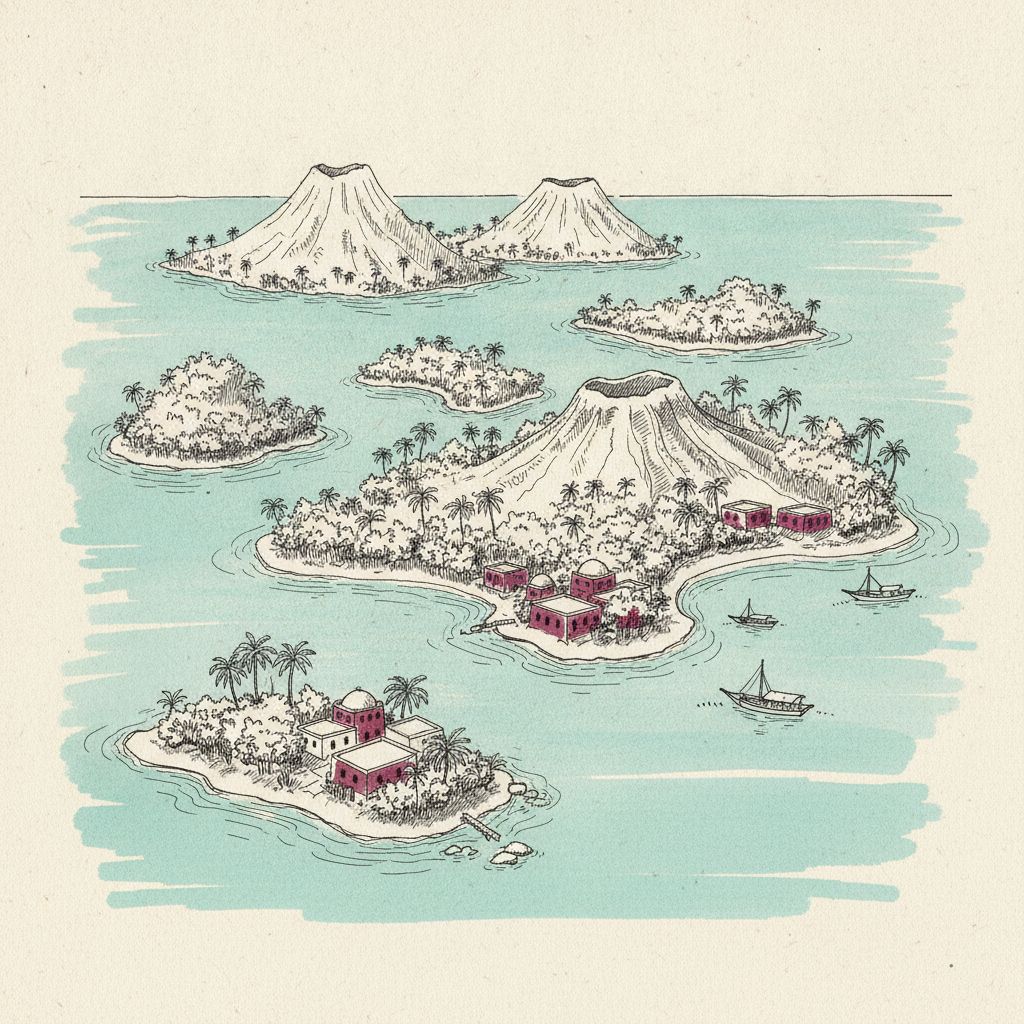
the Union of the Comoros is an archipelago of three major islands in the northern Mozambique Channel, roughly 300 kilometres off the north-west coast of Madagascar and immediately north of the French territory of Mayotte. Population approximately 900,000 across Grande Comore, Anjouan, and Moheli. Malaria is endemic; health system capacity is constrained by limited diagnostic infrastructure and periodic drug-supply gaps. The islands' relationship with Mayotte is politically complex: Comoros claims Mayotte as its fourth island but it voted in 2009 to remain French, and clandestine migration creates a mobile cross-border population.
The two territories share a Plasmodium falciparum malaria transmission zone, and irregular population movement between Comoros and Mayotte is a documented driver of imported Malaria cases in both directions. In the current alert, Mayotte recorded a 4.2-fold surge to 25 cases per week in weeks 18 to 20 of 2026, concentrated in southern municipalities closest to the Comorian coast. ECDC surveillance does not extend to Comorian territory, meaning the upstream reservoir burden is unmeasured. Any sustained rise in local Comorian transmission will continue to seed Mayotte regardless of island-level vector-control measures.
Reference
What does Comoros produce that's used in perfume?
Why does Comoros have so many migrants going to Mayotte?
Is Comoros part of Saudi Arabia's new Red Sea coalition?
What is the malaria situation in Comoros in 2026?
Is Comoros linked to the malaria surge in Mayotte?


Written with AI from Lowdown's published reporting. Not individually reviewed by an editor. Updated 31 July 2026. Editorial standards.