Boikyi
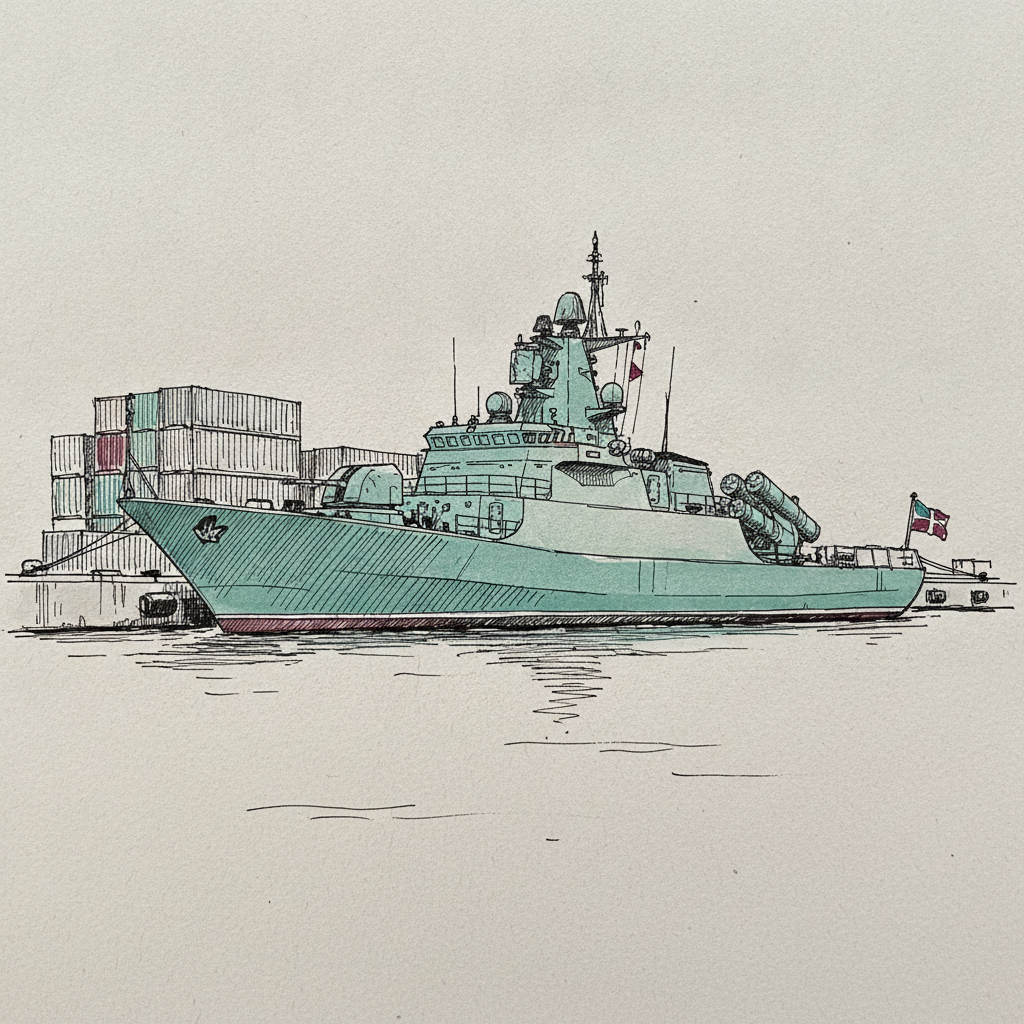
Russian Baltic Fleet missile corvette set on fire at Kronstadt by Ukrainian drones on 6 June 2026, the first confirmed Ukrainian naval strike in the Baltic Sea.
Last refreshed: 9 June 2026 · Appears in 1 active topic
Is the Boikyi repairable, or has Russia lost a $400 million corvette to a cheap drone?
Timeline for Boikyi
Ukraine hits Baltic Fleet at Kronstadt
Russia-Ukraine War 2026Background
Boikyi is the third Steregushchiy-class (Project 20380) corvette of the Russian Navy, built at Severnaya Verf and commissioned on 14 May 2013. At 105 m and ~2,200 tonnes, she carries Kh-35 anti-ship missiles, a 100 mm gun, and Redut air-defence. NATO classifies her class as frigates. She was assigned to the Baltic Fleet at Kronstadt.
Ukrainian Unmanned Systems Forces struck Boikyi in the Kronstadt Marine Plant dry dock on the night of 6 June 2026, using 400+ long-range drones operating at ~1,100 km range. Satellite imagery showed severe superstructure damage consistent with a total loss; replacement cost estimated at ~$400 million against a ~$55,000 drone. The vessel had been escorting Russian shadow-fleet tankers in the Baltic before entering dry dock.
What type of ship is the Boikyi and what weapons does it carry?
Was the Russian corvette Boikyi destroyed in the 2026 Kronstadt drone strike?
How far did Ukrainian drones travel to hit the Boikyi at Kronstadt?


Written with AI from Lowdown's published reporting. Not individually reviewed by an editor. Updated 9 June 2026. Editorial standards.