Skip to content
Briefings are running a touch slower this week while we rebuild the foundations.See roadmap
Behesht-e Zahra
Nation / PlaceIR

Behesht-e Zahra

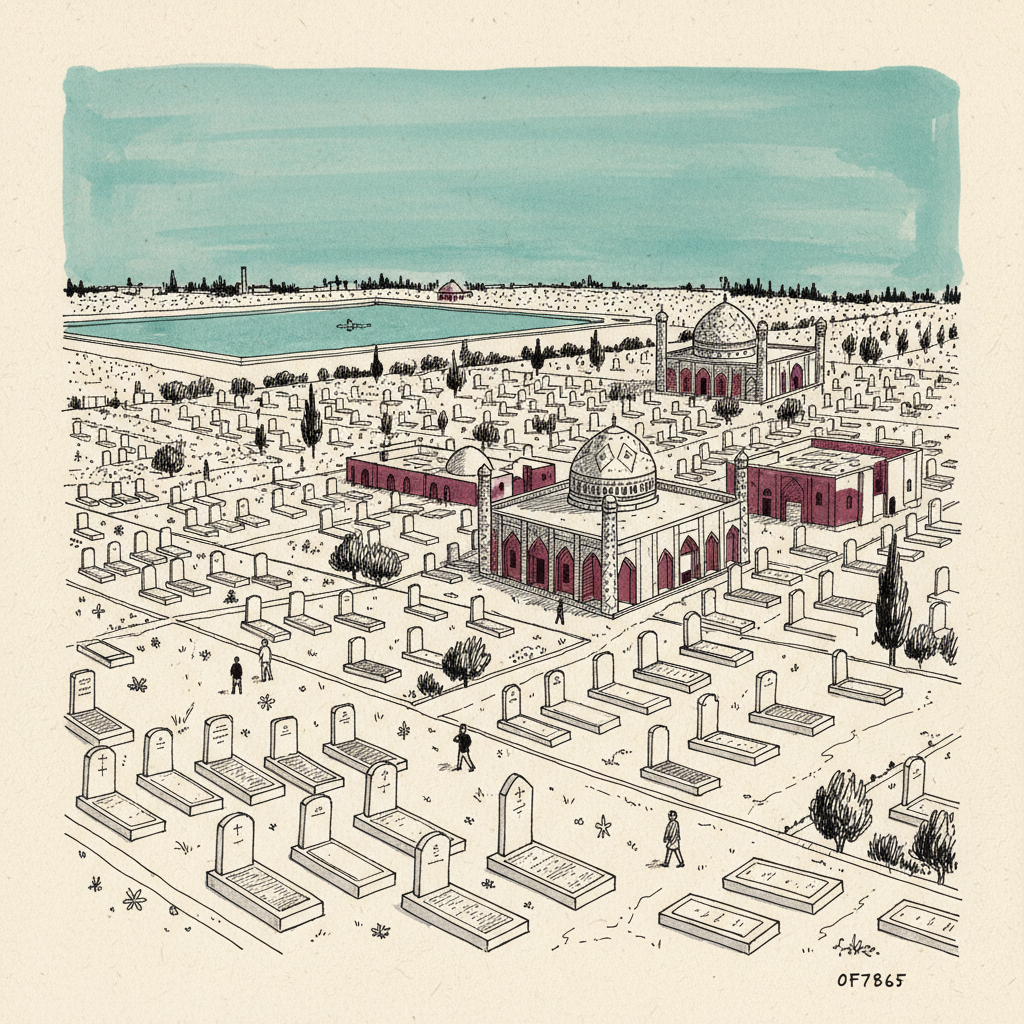
Behesht-e Zahra is Iran's largest cemetery, located south of Tehran; Iranian authorities reportedly deleted records and removed gravestones of January-uprising victims there.

Last refreshed: 1 June 2026 · Appears in 1 active topic

Key Question

Is Iran erasing evidence of the January uprising's death toll at its own symbolic cemetery?

Timeline for Behesht-e Zahra

#1141 Jun
View full timeline →
Common Questions
What is Behesht-e Zahra cemetery in Tehran?
Behesht-e Zahra is Iran's largest cemetery, located south of Tehran in Shahr-e Rey. It is the burial site of those killed in the 1979 revolution, the Iran-Iraq War, and subsequent conflicts, and carries deep symbolic significance for both the Islamic Republic and Iranian opposition.Source: Lowdown Iran Conflict 2026
Why are Iranian authorities said to be removing gravestones at Behesht-e Zahra?
According to NCRI monitors (unconfirmed independently), Iranian authorities were deleting cemetery records and removing gravestones of those killed in the January 2026 uprising, in an apparent attempt to obscure the official death toll from that protest wave.Source: NCRI
Has Iran destroyed evidence of protest deaths at cemeteries before?
Human rights organisations have previously documented the removal of protest victims' graves and records in Iran after the November 2019 protests, using satellite imagery of grave clusters to cross-check official casualty figures.Source: Amnesty International / Iran Human Rights
Who are the NCRI monitors reporting on Behesht-e Zahra?
The National Council of Resistance of Iran (NCRI) is an Iranian opposition umbrella group in exile. Its monitors report on events inside Iran, including prison conditions and casualty figures, though their reports are not independently corroborated by journalists on the ground.Source: NCRI

Background

Behesht-e Zahra (Persian: "Paradise of Zahra") is Iran's largest and most historically significant cemetery, located in the Shahr-e Rey district south of Tehran. Established in the 1970s, it is the burial site of many of those killed in the 1979 revolution, the Iran-Iraq War, and subsequent state violence. The cemetery carries deep symbolic weight for both the Islamic Republic, which honours its own martyrs here, and for the opposition, which has used it as a site of commemoration for victims of state repression.

According to NCRI monitors (whose reports have not been independently corroborated), Iranian authorities were actively deleting cemetery records and removing gravestones of people killed during the January 2026 uprising as of 1 June 2026. The pattern, if confirmed, would represent a systematic attempt to erase documentary evidence of the death toll from that uprising, a tactic that has been documented by human rights organisations in previous episodes of Iranian state repression, including after the November 2019 protests.

Behesht-e Zahra's role as a contested space reflects the broader information war around the January 2026 uprising. The Islamic Republic has consistently disputed opposition and international estimates of the death toll. Removing gravestones and digital records from the cemetery's official register would complicate future forensic accounting. Amnesty International and Iran Human Rights have previously used burial site analysis, including satellite imagery of grave clusters, to cross-check official casualty figures from earlier protest waves.

Source Material