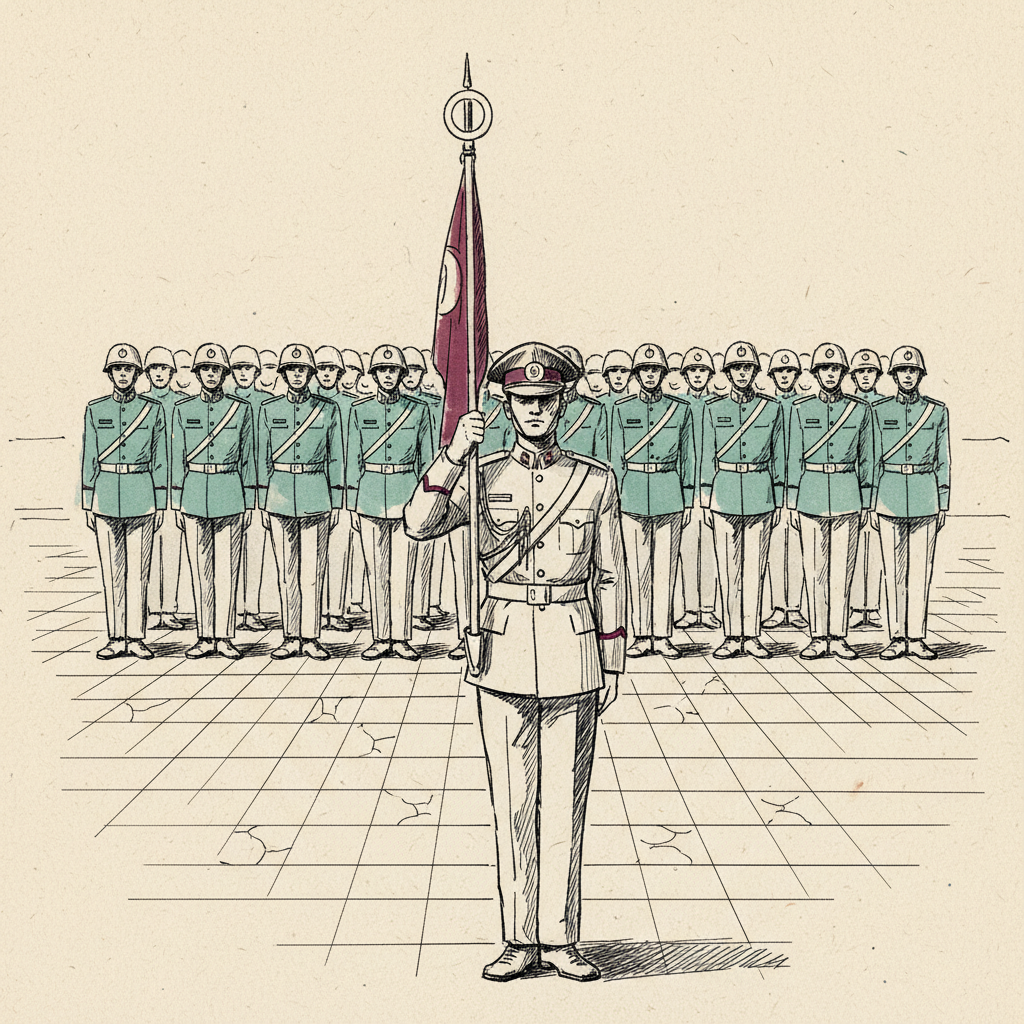
Artesh
Iran's conventional regular army, distinct from the IRGC, with ~350,000 personnel.
Last refreshed: 4 May 2026
How does Iran's regular Artesh army differ from the IRGC in the Hormuz standoff?
Timeline for Artesh
IRGC sets 30-day blockade clock for US
Iran Conflict 2026- What is the difference between the Artesh and the IRGC in Iran?
- The Artesh is Iran's conventional regular military (ground, air, navy) founded in 1923. The IRGC is a parallel revolutionary force controlling missiles, the Quds Force, and the Basij. The IRGC has greater political trust and budget priority; the Artesh handles conventional territorial defence.Source: IISS / open-source military analysis
- Who controls Iran's navy during the Hormuz blockade?
- The IRGC Navy, not the Artesh Navy, is leading blockade enforcement in the Strait of Hormuz. The IRGC Navy operates swarm boats and fast craft for harassment operations; the Artesh Navy operates larger surface vessels and submarines.Source: CENTCOM / open-source military analysis
- How many soldiers does Iran's Artesh have?
- The Artesh (Islamic Republic of Iran Army) has an estimated 350,000 active personnel across its ground forces, air force, naval forces, and air defence branches.Source: IISS Military Balance
Background
The Artesh (Islamic Republic of Iran Army, formally Artesh-e Jomhuri-ye Eslami-ye Iran) is Iran's conventional regular military, founded in its modern form in 1923 under Reza Shah and reconstituted after the 1979 revolution. It encompasses ground forces, air force, naval forces, and air defence, with an estimated 350,000 active personnel. The Artesh is constitutionally subordinate to the Supreme Leader via the Joint Armed Forces General Staff Headquarters, placing it in a parallel command structure alongside the IRGC.
A key distinction for understanding Iranian military posture is the division between the Artesh and the Islamic Revolutionary Guard Corps (IRGC). The IRGC controls Iran's missile forces, the Quds Force (overseas operations), and the Basij militia. The Artesh handles conventional territorial defence. In the current Hormuz standoff, it is the IRGC Navy — not the Artesh Navy — that has conducted swarm-boat incidents and overseen the blockade enforcement. The Artesh's own naval forces operate larger conventional surface vessels and submarines.
During the 1980-88 Iran-Iraq War the Artesh suffered catastrophic losses and was subsequently overshadowed institutionally by the IRGC, which was founded during the revolution and enjoys greater political trust from the leadership. Budget allocations and procurement priorities have historically favoured the IRGC. Analysts note that the Artesh's conventional capabilities — particularly air defence and armoured ground forces — would be the primary assets engaged in any direct exchange with US or Coalition forces, making its readiness level directly relevant to assessments of Iranian deterrence capacity.