Skip to content
You can now search across every topic, entity and event.What's new
US Midterms 2026
14JUN

Wisconsin Liberals Lock 5-2 Court Majority

2 min read
11:52UTC

Chris Taylor's 20-point victory flipped 29 Trump counties and locked liberal control of Wisconsin's Supreme Court until at least 2030.

PoliticsDeveloping
Key takeaway

A 20-point liberal win locks Wisconsin's Supreme Court at 5-2 until 2030.

Chris Taylor won Wisconsin's Supreme Court race by approximately 20 points on 7 April, defeating fellow Appeals Judge Maria Lazar and expanding The Court's liberal majority from 4-3 to 5-2 1. Taylor carried 84% in Dane County (Madison) and flipped roughly 29 counties that voted for Trump in 2024, some by as much as 33 points. The margin doubled the past three liberal Supreme Court victories in the state.

The scale matters beyond the headline. Liberals are now guaranteed to hold The Court until at least 2030. That timeline covers the 2026 midterms, the 2028 presidential election, and the next round of post-census redistricting. Any challenge to Wisconsin's congressional maps, voter ID laws, or election administration procedures will be heard by a court whose ideological composition is settled.

Both the Georgia and Wisconsin results landed on the same night , in structurally different states and structurally different types of race: a deep-red House district and a statewide judicial contest. When two independent measurements both exceed the forecast, the forecast itself comes under scrutiny. The generic ballot prediction may be catching up to voter behaviour rather than leading it.

Deep Analysis

In plain English

Wisconsin's Supreme Court is elected by voters rather than appointed, making judicial elections effectively partisan contests in the state. On 7 April 2026, progressive judge Chris Taylor won by about 20 percentage points , a much larger margin than expected , giving liberals a 5-2 majority on the court they will hold until at least 2030. The result mattered for two reasons. First, it was a statewide test of voter sentiment across all 72 counties. Second, the Wisconsin Supreme Court will decide legal disputes over state election rules and congressional district maps , giving the liberal majority real power over how future elections are conducted in the state. The 29 counties that voted for Trump in 2024 but backed the liberal candidate in this race are being watched as evidence that economic frustration with tariffs and prices is moving rural voters away from Republicans.

Deep Analysis
Root Causes

The Wisconsin result rests on two structural conditions distinct from GA-14.

First, the geographic breadth of the flip: 29 counties voted for Trump in 2024. Rural-to-Democrat movement in Wisconsin differs from GA-14 because Wisconsin's rural economy is dairy-dominated, not row-crop agricultural. Dairy tariff exposure runs through milk futures, imported machinery parts, and export market access , a different transmission path from Georgia's grain and fuel cost model, yet producing a comparable directional signal.

Second, the judicial stakes have a practical dimension that elevated turnout: liberal control of the Wisconsin Supreme Court through 2030 means the court will adjudicate any mid-decade redistricting challenge. Voters in districts that may be redrawn have a direct structural interest in who controls the court, creating a policy-stakes mobilisation effect that a typical judicial race does not generate.

What could happen next?
  • Consequence

    Liberal control of the Wisconsin Supreme Court through 2030 means any mid-decade Republican redistricting attempt in Wisconsin faces a liberal court, reducing the net Republican gerrymander gain from the current multi-state redistricting wave.

  • Meaning

    Two independent measurements , GA-14 (House special) and Wisconsin (statewide judicial) , both exceeding the D+5.5 generic ballot model on the same night in different race types reduces the probability that either result is a local artefact.

First Reported In

Update #2 · First votes exceed every forecast

Ballotpedia News· 12 Apr 2026
Read original
Causes and effects
This Event
Wisconsin Liberals Lock 5-2 Court Majority
A 5-2 liberal majority on Wisconsin's Supreme Court secures judicial review of redistricting, voting rights, and election administration through 2030, removing a structural uncertainty for Democrats in a state that decides presidential elections.
Different Perspectives
EU Commission trade directorate
EU trade officials note Iowa Senate moving on Iran-war fertiliser prices confirms the cross-topic energy transmission they flagged after Gulf shocks in May. A Democratic Senate from January 2027 would restore Ways and Means leverage on tariff schedules, reducing the probability of a locked Republican trade posture through 2028.
Chatham House democracy analysts
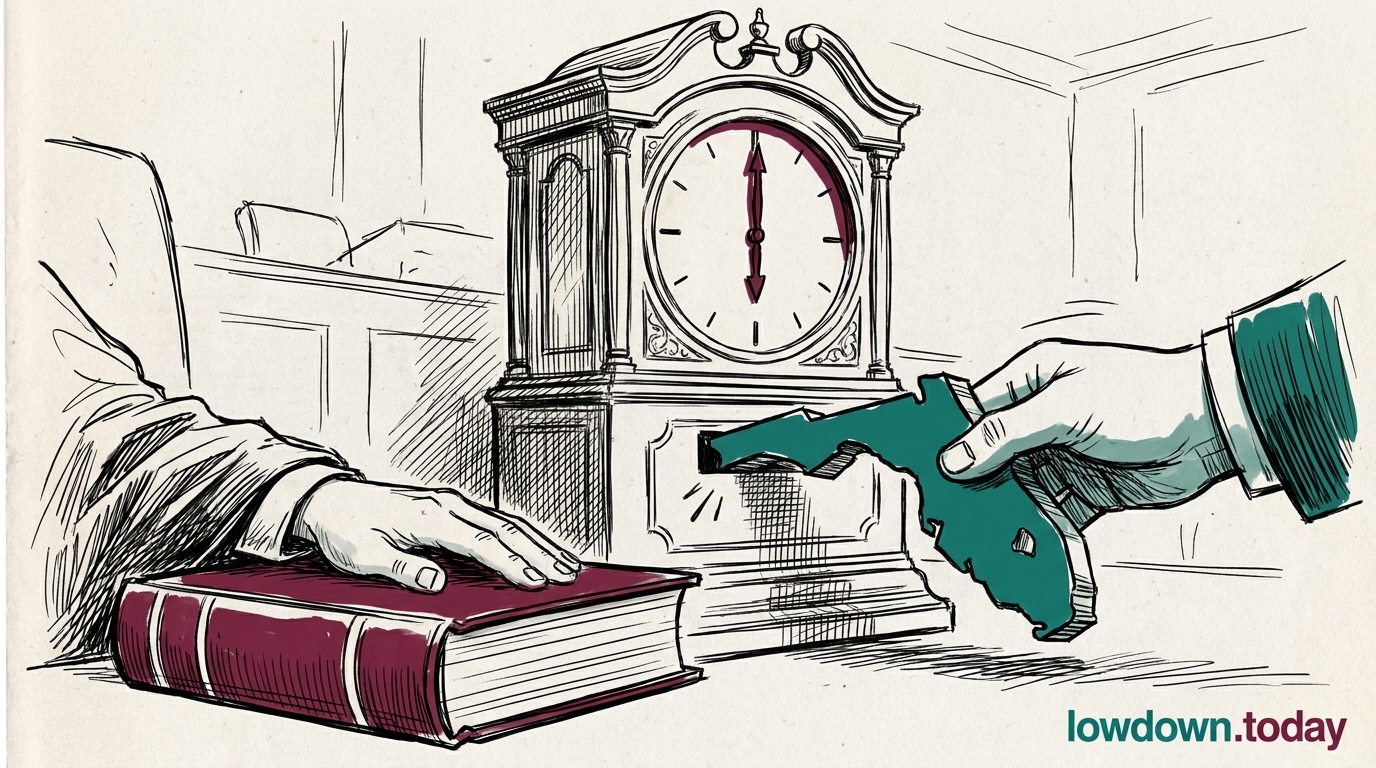
Chatham House analysts assess the Florida qualifying deadline as the point at which redistricting litigation migrated from a live 2026 variable to a post-cycle accountability mechanism; the shadow docket's 7-day Alabama reversal on 2 June and the 13 June Florida lock together confirm that judicial review now operates retrospectively rather than preventively in redistricting disputes.
V-Dem Institute
V-Dem Institute
V-Dem's electoral integrity index identifies the Callais-to-Alabama-stay-to-Florida-qualifying sequence as completing a 13-year Roberts Court rollback: Shelby County (2013) removed preclearance, Brnovich (2021) narrowed vote-denial claims, Callais removed the majority-minority mandate, and the shadow-docket reversal window now forecloses injunctive remedies within any single electoral cycle, meaning judicial review operates retrospectively rather than preventively in redistricting disputes.
Brennan Center for Justice
The Brennan Center characterises Florida's 6-1 ruling as jurisdictional avoidance achieving the same result as a merits ruling, split precisely on appointment lines: all six DeSantis appointees declined to examine his own map. The Equal Ground challenge continues at the First District Court of Appeal with no 2026 remedy available.
National Republican Senatorial Committee
The NRSC brought NRSC v. FEC because the Senate Leadership Fund's parallel-operation model cannot replicate direct candidate coordination, and the December 2025 argument signalled the conservative majority would strike caps ranging from $61,800 to $3.7M per race. A favourable ruling would let the NRSC channel unlimited funds directly through Iowa and four other live Senate campaigns.
EU Commission trade policy directorate
EU trade analysts note the D+6.9 generic ballot is the first reading this cycle making a Democratic House flip structurally plausible; a Ways and Means Committee under Democratic chairmanship after January 2027 would restore congressional leverage on tariff schedules, reducing the probability of locked Republican tariff posture through 2028.