Skip to content
US Midterms 2026
16APR

DeSantis Times Map to SCOTUS Ruling

2 min read
09:34UTC

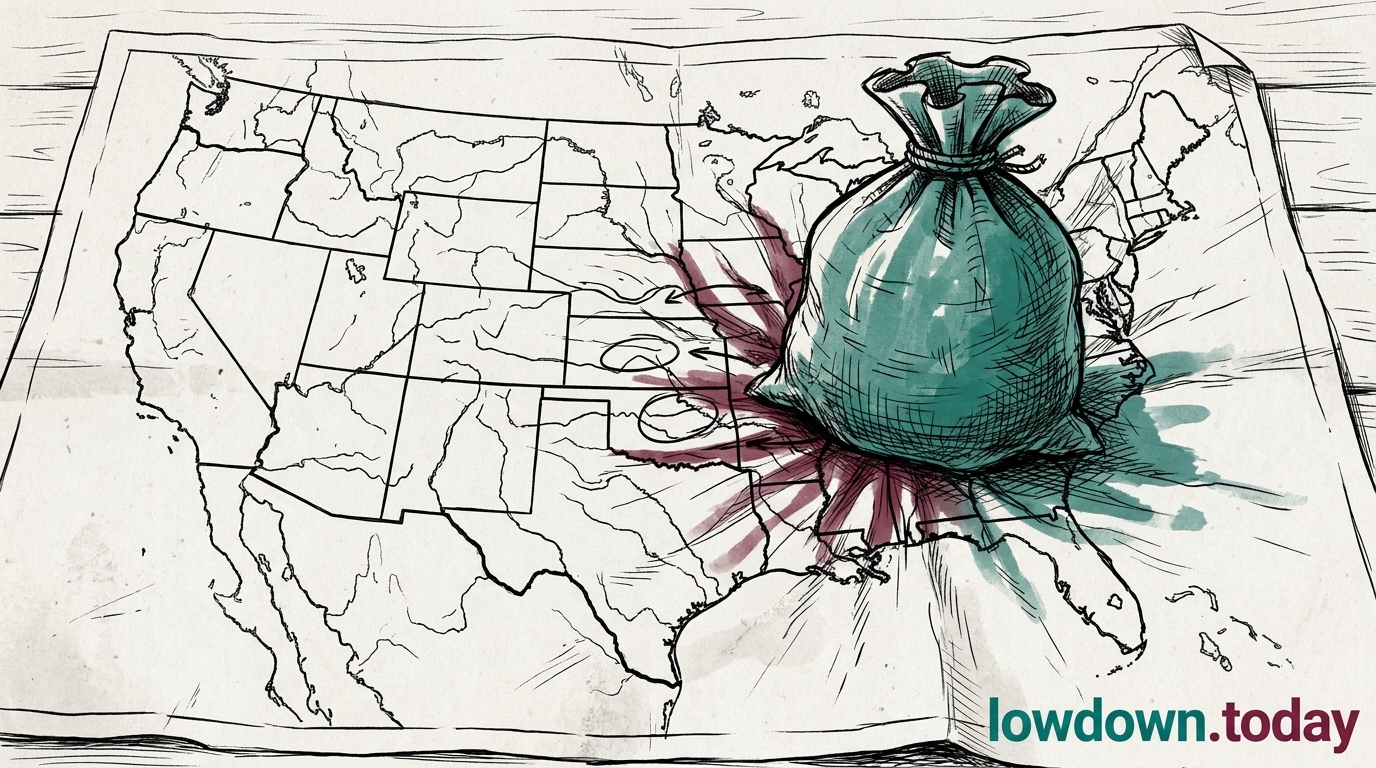
Florida's redistricting session opens Monday, timed so that a Supreme Court ruling narrowing the Voting Rights Act could clear the legal path before maps are finalised.

PoliticsDeveloping
Key takeaway

Florida's redistricting session is timed to exploit a potential SCOTUS ruling weakening the Voting Rights Act.

Florida's redistricting special session opens Monday 20 April and runs through Friday 24 April . Republicans hold 20 of 28 congressional seats and are targeting three to five more. The session date aligns with the state's candidate filing deadline, creating an extremely tight operational window: any new map must be enacted before filings close on 24 April.

MultiState reported on 6 April that Governor Ron DeSantis is deliberately awaiting The Supreme Court's ruling in Louisiana v. Callais before finalising the map 1. Callais tests whether Section 2 of the Voting Rights Act still requires majority-minority congressional districts . A ruling narrowing Section 2 would remove the primary legal constraint on the Florida gerrymander.

DeSantis scheduled the session in a window where the Callais ruling could arrive. If it does, the map has a cleaner path through both state and federal courts. Florida's Supreme Court is DeSantis-aligned, reducing near-term state court challenge prospects. Federal Fair Districts litigation is expected but operates on a slower timeline. The asymmetry persists : Republican redistricting is proceeding faster than Democratic equivalents.

Deep Analysis

In plain English

Redistricting is the process of drawing the boundaries of congressional districts, which determines how many seats each party is likely to win. This normally happens once every 10 years after the census. Florida's Republicans are attempting a mid-decade redraw , outside the normal cycle , to gain more seats. Governor Ron DeSantis called a special legislative session for 20-24 April to draw new maps. He is deliberately waiting to see how the Supreme Court rules in a case called Louisiana v. Callais, which will decide whether the Voting Rights Act still requires states to create some congressional districts where Black or Hispanic voters form a majority. If the court weakens that requirement, Florida can draw maps that reduce minority representation, which would likely produce more Republican-leaning seats. The state's filing deadline for candidates is also 24 April , the same day the session ends. Any new map must be drawn before that deadline for it to apply to the November 2026 election.

Deep Analysis
Root Causes

Florida's redistricting acceleration exploits two structural asymmetries.

First, the VRA Section 2 legal uncertainty created by the Callais case: the existing constraint on 'packing and cracking' majority-minority districts has been the primary obstacle to maximising Republican map advantages in Florida. Waiting for Callais before finalising the map is rational risk management , enacting a map under ambiguous law rather than waiting for clarity is the risk of the sequence reversed.

Second, Florida's court alignment: the state Supreme Court, with DeSantis-appointed justices forming the majority, has already indicated its orientation on redistricting in prior cases. Federal challenge is the only realistic legal path, and federal Fair Districts litigation operates on a timeline (18-36 months) that will not resolve before November 2026 regardless of when the map is enacted.

What could happen next?
  • Consequence

    If the Callais ruling narrows VRA Section 2 before 24 April, Florida can enact a map targeting 3-5 additional Republican seats with reduced legal exposure , a net swing of 3-5 in the Republican column that partially offsets the Democratic gains being projected from the broader wave environment.

  • Risk

    A map enacted before Callais arrives carries higher federal court exposure and may require a third redistricting cycle if the SCOTUS decision creates new standards the pre-Callais map violates.

First Reported In

Update #2 · First votes exceed every forecast

MultiState· 12 Apr 2026
Read original
Causes and effects
This Event
DeSantis Times Map to SCOTUS Ruling
The coordination between Florida's special session and the Callais ruling represents a deliberate alignment of state redistricting with federal judicial outcomes, reducing the legal exposure of a gerrymander that targets three to five additional Republican seats.
Different Perspectives
Trump administration
The administration has pressed a 48-state voter data collection campaign through affirmative DOJ litigation even as seven executive order provisions were blocked by three courts, treating the parallel legal tracks as independent infrastructure projects. The resignation of its own privacy officer and the SAVE system's 17% error rate have not altered the operational posture.
V-Dem Institute (Sweden)
V-Dem's annual democracy index tracks the combination of 31 restrictive voting laws enacted in 2025, DOGE's collaboration with the election-denial organisation True the Vote, and the 17% SAVE system error rate as compounding indicators of backsliding on electoral procedural integrity, distinct from the formal electoral outcomes of the 7 April votes.
European Union trade analysts
The 7-point lower-income Democratic shift and the 75% American tariff-disapproval reading are being watched closely in Brussels: a Democratic House after November 2026 would shift trade committee power and create pressure to negotiate tariff relief, a structural change with direct consequences for European exporters absorbing US import costs since 2025.
Canadian federal government
Ottawa is watching the Cook Senate shifts as a medium-term signal: four Democratic pickups would change the legislative arithmetic on tariff authority, and a formal US recession confirmed by a second negative GDP quarter would alter conditions for any USMCA renegotiation.
Mexican government trade officials
Mexico is the United States' largest trading partner and faces direct exposure to the tariff regime driving Democratic gains; the 7-point lower-income voter shift in the US and a Democratic House after November 2026 would create political pressure for renegotiation of tariff structures that are currently compressing cross-border manufacturing margins.
Trump administration and Republican Senate majority
Attorney General Pam Bondi framed the 30-state voter-data suits as routine compliance enforcement. Republican Senate leaders are using the SAVE Act floor votes to force Democrats in competitive states onto the record on culture-war amendments that will later run in campaign advertisements, compensating for the bill's lack of a cloture path.
