Skip to content
Welcome, thoughtbot's Giant Robots listeners!Start here
US Midterms 2026
7SEP

Wisconsin Liberals Lock 5-2 Court Majority

2 min read
13:32UTC

Chris Taylor's 20-point victory flipped 29 Trump counties and locked liberal control of Wisconsin's Supreme Court until at least 2030.

PoliticsDeveloping
Key takeaway

A 20-point liberal win locks Wisconsin's Supreme Court at 5-2 until 2030.

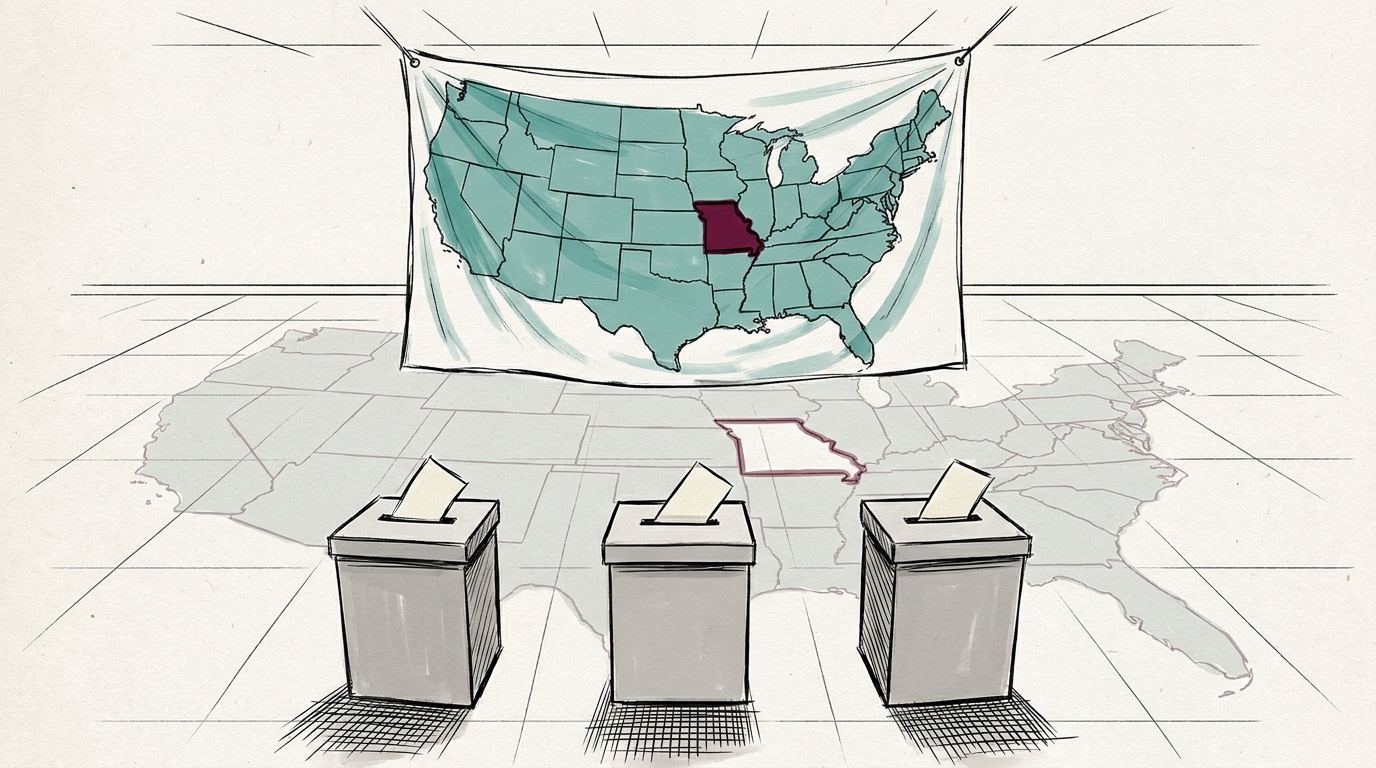
Chris Taylor won Wisconsin's Supreme Court race by approximately 20 points on 7 April, defeating fellow Appeals Judge Maria Lazar and expanding the Court's liberal majority from 4-3 to 5-2⁠1. Taylor carried 84% in Dane County (Madison) and flipped roughly 29 counties that voted for Trump in 2024, some by as much as 33 points. The margin doubled the past three liberal Supreme Court victories in the state.

The scale matters beyond the headline. Liberals are now guaranteed to hold the Court until at least 2030. That timeline covers the 2026 midterms, the 2028 presidential election, and the next round of post-census redistricting. Any challenge to Wisconsin's congressional maps, voter ID laws, or election administration procedures will be heard by a court whose ideological composition is settled.

Both the Georgia and Wisconsin results landed on the same night, in structurally different states and structurally different types of race: a deep-red House district and a statewide judicial contest. When two independent measurements both exceed the forecast, the forecast itself comes under scrutiny. The generic ballot prediction may be catching up to voter behaviour rather than leading it.

Deep Analysis

In plain English

Wisconsin's Supreme Court is elected by voters rather than appointed, making judicial elections effectively partisan contests in the state. On 7 April 2026, progressive judge Chris Taylor won by about 20 percentage points , a much larger margin than expected , giving liberals a 5-2 majority on the Court they will hold until at least 2030. The result mattered for two reasons. First, it was a statewide test of voter sentiment across all 72 counties. Second, the Wisconsin Supreme Court will decide legal disputes over state election rules and congressional district maps , giving the liberal majority real power over how future elections are conducted in the state. The 29 counties that voted for Trump in 2024 but backed the liberal candidate in this race are being watched as evidence that economic frustration with tariffs and prices is moving rural voters away from Republicans.

Deep Analysis
Root Causes

The Wisconsin result rests on two structural conditions distinct from GA-14.

First, the geographic breadth of the flip: 29 counties voted for Trump in 2024. Rural-to-Democrat movement in Wisconsin differs from GA-14 because Wisconsin's rural economy is dairy-dominated, not row-crop agricultural. Dairy tariff exposure runs through milk futures, imported machinery parts, and export market access , a different transmission path from Georgia's grain and fuel cost model, yet producing a comparable directional signal.

Second, the judicial stakes have a practical dimension that elevated turnout: liberal control of the Wisconsin Supreme Court through 2030 means the Court will adjudicate any mid-decade redistricting challenge. Voters in districts that may be redrawn have a direct structural interest in who controls the Court, creating a policy-stakes mobilisation effect that a typical judicial race does not generate.

What could happen next?
  • Consequence

    Liberal control of the Wisconsin Supreme Court through 2030 means any mid-decade Republican redistricting attempt in Wisconsin faces a liberal court, reducing the net Republican gerrymander gain from the current multi-state redistricting wave.

  • Meaning

    Two independent measurements , GA-14 (House special) and Wisconsin (statewide judicial) , both exceeding the D+5.5 generic ballot model on the same night in different race types reduces the probability that either result is a local artefact.

First Reported In

Update #2 · First votes exceed every forecast

Ballotpedia News· 12 Apr 2026
Read original →
Causes and effects
This Event
Wisconsin Liberals Lock 5-2 Court Majority
A 5-2 liberal majority on Wisconsin's Supreme Court secures judicial review of redistricting, voting rights, and election administration through 2030, removing a structural uncertainty for Democrats in a state that decides presidential elections.
Different Perspectives
Judge Adolf Zeman, Alaska Superior Court
Zeman refused to dismiss the League of Women Voters, Alaska Black Caucus and ACLU of Alaska suit over the state giving DOJ its unredacted voter list. The privacy claims now go to evidence-gathering under the Alaska Constitution.
Judge Thomas Schroeder, US District Court for the Middle District of North Carolina
Schroeder refused on 19 October to block the State Board of Elections rule that rejects mail ballots with an unsealed or missing inner envelope. He found the challengers had delayed and that relief was infeasible with voting under way, and pointed to notice-and-cure provisions as a safeguard.
Stephen Richer, Republican former Maricopa County recorder
Richer submitted a brief on 20 October supporting the voting groups on documentary proof of citizenship at registration. He takes no position on the separate 90-day voter-removal question.
Senate Leadership Fund
The Senate Leadership Fund began spending for interim Senator Darline Graham Nordone on 19 October, taking its South Carolina total to $4.06m, including $2.25m against Democrat Annie Andrews. Republicans are now paying to defend a seat in a state Donald Trump carried in 2024.
WinSenate, the ad-buying affiliate of Senate Majority PAC
WinSenate began buying Kansas airtime against Roger Marshall on 10 October and had reported $8.14m there by 20 October. Marshall held $922,088 in cash on 30 September and the NRSC gave him no party money in September, so the Democratic side is spending where the Republican committee has not.
County Board of Arlington County
Arlington says federal Polling Place Policies allowing armed agents at polling sites breach 18 USC 592, the 1865 ban on troops or armed men at an election. It reads Markwayne Mullin's 1 September remarks as confirming such a policy, and asks Judge Brinkema to keep armed federal staff from its polls and drop boxes.

Written with AI from Lowdown's published reporting. Not individually reviewed by an editor. Editorial standards.
