Skip to content
You can now search across every topic, entity and event.What's new
US Midterms 2026
4AUG

SAVE Act debate resumes as wedge theatre

3 min read
08:56UTC

The Senate voted 51-48 to resume debate on the SAVE Act after the Easter recess on 14 April; Tommy Tuberville's transgender sports amendment failed 49-41 while Marsha Blackburn's gender-affirming care amendment and Eric Schmitt's mail-in voting ban remain pending.

PoliticsDeveloping
Key takeaway

SAVE Act floor time is producing recorded votes for campaign advertisements, not legislation.

The Senate resumed floor debate on the SAVE Act (Safeguard American Voter Eligibility Act, H.R. 22) on 14 April 2026 after the Easter recess, voting 51-48 to proceed with Republican Senator Lisa Murkowski (Alaska) again voting with Democrats 1. Senator Tommy Tuberville (Alabama) offered an amendment banning transgender athletes from women's sports; it failed 49-41 and was withdrawn. Senator Marsha Blackburn (Tennessee) has a gender-affirming-care amendment pending. Senator Eric Schmitt (Missouri) has offered one banning mail-in voting.

The parliamentary mechanics foreclose any legislative outcome. Majority Leader John Thune has again refused to invoke the nuclear option to eliminate the filibuster, the Senate procedure that requires 60 votes to end debate and move to a final vote. There are 53 Republican seats. Without elimination of the filibuster or defections from seven Democratic senators, no cloture motion can succeed. The bill cannot pass the Senate in its current form, and nothing on the floor this week changes that arithmetic.

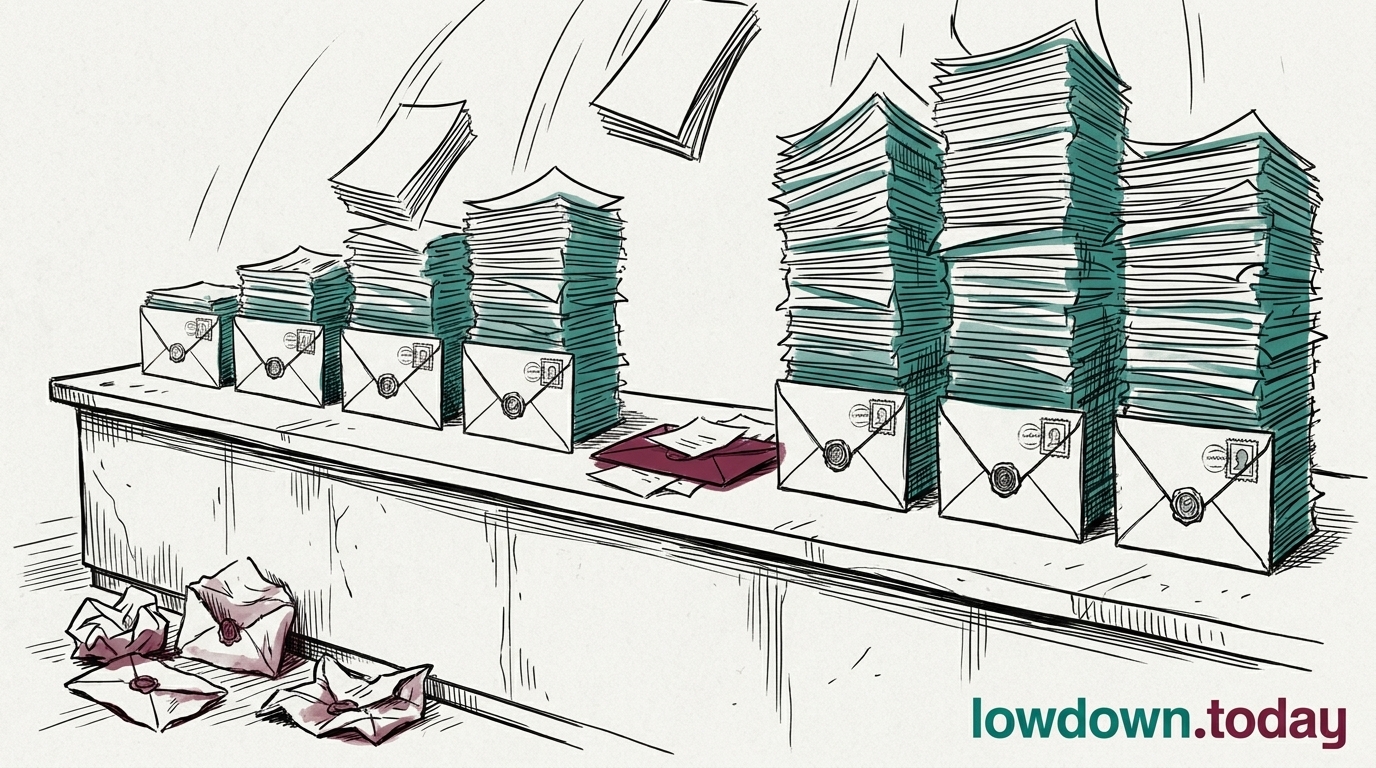
Several Democratic senators defending 2026 seats in Georgia, North Carolina, Michigan, and Arizona are the target audience for the amendment record the floor time produces. Amendments on transgender athletes, gender-affirming care, and mail-in voting generate recorded votes that can be edited into autumn campaign advertisements regardless of the underlying bill's fate. The 49-41 defeat of the Tuberville amendment is already the material: every senator who voted against it, and every senator who did not vote, is now attached to that position. Al Jazeera reported that the SAVE Act as drafted would require documentary proof of citizenship that 21.3 million eligible Americans lack, with criminal penalties for election officials 2. None of that is the point.

Deep Analysis

In plain English

The US Senate has a rule called the filibuster. Under this rule, passing most laws requires 60 out of 100 senators to agree to proceed to a final vote. Republicans currently control 53 Senate seats. That means they need at least 7 Democrats to agree, and none have. The SAVE Act is a bill that would require proof of citizenship to register to vote. Republicans support it; Democrats oppose it. Because they cannot get 60 votes, the bill cannot pass. The Senate Majority Leader could change the Senate rules to eliminate the 60-vote requirement, this is sometimes called the 'nuclear option', but he has refused to do so because not enough of his own Republican senators would support the rule change. So the bill is being debated at length, partly to generate political advertising material. When senators vote on controversial amendments (like those restricting transgender sports or mail-in voting), those votes become campaign ads targeting their opponents, even if the bill itself never passes.

Deep Analysis
Root Causes

The SAVE Act's structural failure has two causes. First, the 60-vote cloture threshold is a constitutional feature of Senate procedure that cannot be overridden without the nuclear option, and the nuclear option requires a majority of the full Senate, meaning Thune needs 50 of 53 Republicans to agree, a count he has publicly confirmed he does not have.

The Murkowski problem is the second structural constraint: she voted against proceeding twice, which means the threshold for the nuclear option is actually 51, not 50, and Thune cannot guarantee he has that. The SAVE Act floor time is therefore operating under a dual constraint: not enough votes to pass the bill and not enough votes to change the rules that prevent passing the bill.

What could happen next?
  • Consequence

    Democrats in competitive states will face campaign advertising based on their votes against the Blackburn and Schmitt amendments on gender-affirming care and mail-in voting, regardless of whether the SAVE Act passes.

    Medium term · 0.83
  • Risk

    Murkowski's repeated opposition signals that even with 53 seats, the Republican conference cannot internally discipline a moderate member who perceives the SAVE Act as electorally harmful in Alaska.

    Short term · 0.87
  • Precedent

    The SAVE Act debate sets a template for using cloture-proof legislation as an amendment platform, a tactic that will likely recur with other culturally salient Republican-priority bills before November.

    Short term · 0.76
First Reported In

Update #3 · Tariff shock reads in GDP. Senate map moves.

Roll Call· 16 Apr 2026
Read original
Different Perspectives
Senate Republican leadership
Floor time is finite at 51-47 with a bipartisan funding negotiation running, and a contested procedural fight over grant conditions is not the best use of it this month. Nothing has been abandoned; the resolution keeps its place on the calendar.
South Carolina election administrators
The Commission applied section 7-11-55 as written and certified the field inside the window the statute allowed. Complaints about the compression belong to the legislature, which alone can change the formula.
Rival Republican campaigns
A nine-candidate field and a majority requirement mean nobody wins on 11 August. The endorsement guarantees a place in the runoff, not the seat, and a fortnight of consolidation afterwards is where the nomination is actually settled.
Trump-endorsed campaign operation
The President's endorsement of the interim senator settles the contest, and a former governor rejected by these voters in 2018 does not merit a second hearing. Outside spending against her is money wasted on a nomination already decided.
Senate Budget Committee under Ron Johnson
Johnson, reported to succeed the late Lindsey Graham as Budget chair on 22 July, has a record of opposing reconciliation packages on deficit grounds, a different proposition than his predecessor for carrying the $10bn voter-ID grant through the Senate on 51 votes after the House passed its version 216-214.
NRCC and Republican committee strategists
The NRCC's $92.7m cash on hand outweighs the DCCC's $79.0m by $13.7m even after Democrats out-raised them $37.4m to $35.4m in the second quarter, official FEC filings from 20 July confirmed. Strategists are banking on the reserve gap, not this quarter's receipts, to carry House races.