Skip to content
Briefings are running a touch slower this week while we rebuild the foundations.See roadmap
UK Startups and Innovation
13MAY

Wayve lands $60m from AMD, Arm and Qualcomm

3 min read
20:05UTC

Three chip architectures, one London autonomy startup, and an $8.6bn post-money valuation. The Series D extension is a commercial bet with a policy jacket.

TechnologyDeveloping
Key takeaway

Wayve's Series D makes it the automotive reference customer for the chip alliance now underpinning British AI infrastructure.

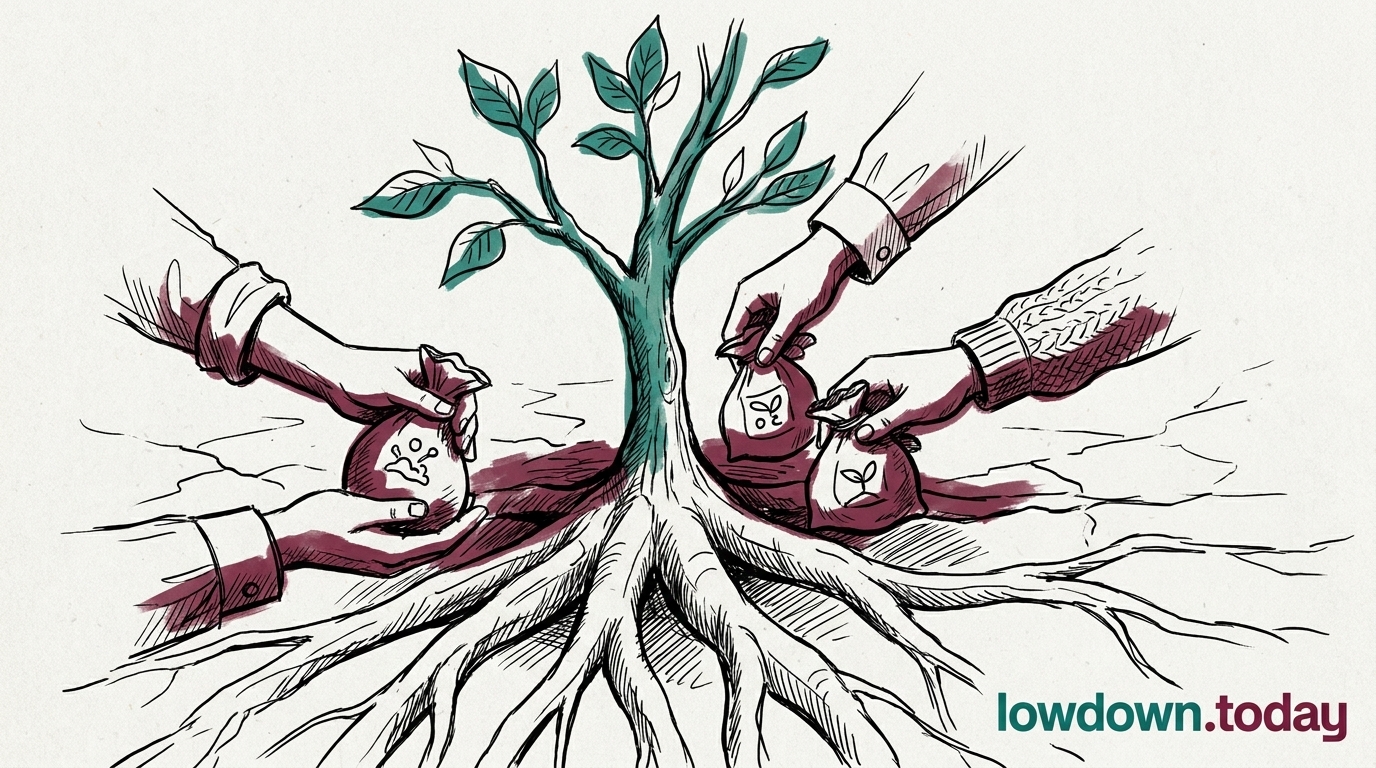
Wayve, the London autonomous-driving startup behind the chip-agnostic AI Driver platform, closed a $60m Series D extension on 15 April 2026 from AMD, Arm and Qualcomm, pushing post-money valuation to $8.6bn and total funding to roughly $1.5bn. 1 CNBC broke the round; the three chip architectures invested jointly rather than at different price points.

Wayve builds end-to-end neural networks that learn driving behaviour from sensor data rather than rule-based stacks. The company licenses its software to car-makers rather than building its own vehicles, and its stated pitch is hardware-agnosticism: the same model trains and runs on any of the major inference architectures. The round syndicate lends weight to that claim, since none of AMD, Arm or Qualcomm would fund a customer locked to a rival chip. For the three vendors, co-funding a European automotive customer hedges against Nvidia concentration and validates their automotive IP roadmaps simultaneously.

The timing sits alongside the Sovereign AI Unit cohort announcement and Nscale's $2bn build-out , both of which sit on the same three-architecture spine. That is not coincidence. Britain's AI hardware stack is consolidating around a specific alliance of non-Nvidia silicon, and Wayve is now the automotive reference customer validating that stack; Nscale is the infrastructure reference customer. For automotive OEMs choosing a driving-stack vendor, Wayve's funders shorten the qualification timeline: whatever chip they pick, Wayve's model already runs on it.

For founders building in adjacent verticals (robotics, industrial AI, edge inference), the takeaway is market structure rather than valuation. The commercial centre of gravity in UK AI infrastructure has tilted toward AMD, Arm and Qualcomm customers, and state policy has now followed. Founders on Nvidia-only stacks should expect harder conversations at DSIT and a slower path to SAIU-adjacent contracts.

Deep Analysis

In plain English

Wayve is a London company building the software that tells self-driving cars what to do. Unlike most competitors, its software works on any car hardware, the way Android works on any phone. The three chip companies that just invested; AMD, Arm, and Qualcomm; all make the computer components that go inside cars; they backed Wayve because they want to prove their chips can power self-driving systems. The UK government then used Wayve's offices to announce its own AI investment programme, connecting the private deal to government policy in a single news cycle.

Deep Analysis
Root Causes

Nvidia's 80-90% share of the automotive AI compute market (per Jon Peddie Research, 2025) created a single-vendor dependency that both OEMs and chip vendors recognise as a structural risk; AMD, Arm and Qualcomm co-investing in a chip-agnostic platform is explicitly an attempt to fracture that moat by backing a proof-point customer.

The UK's post-Brexit position outside EU automotive safety harmonisation frameworks (UNECE WP.29 type approval) means Wayve's go-to-market in the EU requires individual member-state approvals rather than a single certification path, which makes flexible chip architecture; usable across different national hardware requirements; a commercial necessity, not a design preference.

What could happen next?
  • Consequence

    AMD, Arm, and Qualcomm's combined Wayve position creates a joint interest in ensuring UK automotive AI standards favour chip-agnostic architectures; expect coordinated lobbying at the Department for Transport's connected and automated vehicle (CAV) framework consultation before end 2026.

    Short term · 0.6
  • Risk

    Wayve's $8.6bn valuation implies a path to revenue of at least $400-500m annually at standard SaaS multiples; if OEM deployment milestones are not announced publicly by Q2 2027, down-round pressure from existing investors (Nvidia, Microsoft, SoftBank) becomes structurally likely.

    Medium term · 0.55
  • Opportunity

    The three-vendor chip consortium backing Wayve creates the architecture for a UK-anchored automotive AI standard that could be adopted by non-US OEMs (Toyota, Volkswagen, Stellantis) as an alternative to Nvidia's platform, materially increasing UK automotive IP royalty income.

    Long term · 0.45
First Reported In

Update #2 · Britain's innovation pipe leaks at both ends

CNBC· 22 Apr 2026
Read original
Different Perspectives
Australian Department of Defence (AUKUS AI for Acoustics partner)
Rowden Technologies holds active AUKUS AI for Acoustics contracts with the UK, US, and Australian defence establishments. The NWF's £25m investment in Rowden on 13 May brings UK sovereign capital directly into a trilateral programme, which from Canberra's perspective places additional UK government skin-in-the-game on a programme Australia co-funds and co-develops.
Sofinnova Partners (European VC co-investor in Cytospire Series A)
Sofinnova participated alongside the BBB in Cytospire's oversubscribed £61m Series A on 5 May, demonstrating that the BBB's expanded direct mandate is attracting established European specialist biotech funds rather than replacing them. European VCs see the BBB's cornerstone position as a signal reducing UK biotech execution risk rather than crowding out private capital.
Temasek (Singapore sovereign co-investor in Isomorphic Series B)
Singapore's Temasek co-invested alongside the UK's SAIU in Isomorphic's $2.1bn round, treating the same Alphabet-majority company as an acceptable sovereign co-investment target. Temasek's participation normalises the structure: multiple sovereign wealth funds backed the same round, strengthening the precedent that UK-headquartered Alphabet subsidiaries qualify for state investment.
Alphabet / Google (majority Isomorphic shareholder, Mountain View)
Alphabet co-invested via GV and CapitalG in the same Isomorphic Series B round that received UK sovereign backing, placing US corporate capital and UK public capital in the same syndicate without any governance asymmetry. SAIU's minority stake validates Isomorphic's strategic value without constraining Alphabet's control over IP, geography, or exit decisions.
DSIT / Liz Kendall, Secretary of State for Science
DSIT framed the Isomorphic investment as backing a British-founded and headquartered company advancing UK AI capability, and described the nine-day sovereign deployment sprint as evidence the government's industrial strategy is operational. The department has not addressed the ownership question, the absence of eligibility criteria, or the pace-versus-doctrine tension in the BBB mandate.
Beauhurst / UK startup data analysts
Five sub-£50m rounds closed in nine days with zero VCT-backed angel networks on any cap table, confirming the post-cut investor map is forming fast in the £4m–£40m band. The gap is structural: 36.7% of university spinouts raised below £500,000 in 2025, a tier neither the SAIU nor the BBB direct mandate touches.
