Skip to content
Briefings are running a touch slower this week while we rebuild the foundations.See roadmap
UK Startups and Innovation
13MAY

SAIU names seven firms in first cohort

3 min read
20:05UTC

Seven companies, one equity cheque, six allocations of state compute. The £500m Sovereign AI Unit stops being a press release and starts being a deal sheet.

TechnologyDeveloping
Key takeaway

SAIU's first cohort resolves £500m of policy into seven firms clustered around UK AI infrastructure and model layers.

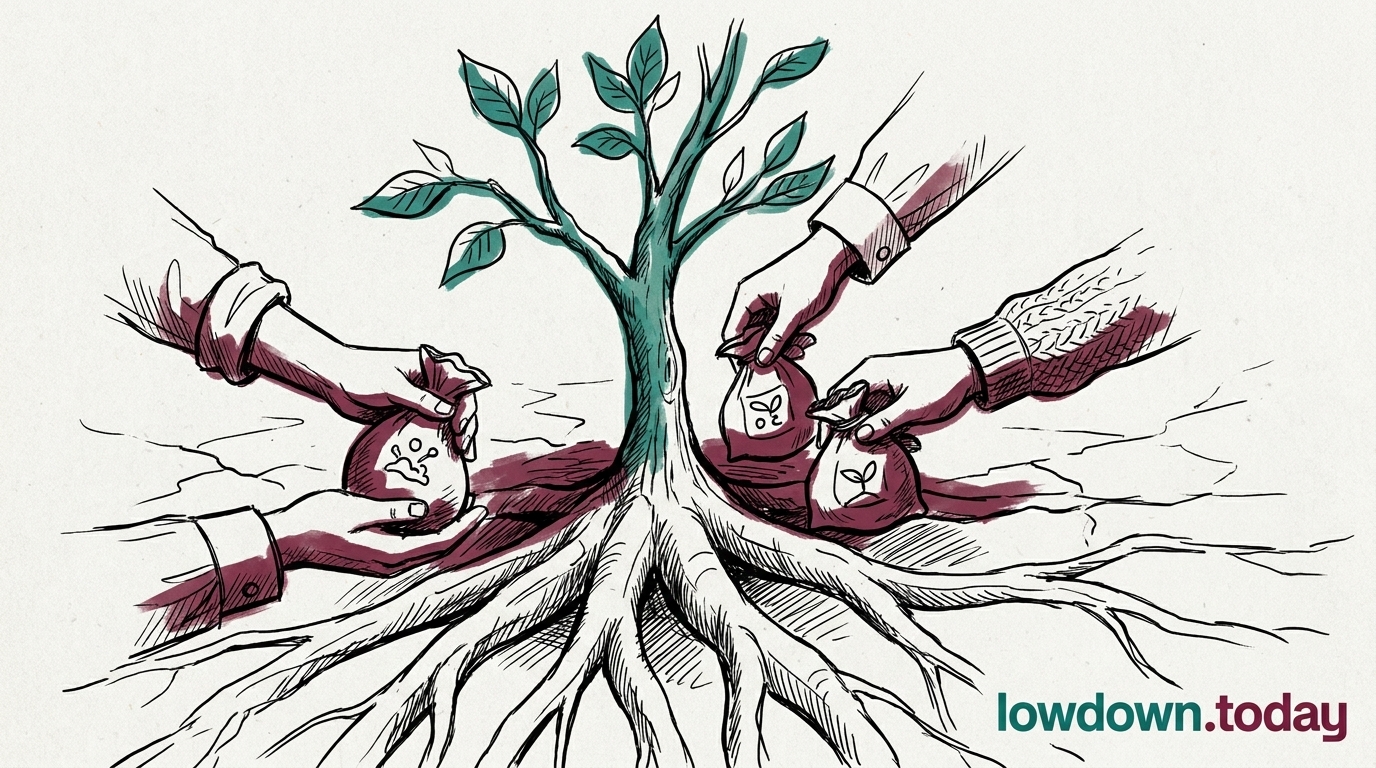
The Department for Science, Innovation and Technology (DSIT) named seven companies in the Sovereign AI Unit (SAIU) first cohort on 16 April 2026: Callosum took the only equity cheque, and six others (Prima Mente, Cosine, Cursive, Doubleword, Twig Bio, Odyssey) each received up to one million GPU hours via the AI Research Resource (AIRR) plus ten cost-free visas with same-day processing. 1

The SAIU exists because Britain has almost no domestic equivalent to AWS, Azure, or Google Cloud; UK AI companies have historically rented their training compute from US hyperscalers, which is expensive in sterling and exposes them to export-control risk. The £500m facility was announced as the answer. Until this week it existed only as a policy paper; the naming now anchors founder expectations on sector mix, equity ticket size, and compute allocation. One million GPU hours, priced against current H100 cloud rates, is roughly equivalent to a £3-5m private-cloud contract at zero upfront cost.

Seven selections mapped to seven technical niches. Callosum writes chip-optimisation software; Doubleword builds inference infrastructure; Cosine targets sovereign defence AI; Cursive builds continuous-learning agents; Twig Bio applies AI to biomanufacturing strain design; Prima Mente trains foundation models for brain disease; Odyssey builds multi-modal world models. Every cohort member sits at the infrastructure or model layer; DSIT backed no consumer AI or agent-application firms.

The announcement venue carried a second signal. DSIT held the launch at Wayve's London HQ one day after the autonomous-driving startup landed chip-vendor investment detailed in the next event; the same three chip architectures sit under Nscale's $2bn build-out . The cohort, the Wayve round, and the Nscale infrastructure spine form a visible hardware-policy loop. Founders outside that ecosystem should read the selection signal accordingly; DSIT says 30-plus firms remain in the pipeline, and the second cohort's breadth will test whether SAIU is a sector programme or a hardware-alliance endorsement wearing sovereign-policy clothes.

Deep Analysis

In plain English

The UK government has picked seven artificial intelligence companies to give either a cash investment or free use of supercomputers. Think of free supercomputer time as lending a factory for nothing: the companies can build and test their software without paying millions for the computing power they need. The scheme also offers ten fast-track work visas per company, so they can hire international talent quickly. Until this week, the £500m scheme existed only as a policy announcement; naming actual companies makes it real.

Deep Analysis
Root Causes

Post-2022 concentration of data-centre silicon supply among three US/UK-IP chip vendors (AMD, Arm, Qualcomm) created a dependency the UK government classified as a sovereignty risk in its 2023 DSIT supply-chain review, which recommended direct state equity to domestic AI infrastructure firms rather than open grant competition.

The EU AI Act's compute thresholds (published February 2025) set a benchmark: systems above 10^25 FLOPs require notification to national authorities. That regulatory architecture created an incentive for UK-based AI companies to remain under UK jurisdiction rather than domicile in the EU, making a UK state-backed compute pool commercially attractive for the first time.

What could happen next?
  • Consequence

    If the second SAIU cohort (30+ firms in pipeline) again clusters around AMD/Arm/Qualcomm-compatible companies, at least three independent VC analysts will publicly flag procurement-concentration risk at DSIT before summer 2026.

    Short term · 0.6
  • Risk

    Callosum's equity close terms, once filed at Companies House, will set a de facto valuation benchmark that founders in the 30-plus pipeline will use to negotiate their own SAIU terms, potentially compressing DSIT's ability to lead deals at market price.

    Short term · 0.7
  • Opportunity

    The ten cost-free visas per AIRR recipient create a direct talent pipeline from non-UK AI centres; if all six AIRR companies use their full allocation, sixty senior AI researchers arrive in the UK within 12 months, with compounding spillover effects on adjacent spinouts.

    Medium term · 0.65
  • Precedent

    The SAIU is the first UK vehicle to bundle equity, compute and visas in a single instrument; if DSIT publishes an evaluation in 2027-28, its methodology will determine whether this model is replicated for life sciences and quantum or quietly discontinued.

    Long term · 0.7
First Reported In

Update #2 · Britain's innovation pipe leaks at both ends

DSIT· 22 Apr 2026
Read original
Different Perspectives
Australian Department of Defence (AUKUS AI for Acoustics partner)
Rowden Technologies holds active AUKUS AI for Acoustics contracts with the UK, US, and Australian defence establishments. The NWF's £25m investment in Rowden on 13 May brings UK sovereign capital directly into a trilateral programme, which from Canberra's perspective places additional UK government skin-in-the-game on a programme Australia co-funds and co-develops.
Sofinnova Partners (European VC co-investor in Cytospire Series A)
Sofinnova participated alongside the BBB in Cytospire's oversubscribed £61m Series A on 5 May, demonstrating that the BBB's expanded direct mandate is attracting established European specialist biotech funds rather than replacing them. European VCs see the BBB's cornerstone position as a signal reducing UK biotech execution risk rather than crowding out private capital.
Temasek (Singapore sovereign co-investor in Isomorphic Series B)
Singapore's Temasek co-invested alongside the UK's SAIU in Isomorphic's $2.1bn round, treating the same Alphabet-majority company as an acceptable sovereign co-investment target. Temasek's participation normalises the structure: multiple sovereign wealth funds backed the same round, strengthening the precedent that UK-headquartered Alphabet subsidiaries qualify for state investment.
Alphabet / Google (majority Isomorphic shareholder, Mountain View)
Alphabet co-invested via GV and CapitalG in the same Isomorphic Series B round that received UK sovereign backing, placing US corporate capital and UK public capital in the same syndicate without any governance asymmetry. SAIU's minority stake validates Isomorphic's strategic value without constraining Alphabet's control over IP, geography, or exit decisions.
DSIT / Liz Kendall, Secretary of State for Science
DSIT framed the Isomorphic investment as backing a British-founded and headquartered company advancing UK AI capability, and described the nine-day sovereign deployment sprint as evidence the government's industrial strategy is operational. The department has not addressed the ownership question, the absence of eligibility criteria, or the pace-versus-doctrine tension in the BBB mandate.
Beauhurst / UK startup data analysts
Five sub-£50m rounds closed in nine days with zero VCT-backed angel networks on any cap table, confirming the post-cut investor map is forming fast in the £4m–£40m band. The gap is structural: 36.7% of university spinouts raised below £500,000 in 2025, a tier neither the SAIU nor the BBB direct mandate touches.
