Skip to content
You can now search across every topic, entity and event.What's new
UK Startups and Innovation
22APR

Angel base shrank 7% before the cut

3 min read
17:16UTC

HMRC's first hard figures show the number of investors claiming EIS relief fell 7% to 33,220, with the same pot of money now concentrated in fewer hands.

TechnologyDeveloping
Key takeaway

Britain's angel base fell 7% in a year, before a tax change set to shrink it further.

HM Revenue and Customs (HMRC) published the 2024/25 figures for EIS (the Enterprise Investment Scheme) in May, and the headline is the people, not the pounds. The count of investors claiming EIS relief fell 7% to 33,220, down from 35,675 1. The money those angels put in held flat at £1,575m across 3,735 companies, so the same pot is now concentrated in fewer hands and a first-time founder has fewer doors to knock on to assemble early cheques.

This erosion pre-dates the April 2026 cut to VCT (Venture Capital Trust) income-tax relief, which fell from 30% to 20% and sat outside this reporting year . The 2,455 angels who dropped out did so before that cut even bit. EIS and SEIS sit at different points on the risk curve, and they moved in opposite directions.

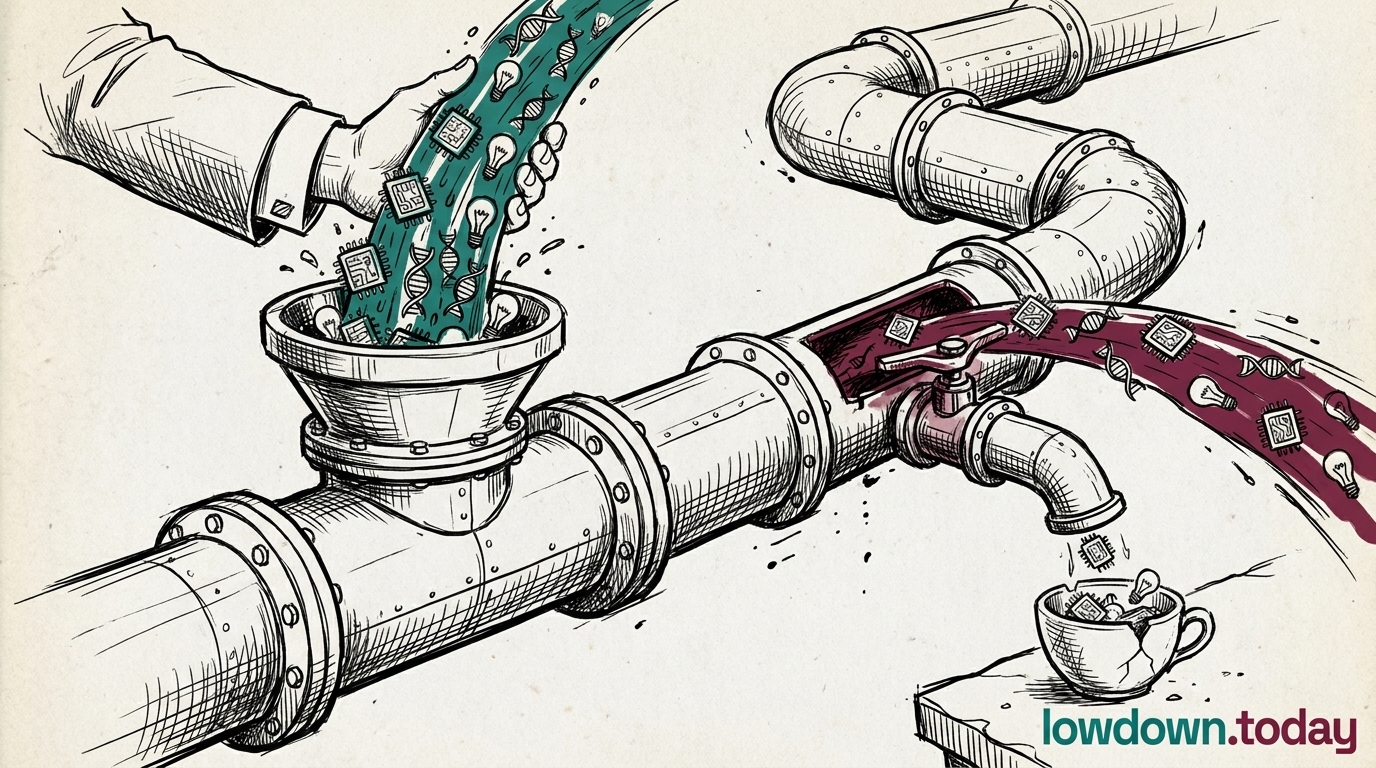
One tier below, SEIS (the Seed Enterprise Investment Scheme) went the other way. Companies raised £276m, up 14%, and applications for advance assurance rose 24% to 4,085 2. So 800-odd more companies queued for the earliest cheques in the same year that 2,455 angels stopped writing the next one up. A widening mouth and a narrowing neck describe the same funnel. London and the South East took 60% of EIS money, down from 63% a year earlier and 65% the year before that, a slow drift of seed capital out of the capital.

Deep Analysis

In plain English

The UK government runs two tax relief programmes to encourage people to invest in small startups. The Enterprise Investment Scheme (EIS) gives investors back 30p for every £1 they put in, via a reduction in their income tax bill. SEIS does the same for even earlier-stage companies, giving back 50p per £1. HMRC published data in May 2026 showing that the number of individual people using EIS fell by 7% in 2024/25. The total money invested stayed roughly flat at £1.575bn. That sounds like a contradiction, but it reflects a shift from individual angels writing small cheques to professional fund managers pooling money from multiple investors into single fund structures. The very-early-stage SEIS market is growing faster, with investment up 14%.

Deep Analysis
Root Causes

The 7% fall in EIS investor count predates the April 2026 VCT relief cut and has three structural causes independent of any single policy change.

First, the FCA's Consumer Duty, effective July 2023, raised the advice threshold for EIS recommendations from suitability to active demonstration of consumer benefit. Advisers at retail wealth managers responded by reducing EIS on model portfolio lists, cutting the distribution channel that accounts for roughly a third of EIS subscriptions per Resolution Foundation's 2024 household wealth survey.

Second, inflation in 2022-24 raised the effective tax cost of the EIS two-year minimum holding period. An investor in the 40% band who put £20,000 into EIS in 2022 received £6,000 back via income tax relief but faced 9% cumulative CPI erosion over the hold period before any capital gain, which eroded the net-of-inflation return below the advertised 30% headline relief.

Third, the rise of institutional SEIS and EIS fund managers (Octopus Ventures, Triple Point, Calculus Capital) since 2020 has steadily displaced individual angel cheques in the data, while keeping total investment flat. An Octopus Ventures EIS deployment counts as one investor in the HMRC statistics regardless of how many underlying investors the fund aggregated.

What could happen next?
  • Risk

    The April 2026 VCT relief cut will compound the EIS investor-count decline in 2025/26 data, and Wealth Club projects a 65% fall in VCT fundraising to circa £320m, removing a significant channel for Series A follow-on capital.

    Short term · Assessed
  • Opportunity

    The 14% SEIS rise and 24% advance assurance jump indicate founders have internalised SEIS eligibility as a funding design criterion, which should sustain the £276m level even in a quieter angel market.

    Medium term · Suggested
  • Meaning

    London and South East EIS share fell from 63% to 60%, a three-point shift that, if sustained, represents roughly £47m in annual EIS flow redirected toward non-Golden-Triangle companies.

    Short term · Reported
First Reported In

Update #8 · London startup raises Britain's own AI model

HMRC· 14 Jun 2026
Read original
Different Perspectives
Institute of Physics
The Institute has long argued STFC's national-laboratory infrastructure, not its grant programmes, is the binding constraint on UK physics output, and warns mothballing capacity like Clara removes capability that cannot be rebuilt on a four-year cycle. It represents the discovery-science community absorbing the reallocation the Bank's equity cheques do not touch.
Helsing
Helsing
The Munich-headquartered defence-AI firm chose Plymouth over Continental sites for a £350m manufacturing plant building underwater surveillance gliders, alongside its record raise. Its choice of postcode signals confidence in UK manufacturing capacity for defence hardware even as it looks abroad for the capital financing that hardware.
Dragoneer Investment Group, Lightspeed Venture Partners and Iconiq
The three US growth-capital firms backed Helsing's $1.8bn round at an $18bn valuation, more than doubling the mark set only a year earlier, with demand reportedly exceeding the capital on offer. Their money, not a UK sovereign vehicle, is what funds the Plymouth plant, extending a pattern of foreign capital underwriting British defence-hardware manufacturing this cycle.
British Business Bank
The Bank wrote its largest-ever direct life-sciences cheque into Alchemab and added a £6.5bn SME lending guarantee the same week UKRI confirmed the STFC cuts. It is deploying an April mandate change letting it lead venture rounds and invest directly up to £60m per company, treating equity extension rounds and small-business debt as newly within its risk appetite.
Daphni
Daphni
The Paris seed fund joined Speedinvest and three UK backers in Astral Systems' GBP23m Series A for modular fusion reactors, one of the round's five European co-investors betting on lab-to-market fusion ahead of any working commercial reactor. Unlike CuspAI's all-foreign cap table, this round kept a UK lead investor in Mercia Ventures.
EQT
EQT
EQT, appointed by the European Innovation Council to run the EUR5bn Scaleup Europe Fund, entered advanced talks for a further CuspAI stake reported on 3 July, the fund's first pursuit of a UK-founded winner. A closed deal would put EU sovereign capital, not a UK vehicle, on the cap table of a company Britain's own funds passed over.
