Venture Capital Trusts
UK investment trusts offering small-company tax relief, cut from 30% to 20% in April 2026.
Last refreshed: 4 July 2026 · Appears in 1 active topic
Who fills the £600m seed-tier hole the VCT cut created?
Timeline for Venture Capital Trusts
£6.5bn guarantee targets the debt tier
UK Startups and InnovationMentioned in: Spinout deals fall 33% as seed dries up
UK Startups and InnovationMentioned in: BBSRC backs 21 Fellows with £10m
UK Startups and InnovationState £50m backs the tier funds skip
UK Startups and InnovationMentioned in: Angel base shrank 7% before the cut
UK Startups and InnovationBackground
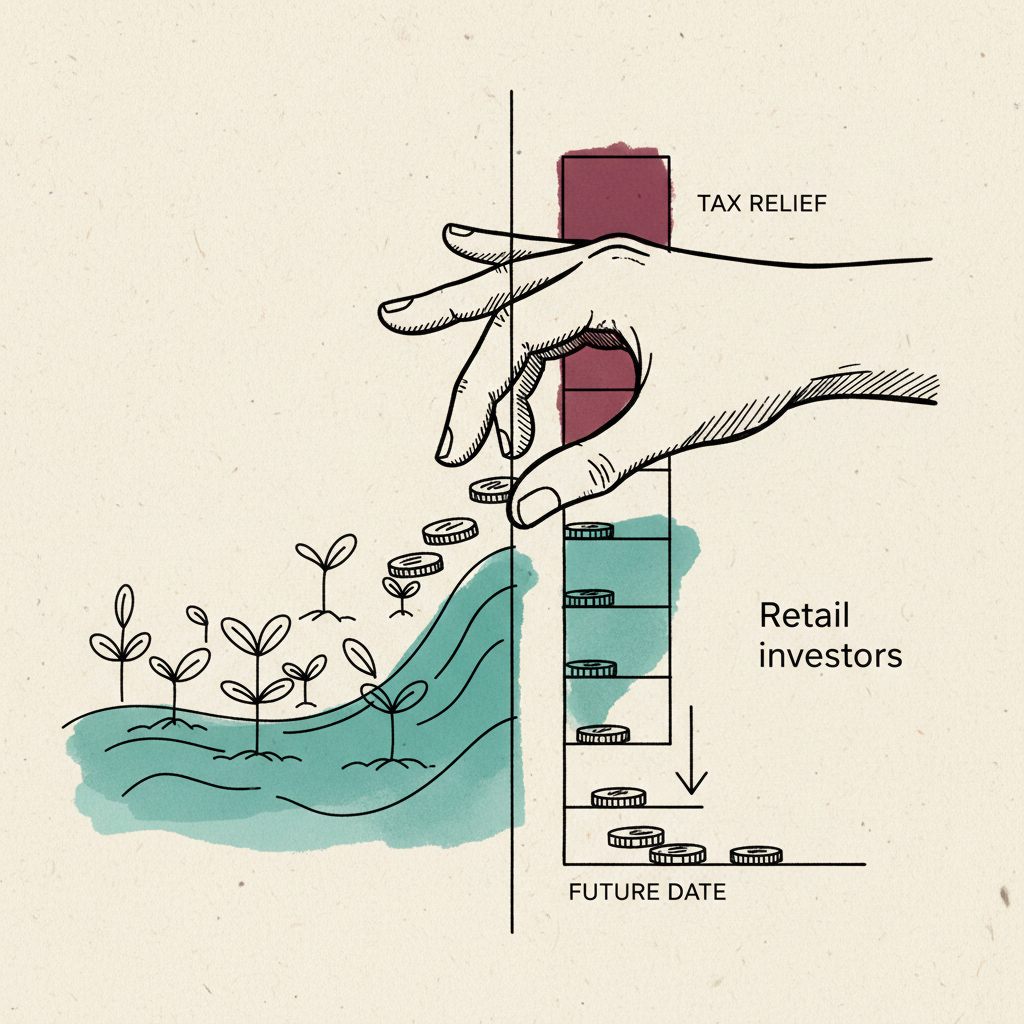
The 30% income tax relief that defined VCTs for 30 years was cut to 20% on 6 April 2026, the first reduction since Venture Capital Trusts were introduced by the Conservative government in the Finance Act 1995. The cut arrived alongside EIS reforms, as part of a package the government projects will unlock approximately £100m of additional annual investment in early-stage UK companies.
VCTs are listed companies that pool retail investor capital and deploy it into portfolios of qualifying small businesses. The 2025/26 tax year ended with a record-breaking £917.7m raised (Wealth Club, third-highest ever), driven by a Deadline rush before the 6 April cut. Historical precedent is Stark: when relief was cut from 40% to 30% in 2006/07, annual fundraising collapsed 65% and took sixteen years to recover. A Focaldata survey found 43.5% of current VCT investors say they will invest less and 41.6% say they will stop entirely. Industry analysis projects a floor of approximately £320m for 2026/27, implying roughly £600m of early-stage capital that simply will not exist at the sub-£2m ticket range where VCTs dominate.
The downstream evidence for that £600m shortfall is now visible. On 27 May 2026, the British Business Bank made a £50m cornerstone commitment to Longwall Ventures Fund 4 via its Enterprise Capital Funds programme, explicitly targeting the £500k to £2m band that VCT relief historically anchored. The GlobalData headline of a record $10.5bn in UK venture funding for January to April 2026 conceals the bifurcation: deal volume fell 2% and over 40% of capital sits in three mega-rounds (Nscale, Wayve, Ineffable). State capital is now the structural floor of early-stage deeptech, not a supplement to private incentive. The gap kept widening through the summer: British Business Bank data published 2 July showed university spinout equity deals down 33% by count and 51% by value in 2025, and by late June private managers, not a public replacement scheme, were doing the backfill work, including Seedcamp's record $320m fund close.