Skip to content
Briefings are running a touch slower this week while we rebuild the foundations.See roadmap
UK Local Elections 2026
10APR

Lib Dems ask FCA to probe Farage crypto stake

2 min read
18:20UTC

Lowdown

PoliticsDeveloping
Key takeaway

A second regulator is now asked to look at Farage personally, on a rulebook distinct from party donations.

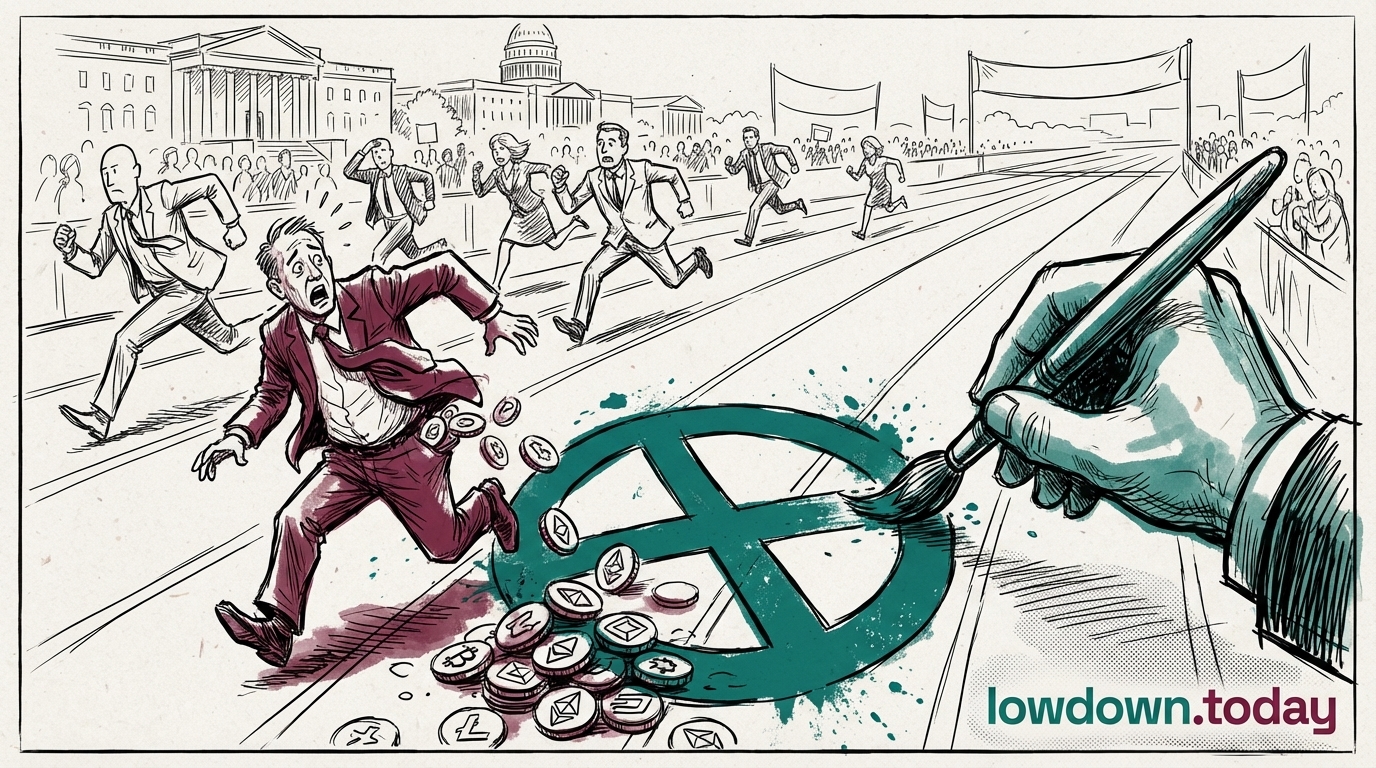
Daisy Cooper, Liberal Democrat deputy leader, wrote to Financial Conduct Authority (FCA) chief executive Nikhil Rathi on 14 April 2026 requesting a formal investigation into Nigel Farage's involvement with Cryptocurrency firm Stack BTC. 1 Cooper's letter alleges Farage appeared in Stack BTC promotional material claiming a £2 million bitcoin purchase on the firm's behalf while personally holding a £215,000 stake representing roughly 6% of the company, which she argues could constitute market abuse and conflict of interest. The FCA confirmed it would review the letter and respond directly.

This is a personal-finance thread, not a donations story. The FCA's jurisdiction is personal market conduct under financial services law; the Radom Pay wallet problem sitting with the Electoral Commission sits under electoral law. Different regulators, different rulebooks, different evidentiary standards. Both threads now reach into the final three weeks of the campaign, alongside the Christopher Harborne £12m donor record already on the register .

At this stage the FCA has received a letter, not opened an investigation. Cooper's framing is a regulatory request; any finding would come after polling day on 7 May regardless of whether the Authority acts.

Deep Analysis

In plain English

Nigel Farage is the leader of Reform UK. He appeared in publicity material for a cryptocurrency company called Stack BTC, which claims to help people buy bitcoin. The publicity suggested Stack BTC had bought £2 million of bitcoin. At the same time, Farage personally owned a £215,000 stake in Stack BTC, representing roughly 6% of the company. Daisy Cooper, the deputy leader of the Liberal Democrats, wrote to the head of the Financial Conduct Authority (the FCA, which is the UK's financial regulator) asking it to investigate whether this constitutes market abuse. Her argument is that promoting an investment while personally benefiting from it without declaring that interest may break financial services rules. This is separate from questions about Reform's party-level crypto donations. It concerns Farage's personal financial conduct.

Deep Analysis
Root Causes

The FCA complaint arises from a structural gap in how British political and financial regulation intersects.

The Electoral Commission regulates party-level donations and expenditure under the Political Parties, Elections and Referendums Act 2000. It has no jurisdiction over personal financial conduct by party leaders that does not involve a formal donation or expenditure.

The FCA regulates market conduct by persons who hold financial interests in regulated or unregulated investments. Cryptocurrency firms like Stack BTC are not currently FCA-authorised for mainstream retail investment, but the FCA can investigate promotional material for any investment vehicle if it believes the material was misleading or if the person promoting it had undisclosed financial interests.

Farage's situation falls in the gap: his Stack BTC stake is a personal financial matter, not a party donation; but his promotional activity for the firm, while holding that stake, may trigger FCA scrutiny of his personal conduct as someone promoting an investment in which he has a material interest.

What could happen next?
  • Risk

    An FCA investigation running through the campaign period creates ongoing negative coverage for Reform UK regardless of its eventual outcome, as each stage of a financial conduct investigation generates news independently of any finding.

    Short term · 0.72
  • Precedent

    If the FCA determines that Farage's promotional activity constituted market abuse, it would be the first application of financial services market abuse rules to a senior elected politician's personal investment conduct.

    Long term · 0.42
  • Consequence

    The FCA complaint adds personal financial regulatory risk to the party-level Electoral Commission and crypto donation threads, creating a multi-regulator picture that Reform's communications team must manage simultaneously in the final weeks.

    Immediate · 0.8
First Reported In

Update #4 · 22 Days to Go: Greens Take a Reform Seat in Kent

CoinTelegraph· 15 Apr 2026
Read original
Different Perspectives
Welsh Government (Plaid Cymru under Rhun ap Iorwerth)
Plaid's Cardiff minority government relies on Green confidence-and-supply with no written agreement, the same arrangement that collapsed in Scotland in 2023. Green Westminster polling fell from 17% to 15% in two weeks as Greens took governing responsibility; whether that deflation reaches Cardiff is the near-term test for ap Iorwerth's majority.
Reform-run English county councils (Essex, Suffolk, Norfolk)
Essex named a City-trained efficiency lead over a budget where statute has already committed roughly 98% of spend; Suffolk simultaneously issued a pre-action letter against the reorganisation that will dissolve it. Reform-controlled authorities are spending public money on litigation their own sector lawyers expect to fail while their DOGE units face statutory constraints they cannot override.
Scottish Government (SNP under John Swinney)
Swinney rested the 72-55 Holyrood mandate on the combined SNP-Green bloc rather than his own party's 58 seats, seven short of the trigger he named; he has publicly conceded he has no plan if Westminster holds its veto. The constitutional argument is made; the enforcement route does not exist.
UK Government (MHCLG and Downing Street)
MHCLG has until 12 June to respond to Suffolk's pre-action letter and faces three further counties at the same stage; Downing Street rejected Holyrood's Section 30 demand as a spokesperson lobby line rather than a written statement, declining to open formal inter-governmental correspondence. Both decisions compress Reform's two main legal challenges into the same two-week window.
UK Government (Labour)
Westminster framed the youth justice transfer as a culmination of prior work rather than a precedent, refused a Section 30 order before the request arrived, and omitted both the Representation of the People Bill and any Wales Bill from the 13 May King's Speech. Starmer is described as open to a devolved-leaders summit in June.
Reform UK
Reform UK
Essex, Norfolk and Suffolk filed pre-action protocol letters framing their LGR challenge as mandate-consistent, while 22 Reform councillors departed in 14 days at an annualised rate nearly three times the 10 percent projection. Richard Tice defended the Harborne 5 million pound gift as unconditional, with no acknowledgement of Farage's two contradictory accounts on record.