Skip to content
You can now search across every topic, entity and event.What's new
UK Local Elections 2026
3AUG

England loses 96 councils by 2028

2 min read
15:31UTC

MHCLG confirmed on 16 July that 134 councils will merge into 38 unitary authorities across 14 English counties, with elections to the new bodies in May 2027.

PoliticsDeveloping
Key takeaway

England's 134 county and district councils will collapse into 38 unitary authorities across 14 counties by April 2028.

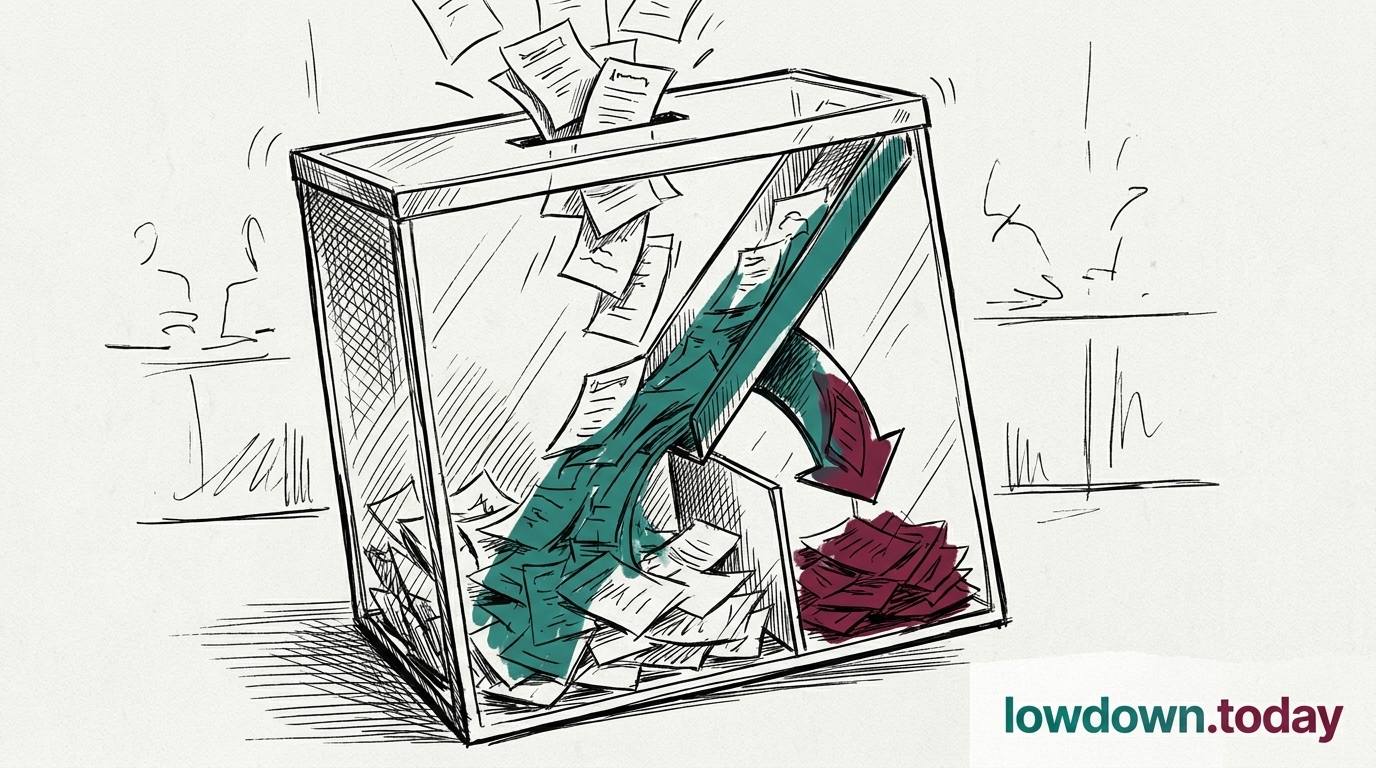
The Ministry of Housing, Communities and Local Government (MHCLG) confirmed the final reorganisation decisions for 14 county areas on 16 July 2026, replacing 134 county and district councils with 38 new unitary authorities 1. A unitary authority is a single council that runs every local service, replacing the current split between a county tier and a district tier. Communities Secretary Steve Reed set elections to the new bodies for May 2027 and vesting day, when they legally take over, for 1 April 2028, with Surrey a year earlier.

Transition funding runs above £1m per new unitary, more than £63m across the programme 2, money spent on merging councils rather than on the services they run. England is about to lose 96 of its councils in a single wave, and reorganisation on this scale decides who abolishes whom and who votes for the successor authorities in 2027.

The decision landed the day after our last briefing and four days before Andy Burnham entered Downing Street. The Local Government Association, the cross-party body for councils, had urged the incoming prime minister through its new chair Eamonn O'Brien to adjust the timetable ; the outgoing government fixed it instead, leaving Burnham to deliver a schedule he did not set.

Deep Analysis

In plain English

Local government reorganisation means merging England's old two-tier system, county councils plus separate district councils, into single 'unitary' authorities that run everything from bin collections to social care. On 16 July 2026 the government confirmed the final shape for 14 county areas: 134 existing councils will become 38 new ones. Residents in the affected areas will vote for councillors to the new authorities in May 2027, but the old councils keep running services until 'vesting day', 1 April 2028, when the new authorities formally take over (Surrey moves a year earlier, in 2027). For now, nothing changes day to day.

Deep Analysis
Root Causes

Adult social care and children's services now consume the overwhelming majority of county budgets, leaving little genuinely discretionary spend and making the two-tier structure's duplicated overheads, county and district each running separate planning, environmental health and back-office functions, harder to justify.

The transition funding of £63m-plus, set against 134 councils merging into 38, is modest. It signals ministers expect the reorganisation to become self-funding within a few years rather than needing sustained central subsidy, the same efficiency bet CCN has made publicly.

First Reported In

Update #13 · England's council map redrawn as five sue

UK Parliament· 24 Jul 2026
Read original
Causes and effects
This Event
England loses 96 councils by 2028
The largest redrawing of England's local-government map since the 1970s is now fixed for 14 county areas.
Different Perspectives
Democratic Unionist Party
Gavin Robinson rejects Sinn Féin's characterisation of the institutions as precarious, says the DUP is "committed to" delivering for the public, and will not be "goaded" into a dispute he attributes to Treasury funding rather than unionist bad faith.
Sinn Féin
Sinn Féin
Conor Murphy says Stormont power-sharing is in "a precarious place" and blames the DUP for lacking "the political will to make it work", while insisting his own party remains "wedded to power-sharing".
Council leaders in West Sussex and Cambridgeshire and Peterborough
Officers must recruit staff and set shadow budgets through the autumn for boundaries Whitehall has not yet drawn, after October's deferral cost three months of planning time without settling anything, while their May 2027 election date has not moved.
Restore Britain
Restore Britain
Restore Britain beat the Conservatives into fifth place in its first mayoral attempt, evidence Rupert Lowe's party has already displaced the Tories as the default home for voters leaving the Conservative column on Reform's right flank.
Scottish National Party
The SNP, through deputy leader Keith Brown, calls Sarwar's peerage exit "the most undemocratic trick in the Westminster book", arguing Scottish Labour now runs on a caretaker leader chosen by patronage rather than by Scottish voters.
Conservative Party
Conservative Party
The Conservatives finished fifth in Greater Manchester, beaten by Restore Britain, a party founded this year, in a contest the Tories once treated as a two-horse race against Labour.
