Skip to content
Welcome, thoughtbot's Giant Robots listeners!Start here
Russia-Ukraine War 2026
27MAR

Ukraine deploys 228 specialists to Gulf

2 min read
20:48UTC

Ten-year defence deals with Saudi Arabia and Qatar turn combat experience into an export commodity. A UAE agreement is expected imminently.

ConflictDeveloping
Key takeaway

Gulf states are paying for Ukrainian combat expertise the US declined to support.

Ukraine signed 10-year defence deals with Saudi Arabia and Qatar in March 2026, deploying 228 counter-drone specialists across five Gulf states.⁠1 A deal with the United Arab Emirates is expected imminently.

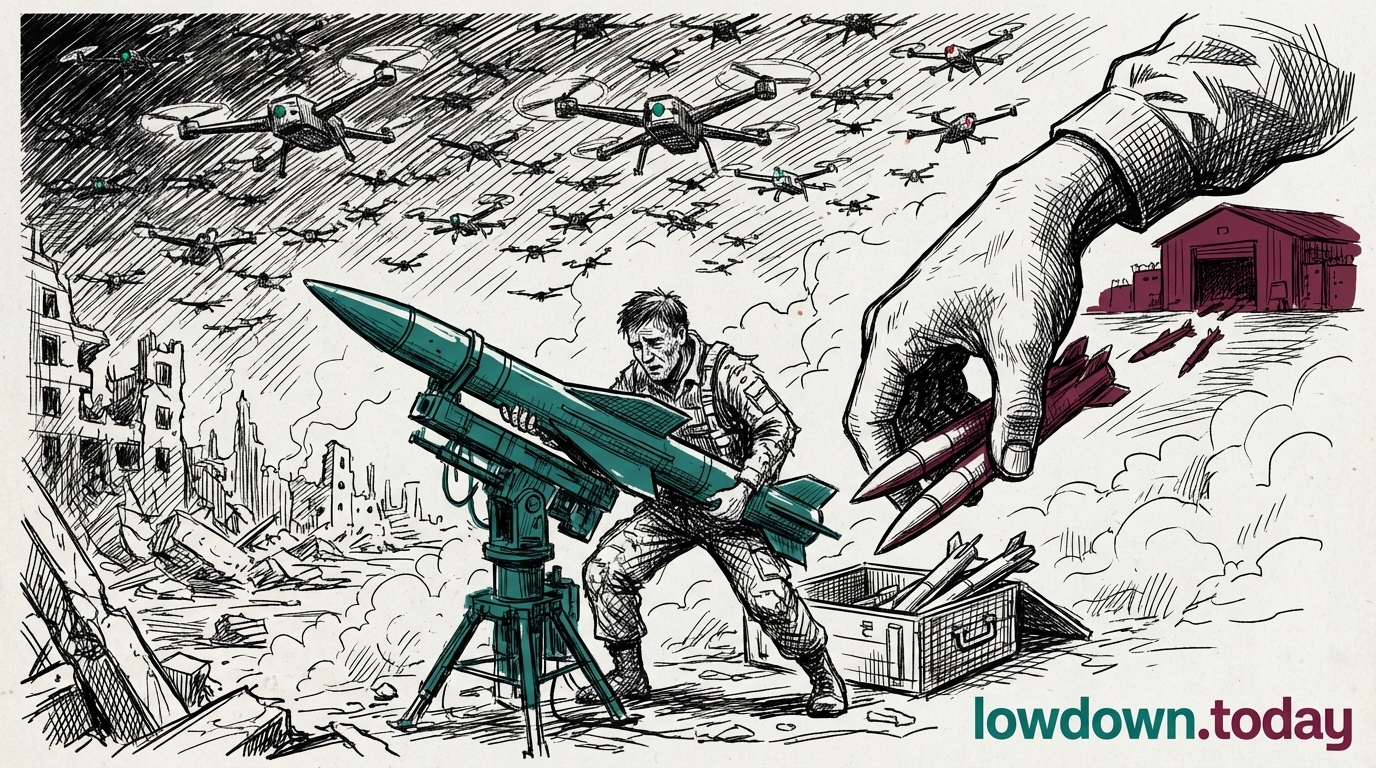
The personnel deployments are the most commercially significant element. Zelenskyy proposed drone combat hubs to The White House in August 2025; the US dismissed the offer. The Gulf states did not. At $2,500 to $5,000 per interceptor versus $13.5 million for a PAC-3 Patriot, Ukrainian systems offer a cost advantage of roughly 3,000 to 1. Gulf buyers gain operational counter-drone capability years faster than domestic development would allow. For Ukraine, these deals create a revenue stream independent of Western military aid.

Deep Analysis

In plain English

Ukraine has spent three years developing the world's most battle-tested drone warfare doctrine. Now it is selling that expertise to Gulf states that face real drone threats from Houthi and Iranian forces. The 228 specialists are essentially working as counter-drone consultants, embedded in five Gulf countries. The 10-year deal structure means Ukraine is not just selling equipment; it is selling knowledge and presence. The US had the opportunity to partner on this and declined in August 2025. The Gulf states accepted the same offer.

Deep Analysis
Root Causes

Zelenskyy proposed drone combat hubs to The White House in August 2025 and was dismissed. The Gulf pivot reflects a pragmatic reorientation toward buyers with both the need and the financial capacity to pay for Ukrainian expertise, without the political constraints that made US engagement difficult.

The 10-year deal structure also reflects Ukraine's need for long-term revenue certainty. Annual military aid packages from Western donors are subject to political cycles; a decade-long commercial contract with Gulf states provides a planning horizon that aid cannot.

What could happen next?
  • Consequence

    Ukraine establishes a sustainable revenue stream from Gulf defence relationships that reduces dependence on Western military aid and provides long-term financial planning certainty.

    Short term · High
  • Opportunity

    Gulf states gain combat-proven counter-drone capability far faster and cheaper than domestic development would allow, with practitioners who have real operational experience.

    Immediate · High
  • Risk

    Specialist deployments create potential intelligence exposure for Ukraine and create dependency dynamics that could complicate Ukrainian foreign policy if Gulf state interests diverge.

    Medium term · Medium
  • Precedent

    Ukraine's model of monetising combat expertise through personnel deployments will be studied by other conflict-experienced smaller militaries seeking to diversify beyond traditional hardware exports.

    Long term · Medium
First Reported In

Update #3 · Anduril wins $20 billion counter-drone deal

Euromaidan Press· 30 Mar 2026
Read original →
Causes and effects
This Event
Ukraine deploys 228 specialists to Gulf
Monetises Ukraine's three years of combat-proven counter-drone doctrine through personnel deployment and long-term contracts.
Different Perspectives
Government of Latvia
Latvia abstained on 22 September when the EU renewed its individual sanctions for 36 months at the price of delisting Alisher Usmanov and Mikhail Fridman, and promised national sanctions of its own. Riga's abstention marks how far a frontline member state will go to keep listed names listed.
India's Ministry of External Affairs
After the House passed the Graham bill on 16 September, India's foreign ministry said it would keep buying energy on market terms and protect its trade. Russia supplied 30.3% of India's crude imports in fiscal 2026, so the tariff decision due around 18 October falls directly on New Delhi.
Kaja Kallas, EU foreign policy chief
Kallas answered the US licence on 10 October by saying Europe would not ease pressure, and EU ministers adopted a 22nd package of nearly 1,600 listings two days later. Brussels is tightening as Washington loosens, though TASS reported the package adds no significant new trade restrictions.
Donald Trump and the US Treasury
The Treasury licensed Russian diesel imports until 7 April 2027 on the day of Trump's call with Putin, and Trump then told reporters Ukraine should find a new leader. Washington is trading sanctions relief for fuel supply while pressing Kyiv to halt the refinery strikes behind the shortage.
Kremlin and Deputy Prime Minister Alexander Novak
After the 9 October call the Kremlin said Russia was ready to supply oil and petroleum products to American and global markets, and Novak brought forward the end of diesel export curbs. Moscow is selling the shortage back as goodwill, with volumes that Decree No. 686 now hides from outside checks.
Volodymyr Zelenskyy, President of Ukraine
Zelenskyy called GL 135 an investment in prolonging the war and offered to stop striking Russian refineries if Russia stops destroying Ukraine's energy system. Answering Trump's call for a new leader, he set a total 60-day ceasefire as the condition for elections, which puts the next move on Moscow.
