Skip to content
Welcome, thoughtbot's Giant Robots listeners!Start here
Russia-Ukraine War 2026
27MAR

Berlin startup priced ahead of delivery

3 min read
20:48UTC

Stark Defence is in talks to raise about €300 million at a roughly €2.5 billion valuation, double its prior mark, despite no demonstrated volume production; Peter Thiel is confirmed as an investor.

ConflictDeveloping
Key takeaway

European defence-AI capital is pricing the option to produce, not proven production.

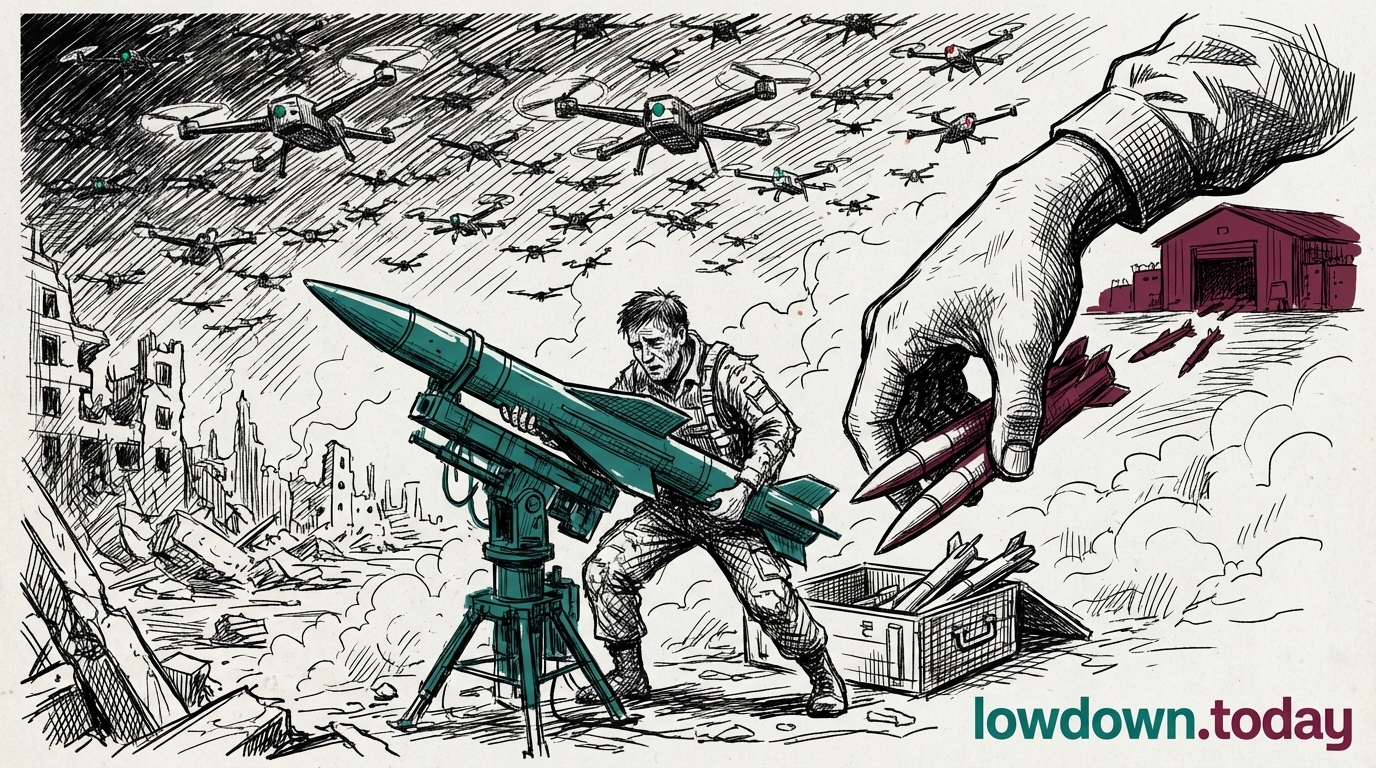
Berlin's Stark Defence, founded in 2024, is in talks to raise about €300 million at a roughly €2.5 billion valuation, more than double its prior €1 billion mark⁠1. The company has not demonstrated production at the volumes military procurement requires, so investors are paying twice the price for an unchanged delivery record. Peter Thiel is confirmed as an investor, and the flagship Virtus autonomous loitering munition, a drone that loiters over a target area before striking, remains Stark's only product while the round stays open.

Stark already holds a slice of the Bundeswehr's €840 million framework alongside Helsing and Rheinmetall, and that existing government contract is the backdrop against which the valuation doubled on no disclosed output. The gap to Helsing's $18 billion mark is the proven-in-field premium: Helsing's HX-2 has combat credentials, while Stark's Virtus has a valuation and a backer.

The round prices an option on conversion, and the prototype-to-production gap is the risk the capital is underwriting. The same delivery-versus-valuation tension runs through this whole briefing: a funded Anduril books a loss against its CCA win, Skydio prices mass below the cost of a single exquisite ISR platform, and a Berlin prototype house is marked at billions before building at scale. In each case the capital buys the option to produce rather than production itself. The raise is in discussions, not signed, and Thiel's participation is reported via the Financial Times rather than confirmed by a closed round.

Deep Analysis

In plain English

Stark Defence is a Berlin-based defence startup founded in 2024. It makes a single product: the Virtus, an autonomous drone designed to loiter above a battlefield and then dive into a target. No confirmed volume production exists yet. The company is in talks to raise €300 million at a €2.5 billion valuation, double its previous €1 billion mark. PayPal co-founder Peter Thiel has confirmed his investment. Stark already holds a position in a €840 million German military contract framework alongside Helsing and Rheinmetall; the framework provides access to procurement but does not guarantee Stark-specific purchase orders.

What could happen next?
  • Risk

    Stark Defence's EUR 2.5 billion valuation without volume production creates a correction risk if Bundeswehr framework task orders do not materialise within 12-18 months; a failed follow-on round would mark down all European autonomous weapons startup valuations.

  • Opportunity

    Peter Thiel's confirmed participation will attract co-investment from US family offices and sovereign wealth funds that follow Thiel's deal flow into European defence tech, bringing USD-denominated capital into a sector that has primarily accessed EUR-denominated institutional funding.

First Reported In

Update #13 · Air Force shuts primes out of drone wingman

ad-hoc-news.de· 25 Jun 2026
Read original →
Different Perspectives
Government of Latvia
Latvia abstained on 22 September when the EU renewed its individual sanctions for 36 months at the price of delisting Alisher Usmanov and Mikhail Fridman, and promised national sanctions of its own. Riga's abstention marks how far a frontline member state will go to keep listed names listed.
India's Ministry of External Affairs
After the House passed the Graham bill on 16 September, India's foreign ministry said it would keep buying energy on market terms and protect its trade. Russia supplied 30.3% of India's crude imports in fiscal 2026, so the tariff decision due around 18 October falls directly on New Delhi.
Kaja Kallas, EU foreign policy chief
Kallas answered the US licence on 10 October by saying Europe would not ease pressure, and EU ministers adopted a 22nd package of nearly 1,600 listings two days later. Brussels is tightening as Washington loosens, though TASS reported the package adds no significant new trade restrictions.
Donald Trump and the US Treasury
The Treasury licensed Russian diesel imports until 7 April 2027 on the day of Trump's call with Putin, and Trump then told reporters Ukraine should find a new leader. Washington is trading sanctions relief for fuel supply while pressing Kyiv to halt the refinery strikes behind the shortage.
Kremlin and Deputy Prime Minister Alexander Novak
After the 9 October call the Kremlin said Russia was ready to supply oil and petroleum products to American and global markets, and Novak brought forward the end of diesel export curbs. Moscow is selling the shortage back as goodwill, with volumes that Decree No. 686 now hides from outside checks.
Volodymyr Zelenskyy, President of Ukraine
Zelenskyy called GL 135 an investment in prolonging the war and offered to stop striking Russian refineries if Russia stops destroying Ukraine's energy system. Answering Trump's call for a new leader, he set a total 60-day ceasefire as the condition for elections, which puts the next move on Moscow.
