Skip to content
You can now search across every topic, entity and event.What's new
Russia-Ukraine War 2026
18MAR

Iran got 800 interceptors; Ukraine 700

2 min read
11:41UTC

Eight hundred missiles consumed in three days of the Iran war exceeded everything Ukraine received over the entire winter, exposing a production bottleneck that cannot be resolved in under a year.

ConflictDeveloping
Key takeaway

US interceptor production cannot sustain two simultaneous high-intensity air defence campaigns.

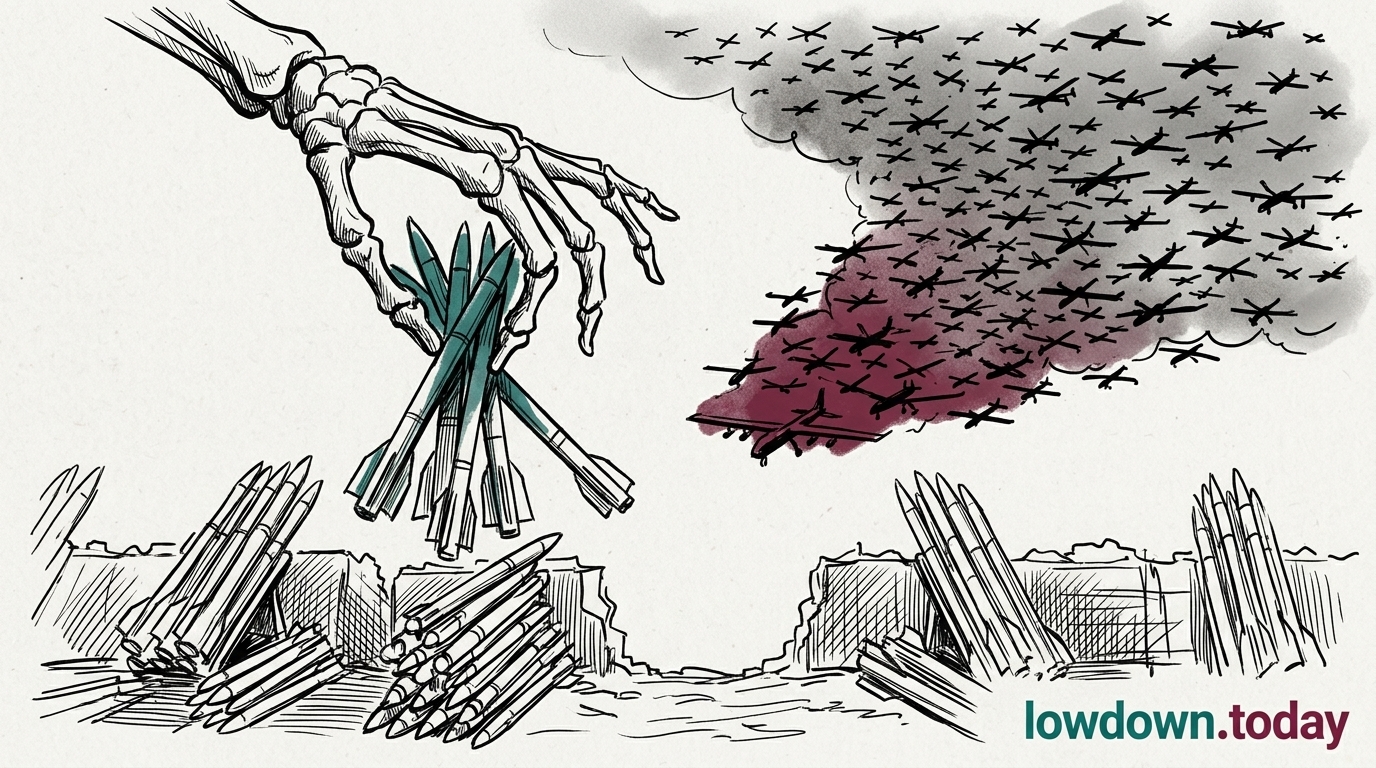
Zelenskyy told the BBC on 26 March that 800 US-made interceptors were consumed in three days of the Iran war, compared to 700 Ukraine received over its entire winter 1. The United States produces only 60 to 65 Patriot missiles per month.

Replacing the 800 rounds burned in Iran takes 12 to 13 months at current production rates. Zelenskyy's earlier observation that more Patriot interceptors were used in three days of the Iran war than Ukraine received in three years was a rhetorical comparison; the 26 March figures make it arithmetic. The THAAD expenditure of 100 to 150 rounds in the first week compounds the shortfall across a second interceptor class.

Zelenskyy confirmed that deliveries to Ukraine have not stopped. But the trajectory is clear: the $750 million PURL diversion notified the same day signals Washington is prioritising restocking over resupply. France's commitment of eight SAMP/T NG air defence systems becomes a more important stopgap with each week the American production bottleneck persists.

The production constraint is physical, not political. Propellant, seeker heads, and testing capacity all take 18 months to surge. No amount of congressional goodwill changes the number of missiles that leave the factory floor each month.

Deep Analysis

In plain English

Imagine there are only 65 bullets produced each month for a very expensive gun. Ukraine was given 700 over the whole winter. Then, separately, 800 were fired in just three days during the Iran war. Zelenskyy is pointing out the maths: the US cannot supply both wars at once. The gun that protects Ukraine from Russian drones uses the same bullets being spent in the Middle East. Until production speeds up — which takes 12-18 months at minimum — one theatre will go short.

Deep Analysis
Root Causes

The interceptor shortage has two structural roots.

US Patriot missile production was scaled for Cold War deterrence scenarios, not sustained multi-theatre high-intensity conflict. The production bottleneck — propellant chemistry, seeker head manufacturing, and qualification testing — cannot be surged quickly. Raytheon has stated publicly that 18 months is the minimum lead time for a significant production increase.

The Iran war created demand that was structurally unpredictable in Western defence planning. NATO procurement cycles operate on 5-10 year horizons; simultaneous high-intensity air defence campaigns across two separate theatres were not in the baseline scenario for Patriot allocation planning.

First Reported In

Update #8 · Pentagon diverts funds; 948 drones fired

Ukrainska Pravda· 27 Mar 2026
Read original
Different Perspectives
Turkey
Turkey
Turkey, a major buyer of Russian diesel cargoes, loses that access under Moscow's first producer-binding export ban, in force from 8 July to 31 July. Ankara hosted the same week's NATO summit pledging EUR 70bn to Ukraine, sitting on both sides of the fuel-and-alliance ledger.
NATO
NATO
NATO leaders meeting in Ankara on 7 and 8 July pledged EUR 70bn in equipment, assistance and training for Ukraine across 2026, with a 2027 sustainment commitment and a $40bn Drone Edge counter-drone initiative. European allies now fund the vast majority of that package, filling the gap left by Washington's idled crude waiver.
India
India
India's state refiners continued buying discounted Urals crude as June's price fell to $63.18 a barrel, insulating New Delhi from the OFAC waiver gap still constraining Western buyers. Indian refiners could pick up diesel-export share as Russia's producer-binding ban shuts out its former customers.
China
China
China's independent refiners kept importing discounted Urals crude through June as the price fell to $63.18 a barrel, down 26% month-on-month per CREA. Beijing has said nothing on Moscow's new diesel ban, leaving Chinese refiners a likely beneficiary if Turkish and Brazilian buyers seek replacement cargoes.
United States
United States
No successor licence has been issued since General License 134C lapsed on 17 June, leaving a 26-day gap, the longest of the war, in the Russian crude waiver. Washington's silence is tightening the channel without any stated decision, as Treasury weighs whether to let it die.
Ukraine
Ukraine
Ukraine's long-range strike campaign shifted from refineries to seaborne fuel tankers crossing the Sea of Azov, cutting tracked vessel traffic 55% between 30 June and 11 July, per Starboard Maritime Intelligence. The shift targets Russia's export revenue directly rather than just domestic supply, adding pressure alongside the collapsing Urals price.
