Skip to content
You can now search across every topic, entity and event.What's new
Russia-Ukraine War 2026
23JUL

UK picks champions as EU shares the bet

3 min read
20:33UTC

The UK Sovereign AI Unit's Strategic Assets competition closes at 14:00 BST on 5 June, with second-wave contracts of up to GBP 5m each from July, advancing a national-champion model that diverges sharply from the EU's shared-procurement approach.

ConflictDeveloping
Key takeaway

Britain funds national AI champions directly while the EU shares the bet, and neither model has closed the chip gap.

The UK Sovereign AI Unit's Strategic Assets competition closes for full applications at 14:00 BST on Friday 5 June, with second-wave contracts of up to GBP 5m each expected from July 1. The unit sits inside DSIT, the UK Department for Science, Innovation and Technology, and invests in nationally strategic AI through equity stakes and compute access. Each contract runs 12 to 24 months across challenge areas including national security, cybersecurity, energy and health. The competition follows the GBP 80m procurement launched in April and the first cohort that took an equity stake in Callosum and awarded compute to six firms .

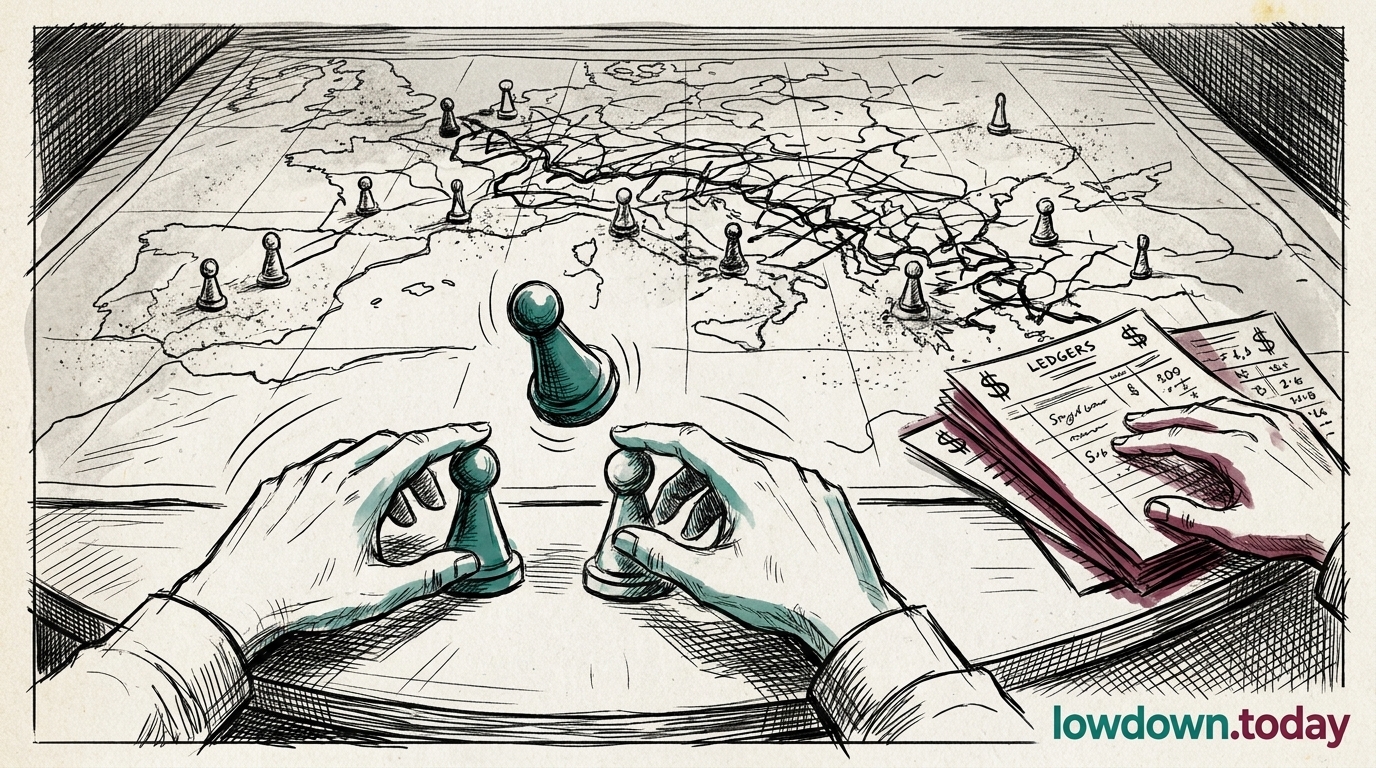
The two sovereignty models now sit side by side. Britain builds national isolation, picking domestic champions and funding them directly through equity and compute. The EU builds shared dependency through pan-EU procurement frameworks , spreading the bet across a single market. The British design concentrates risk in a handful of state-backed firms: if the chosen champions fail, the strategy fails with them. The EU design spreads that risk but ties delivery to the slowest legislative clock in the bloc, the same clock that has held CAIDA on its fourth scheduled date.

Neither doctrine reaches the layer that matters most. For British founders the offer is up to GBP 5m of non-dilutive funding within weeks, but only for projects the state has pre-selected as strategic. For European firms it is access to a shared procurement pool that depends on a law not yet adopted. Both run on US or Chinese chips, and neither has closed the compute gap Bruegel measured.


Deep Analysis

In plain English

The UK government has a programme called the Sovereign AI Unit that funds British AI companies working on national security, cybersecurity, energy and health. In June 2026 the competition for a second wave of contracts closed, with each contract worth up to GBP 5m and running for one to two years. Unlike EU programmes that mainly give grants, the UK model takes a small ownership stake in the companies it funds. The idea is that the government becomes a part-owner of promising AI firms, which gives it access to their technology and a share of any future success. The first round backed a company called Callosum and gave compute access to six other firms.

What could happen next?
  • Consequence

    If UK equity-backed AI firms outperform EU grant-funded alternatives in commercial uptake, the UK's post-Brexit industrial policy framework gains a visible advantage in attracting AI investment over EU member states.

  • Risk

    GBP 5m contracts are too small to fund sovereign AI compute infrastructure; the programme builds capability at the application layer while remaining dependent on US hyperscaler cloud for training and inference.

First Reported In

Update #7 · Sovereignty arrives, minus Brussels

UK DSIT (GOV.UK)· 3 Jun 2026
Read original
Different Perspectives
IAEA (Rafael Grossi)
IAEA inspectors logged Zaporizhzhia's 22nd loss of off-site power, ten of them in the last three months, after a thunderstorm knocked out the plant's sole surviving backup line. Grossi reads the accelerating frequency, not any single outage, as the safety signal now that the plant's redundancy is exhausted.
United States (Treasury/OFAC)
Washington has let general licence 134C, its Russian crude waiver, lapse for 36 days with no successor, the longest gap of the war. Treasury has not said whether the non-renewal reflects deliberate policy or administrative delay, leaving buyers to price in compliance risk rather than wait for clarity.
Slovakia
Slovakia
Slovakia dropped its hold-out on the EU's 21st sanctions package only after winning a 2028 guarantee phasing out Russian gas, the exact pipeline dependency, roughly 80% of its crude supply, that gave it leverage. Bratislava's climbdown clears the package but leaves the same single-veto mechanism intact for the next round.
Russia (Kremlin and general staff)
General staff chief Gerasimov claimed Donetsk captures on 18 July that ISW says it cannot corroborate, extending a pattern ISW clocked at a 5:1 exaggeration ratio earlier this year. Moscow is conditioning its public for a possible autumn mobilisation after September's Duma elections rather than acknowledging the front has stalled.
Ukraine (Zelenskyy government)
Zelenskyy dismissed his commander-in-chief, defence minister and chief of general staff within eight days, replacing Syrskyi with Drapatyi and Hnatov with Skybiuk as protesters demanded Syrskyi go and Fedorov return. Kyiv frames the sweep as a bet on manoeuvre capacity ahead of a feared Russian autumn surge, not the disarray critics read into three changes in a week.
The United Kingdom
The United Kingdom
Starmer pledged £300 million in Kyiv on 16 July toward Ukraine's Gripen E squadron, adding to the PURL expansion Trump and Rutte had announced two days earlier. London is paying into a scheme built around a shortfall NATO's own published $4bn-plus pledge does not close against Zelenskyy's roughly $15bn stated need.



