Skip to content
You can now search across every topic, entity and event.What's new
Russia-Ukraine War 2026
19JUL

Google loses €4.1bn EU Android appeal

2 min read
13:35UTC

The Court of Justice dismissed Google and Alphabet's last appeal on 2 July, confirming a €4.1bn Android fine and exhausting an eight-year antitrust fight.

ConflictAssessed
Key takeaway

Google's last Android appeal is dead just as Brussels weighs a bigger DMA fine.

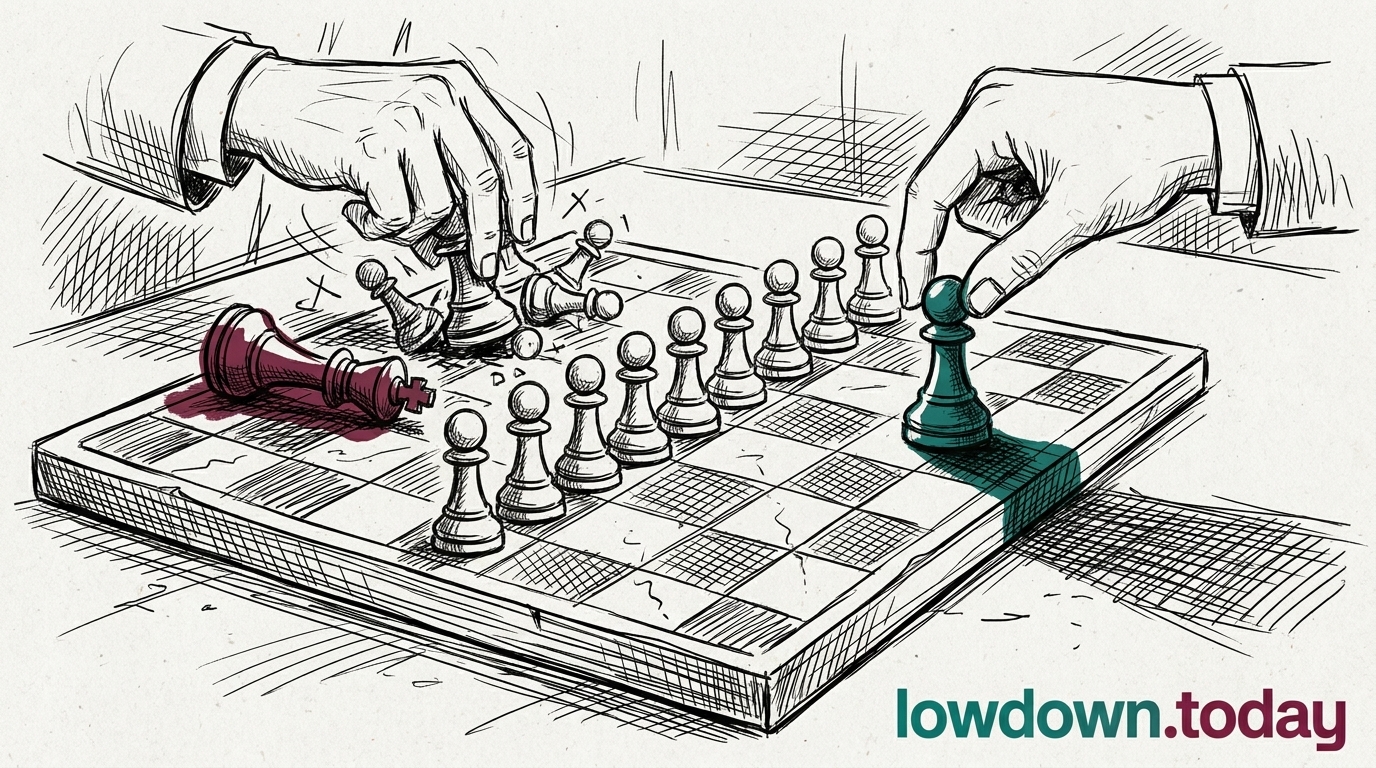
The Court of Justice of the European Union (CJEU), the EU's highest court, dismissed Google and Alphabet's final appeal on 2 July, confirming a €4.1bn fine for the company's Android practices 1. The 2018 case turned on Google forcing pre-installation of Search and Chrome as a condition of licensing its Play Store, and it is now exhausted of appeals 2.

Brussels is running a separate and newer track against Google under the Digital Markets Act (DMA), the EU law policing how dominant 'gatekeeper' platforms treat rivals. The Android fine rests on older abuse-of-dominance law; the DMA cases run on the fresh gatekeeper framework. Both hardened The Commission's posture inside the same fortnight.

The European Commission must decide a far bigger case within three weeks, and the Google verdict stiffens its hand. It has to rule on the DMA self-preferencing fine that Ursula von der Leyen has personally held since March , a freeze that has sat on the Commission's enforcement docket ever since , with a binding search-data decision due 27 July . A final court win on the oldest Google file removes any lingering doubt that large platform penalties survive appeal.

Deep Analysis

In plain English

The Court of Justice of the European Union, the EU's highest court, based in Luxembourg, has just closed the book on an eight-year-old case against Google. Back in 2018, the European Commission (the EU's competition regulator) fined Google for forcing phone makers to pre-install its Search and Chrome apps if they wanted the Play Store. Google appealed all the way up. This month's ruling was its last chance, and it lost, so the €4.1bn fine now stands for good, with no further court left to ask.

Deep Analysis
Root Causes

The eight-year gap between the Commission's 2018 decision and this month's final dismissal traces to the EU's two-tier judicial architecture: an Article 102 abuse case must clear the General Court before a CJEU appeal is even possible, and Google exhausted both stages plus a 2022 request for a fine recalculation along the way.

Brussels built the DMA's ex-ante obligations to close that lag: the search-data sharing rules due by 27 July take effect on gatekeeper designation rather than after a multi-year abuse investigation, which is why the Commission reached for the newer instrument in its live Google case instead of opening another Article 102 file.

First Reported In

Update #11 · Dresden delivers, the logic gap stays open

Court of Justice of the European Union· 8 Jul 2026
Read original
Causes and effects
This Event
Google loses €4.1bn EU Android appeal
A settled eight-year case stiffens the Commission's hand three weeks before it rules on Google's far larger Digital Markets Act fine.
Different Perspectives
The United Kingdom
The United Kingdom
Starmer pledged £300 million in Kyiv on 16 July toward Ukraine's Gripen E squadron, adding to the PURL expansion Trump and Rutte had announced two days earlier. London is paying into a scheme built around a shortfall NATO's own published $4bn-plus pledge does not close against Zelenskyy's roughly $15bn stated need.
Brussels
Brussels
The EU's 21st sanctions package missed its Coreper vote on 15 July over Greek LNG re-export rights and an Austrian bank compensation demand, the same week Hungary stalled accession clusters on procedure rather than veto. Both processes run on unanimity, so a single national interest, not Russia policy, sets the pace either can move at.
Hungary's Tisza government
Budapest refused to open EU accession Clusters 2 and 3 for Ukraine at COELA on 17 July, offering Moldova a standalone opening instead, and the question returns on 22 July. Having ended Orbán's blanket loan veto in May, it now blocks the narrower rule-of-law chapters where its own electorate is least comfortable.
Washington
Washington
Trump and Rutte expanded PURL on 14 July, letting allies fund the American interceptors and jets Washington will license but no longer gift outright. The same week, Lockheed Martin told allies it cannot guarantee PAC-3 MSE delivery timelines even after tripling output, so Washington now shapes Ukraine's air defence through a supply queue rather than a donation decision.
Moscow
Moscow
Novak ordered a study into cutting the diesel exchange quota to 10% within a week of his export ban, while June delivered Russia's first budget surplus of 2026 and National Wealth Fund liquidity above its own May forecast. Its own investors disagree: the Moscow Exchange has fallen for its longest losing streak since 1997.
Ukraine's government and its street protesters
Zelenskyy sacked Fedorov on 15 July, installed an acting SBU officer in his place, and did not move against three days of protest that followed across eight cities. He is betting that visible tolerance for dissent, timed to EU accession hearings on rule of law, outweighs whatever command dispute forced the reshuffle.
