Skip to content
Briefings are running a touch slower this week while we rebuild the foundations.See roadmap
Russia-Ukraine War 2026
5MAR

COSCO ships pay IRGC toll at Hormuz

3 min read
04:57UTC

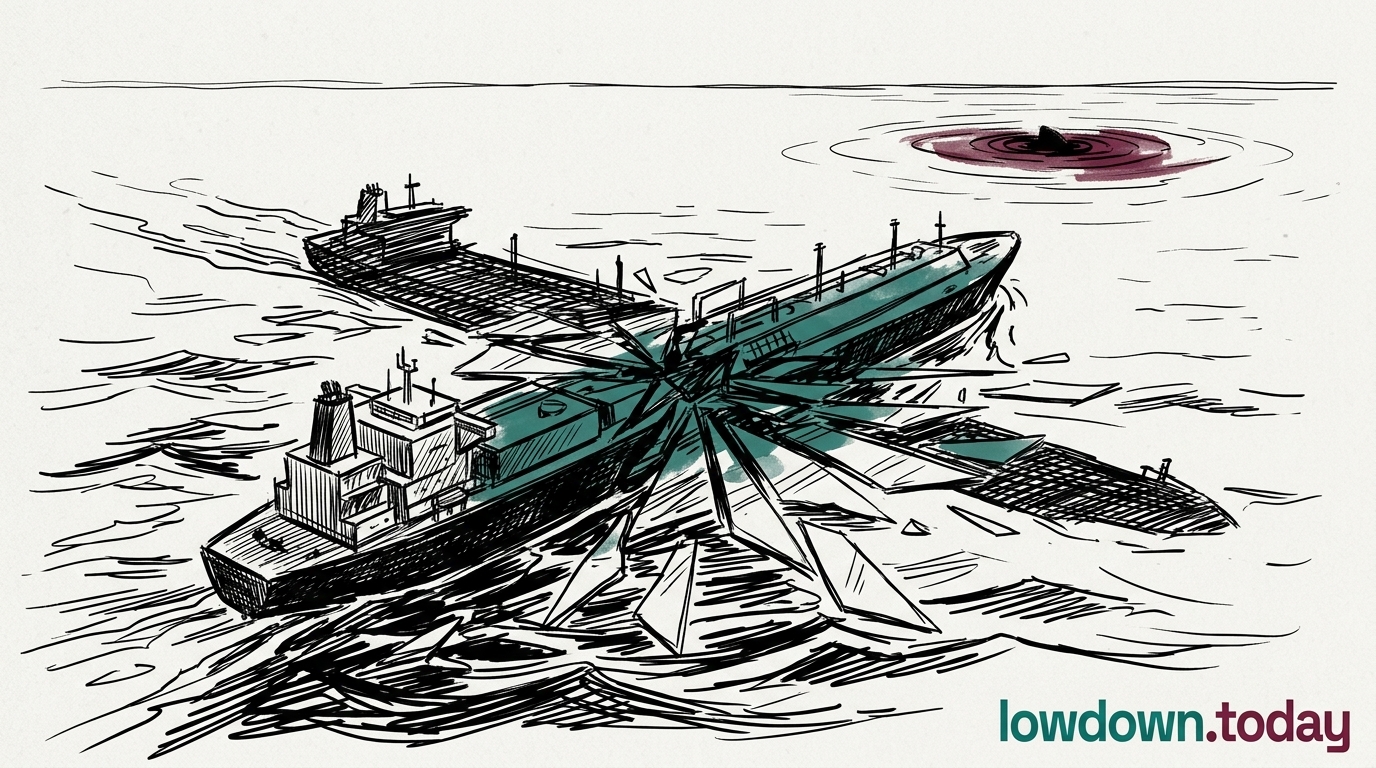
Two COSCO container vessels completed the Strait transit on their second attempt, normalising Iran's toll corridor at the container shipping level.

ConflictDeveloping
Key takeaway

China is helping normalise Iran's Hormuz toll by paying it with state-backed ships.

Two COSCO container ships, the CSCL Indian Ocean and CSCL Arctic Ocean, transited the Strait of Hormuz on 30 March. 1 They are the first container vessels operated by a major state-backed Chinese company to cross since the war began. An earlier attempt on 27 March was aborted with a U-turn near Iranian waters; the successful crossing took roughly 12 hours via Larak and Qeshm islands.

Container traffic matters differently from tanker traffic. Tankers moved through Hormuz under shadow-fleet arrangements and favoured-nation exemptions. Container ships carry manufactured goods, consumer products, and supply chain inputs. Their passage signals the IRGC's toll corridor is expanding beyond crude oil into general commerce. NBC News and Lloyd's List confirmed at least two vessels paid the IRGC approximately $2 million each to transit. 2 More than 20 vessels have used the tolled corridor since it opened.

The aborted 27 March attempt followed by success three days later suggests terms were negotiated in the interval, likely between Beijing and the IRGC directly. China is operationalising the toll at the container level, a step beyond tanker exemptions. For consumers beyond the Gulf, the toll will eventually surface not just in petrol prices but in the cost of electronics, clothing, and anything else that crosses the Indian Ocean.

Deep Analysis

In plain English

The Strait of Hormuz is the world's most important oil passage. Since the war began, Iran has been charging ships a toll to cross it, roughly $2 million per vessel. Two large Chinese state-owned ships crossed on 30 March after paying the toll. This matters because China is the world's largest trading nation. When Chinese state companies pay the toll, they signal to every other country that the toll is legitimate and here to stay. Iran's parliament is now drafting a law to make the toll permanent. The Strait went from a free international waterway to a paid checkpoint in 32 days. That cost eventually reaches consumers as higher prices on petrol, electronics, and imported goods.

Deep Analysis
Root Causes

China's supply chains depend on cross-Hormuz shipping for oil imports and Indian Ocean container transit. The two COSCO ships represent a pragmatic decision that the cost of continued blockage exceeds the political cost of paying the toll.

Beijing has leveraged its position as Iran's largest trading partner and diplomatic backer to secure transit. The aborted 27 March attempt followed by success three days later suggests direct negotiation between Chinese officials and the IRGC in the intervening period. China is operationalising its neutrality as commercial access, not political endorsement.

What could happen next?
  • Consequence

    China's state-backed commercial participation legitimises the toll system, making it far harder for any future administration to demand its removal as a non-negotiable condition.

    Immediate · 0.85
  • Consequence

    The toll corridor expanding from tankers to container shipping embeds the cost into consumer goods prices globally within weeks.

    Short term · 0.8
  • Precedent

    First instance of a major state-backed shipping operator paying an IRGC-operated toll, establishing the system as commercially viable and diplomatically tolerated.

    Medium term · 0.9
  • Risk

    Once codified in Iranian domestic law, reversing the toll requires a sovereignty concession no Iranian government can make without domestic political destruction.

    Long term · 0.8
First Reported In

Update #53 · Trump drops Hormuz goal; toll becomes law

gCaptain / Bloomberg· 31 Mar 2026
Read original
Different Perspectives
North Korea / DPRK
North Korea / DPRK
ISW confirmed the first mounting of DPRK Type-75 MLRS on Russian autonomous UGVs near Kharkiv on 7 June, the latest step in a supply axis that escalated from shells in 2023 to troops in 2024. Pyongyang gains live battlefield data on its ordnance and on Russia's uncrewed-systems programme.
IAEA / Rafael Grossi
Grossi confirmed Chornobyl structural damage with nuclear material metres away and could not attribute the ZNPP 15-hour blackout during the agreed repair window. Six ceasefires brokered and broken at ZNPP, compounded by Rosatom's May attack on IAEA neutrality, have eroded his ability to enforce the windows he negotiates.
Emmanuel Macron / France
Macron co-signed the E3 framework whose line-of-contact baseline marks Europe's first formal acceptance that 1991 borders are not the opening position. France's role carries weight because Macron had previously proposed a European force for Ukraine, and the framework's multinational force point is the vehicle for that.
Keir Starmer / E3
Keir Starmer / E3
Starmer, Macron and Merz met Zelenskyy on 7 June and backed a five-point framework taking the line of contact as the talks baseline, conceding roughly one fifth of Ukraine in exchange for a multinational force and frozen assets. With US mediation ended, the NATO Ankara summit on 7-8 July is the next test.
Vladimir Putin / Kremlin
Putin used SPIEF to reject Zelenskyy's summit letter, citing 'elements of rudeness', and repeated the pre-agreed treaty precondition that has frozen every diplomatic round since May. The SPIEF platform's message of investor confidence was punctured by naval fires visible from St Petersburg, which Moscow declined to dispute in scale.
Ukraine / Unmanned Systems Forces
Commander Brovdi confirmed USF units tracked and set fire to Boikyi at Kronstadt, while Code 9.2 struck the Chonhar Bridge the following day. Ukraine is sequencing strikes for rear-area interdiction and political timing rather than ground gains, trading the Baltic Fleet's home base for the logistics squeeze Russia cannot absorb without rationing its own occupied territory.