Skip to content
Briefings are running a touch slower this week while we rebuild the foundations.See roadmap
Russia-Ukraine War 2026
16APR

DMA orders Google to open search data

4 min read
14:27UTC

Brussels sent Google preliminary DMA measures requiring it to share search rankings, queries and click data with rivals and AI chatbots on FRAND terms. A binding decision is due by 27 July.

ConflictDeveloping
Key takeaway

Google must share search data with rival chatbots, an involuntary data dividend for European AI.

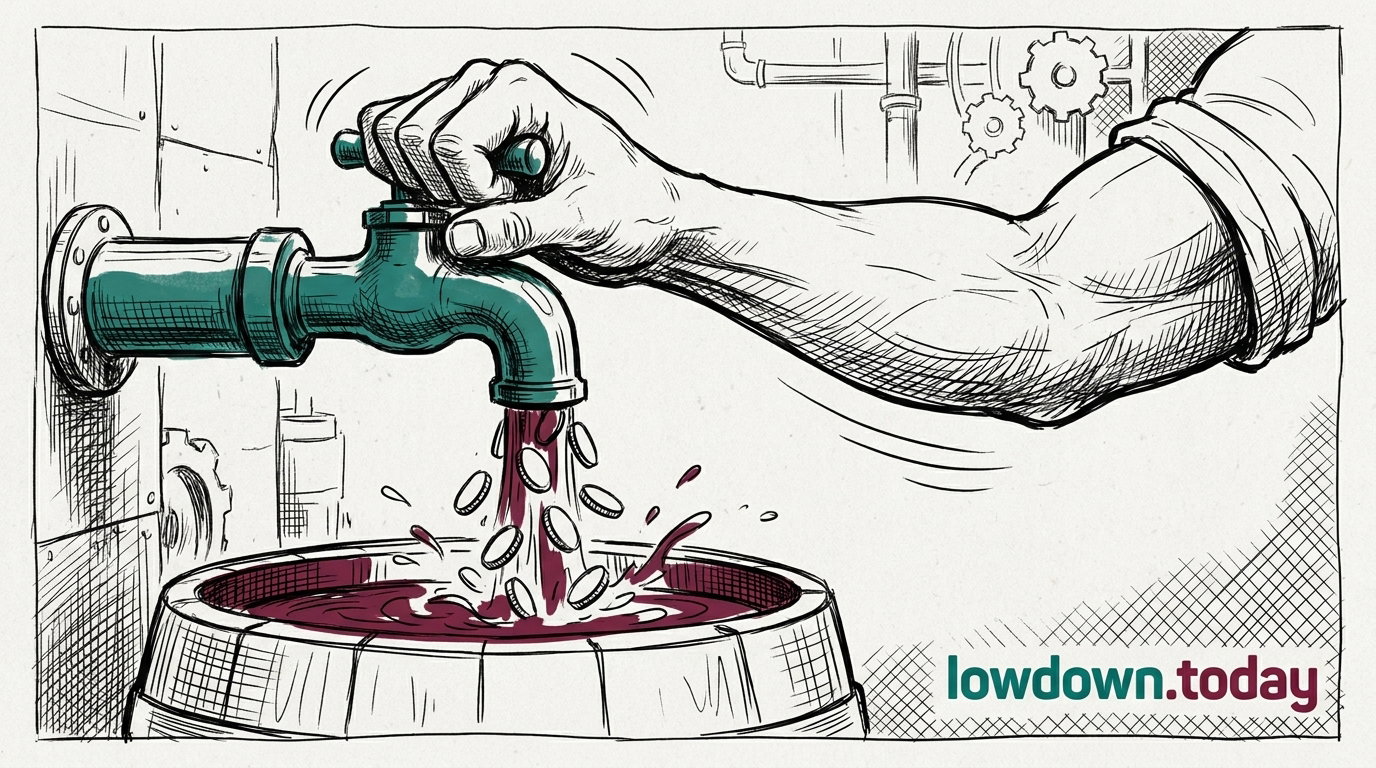
DG COMP and DG CNECT, the European Commission's competition and digital-strategy directorates, sent Google preliminary compliance measures on 16 April 2026 requiring it to share search rankings, user queries, click data and view metrics with rival search engines and AI chatbots on fair, reasonable and non-discriminatory (FRAND) terms 1. A public consultation opened on 17 April and closes on 1 May; a binding decision is due by 27 July 2026 1. Search rankings, queries and click logs are the foundational training substrate every frontier AI assistant needs; the order is an involuntary data dividend for European AI builders who cannot scrape at Google scale.

Executive Vice-President Teresa Ribera framed the order around AI alongside search: "Data is a key input for online search and for developing new services, including AI" 1. The technical annex sets eligibility criteria, delivery frequency, anonymisation procedures and governance 1. Google responded that the demands threaten user privacy on "sensitive searches about health, family, finances" and alleged the investigation was "driven at least in part by OpenAI" 1. Google is asking Europe to read the remedy as a US-on-US proxy fight rather than a European sovereignty instrument.

The order extends the DMA lineage from platform fines to a behavioural data-access remedy. European firms that cannot scrape at Google scale, Mistral AI included, would gain an involuntary data dividend if FRAND terms survive the consultation. The 27 July binding decision deadline sits five days before the AI Office, the Commission's AI enforcement body, gains full enforcement powers over general-purpose AI model providers on 2 August . That creates a regulatory collision between competition and AI enforcement arms with no public joint pipeline connecting the two.

Deep Analysis

In plain English

When you search on Google, the search engine records what you typed, which results you clicked on, and which ones you ignored. Over 25 years, Google has collected billions of these records. They tell an AI system what information people actually want when they type different queries, giving it 25 years of annotated signal that no AI company can buy or scrape from scratch at equivalent scale. The EU's Digital Markets Act (DMA) is a law that says very large tech platforms must play by special rules to keep markets fair. The European Commission has told Google it must share this search data with rival search engines and AI chatbot makers, on terms that are fair and non-discriminatory. Google argues this threatens user privacy. The Commission says it is essential for European companies to be able to build AI systems that can compete with US ones. A formal decision is due on 27 July 2026.

Deep Analysis
Root Causes

European AI companies face a structural training-data deficit. Google processes roughly 8.5 billion searches per day and has accumulated two decades of annotated query-click feedback loops. Mistral AI, founded in 2023, cannot replicate that dataset through commercial scraping or licensed data partnerships at equivalent quality or volume.

The AI Act's forthcoming general-purpose AI transparency requirements will require model providers to document training data provenance and demonstrate diversity; mandated access to Google search logs addresses both the data-volume gap and the provenance documentation problem in a single remedy.

The Draghi report on European competitiveness identified data access as one of the three structural barriers to European AI parity alongside compute and talent. The DMA order on search data is the Commission's first concrete implementation of that Draghi recommendation, though it targets one specific platform's dataset rather than establishing a general European data-access framework.

What could happen next?
  • Consequence

    The 1 May consultation close and 27 July binding decision creates a 12-week implementation clock; Google's legal challenge will likely begin before the ink is dry, extending effective implementation by 12 to 18 months.

    Short term · 0.78
  • Precedent

    A sustained DMA search-data remedy would establish the principle that gatekeeper platform data constitutes quasi-public infrastructure, with implications for Meta social graph data, Apple App Store behavioural data, and Amazon marketplace data in subsequent proceedings.

    Medium term · 0.72
  • Opportunity

    The binding decision landing five days before the AI Act enforcement date on 2 August creates a regulatory stack where European AI providers gain both a data-access right and an enforcement environment that disadvantages US competitors simultaneously.

    Medium term · 0.65
First Reported In

Update #2 · Brussels buys, Britain backs, Google unlocks

European Commission DG CNECT· 19 Apr 2026
Read original
Different Perspectives
China
China
Beijing has not publicly commented on the dual Oreshnik launch. China's declared position of urging restraint and dialogue sits awkwardly alongside its continued economic ties with Russia; the weapons escalation tests whether Beijing's neutrality framing can survive a European IRBM normalisation event.
IAEA
IAEA
Director General Grossi condemned the ZNPP reactor-6 turbine building strike and stated "there should be no attack of any kind from or against the plant." The agency confirmed normal radiation levels but has not resolved attribution; Rosatom CEO Likachev warned the region is "one step closer to an incident."
Turkey
Turkey
Ankara hosted Istanbul Round 2 at Ciragan Palace on 2 June and secured a 1,200-for-1,200 prisoner exchange, consolidating Turkey as the war's sole diplomatic venue after Rubio confirmed US mediation has ended. Erdogan's leverage over both parties grows with each round.
European Union
European Union
EU Ambassador Mathernova answered Lavrov's evacuation demand with "We stay in Kyiv. We stay with Ukraine." The Verkhovna Rada approved the EUR 90bn EU loan on 28 May; the EUR 9.1bn first tranche, the EU's first explicit defence-procurement financing, arrives mid-June.
United States
United States
Rubio declared US mediation stagnated on 22 May and confirmed no talks were occurring, then received Lavrov's evacuation demand three days later without ordering embassy drawdown. Washington's leverage now runs through the GL 134C sanctions cliff on 17 June rather than any active diplomatic channel.
Ukraine
Ukraine
Zelenskyy called Russia's 2-3 day ceasefire counter-offer at Istanbul Round 2 "shortsighted" and submitted a full peace memorandum covering EU membership, international guarantees, phased sanctions relief and frozen-asset reparations. Kyiv's position is that a partial ceasefire freeze aids Russian reconstitution; only an all-domain 30-day pause is acceptable.
