Skip to content
Briefings are running a touch slower this week while we rebuild the foundations.See roadmap
Russia-Ukraine War 2026
5APR

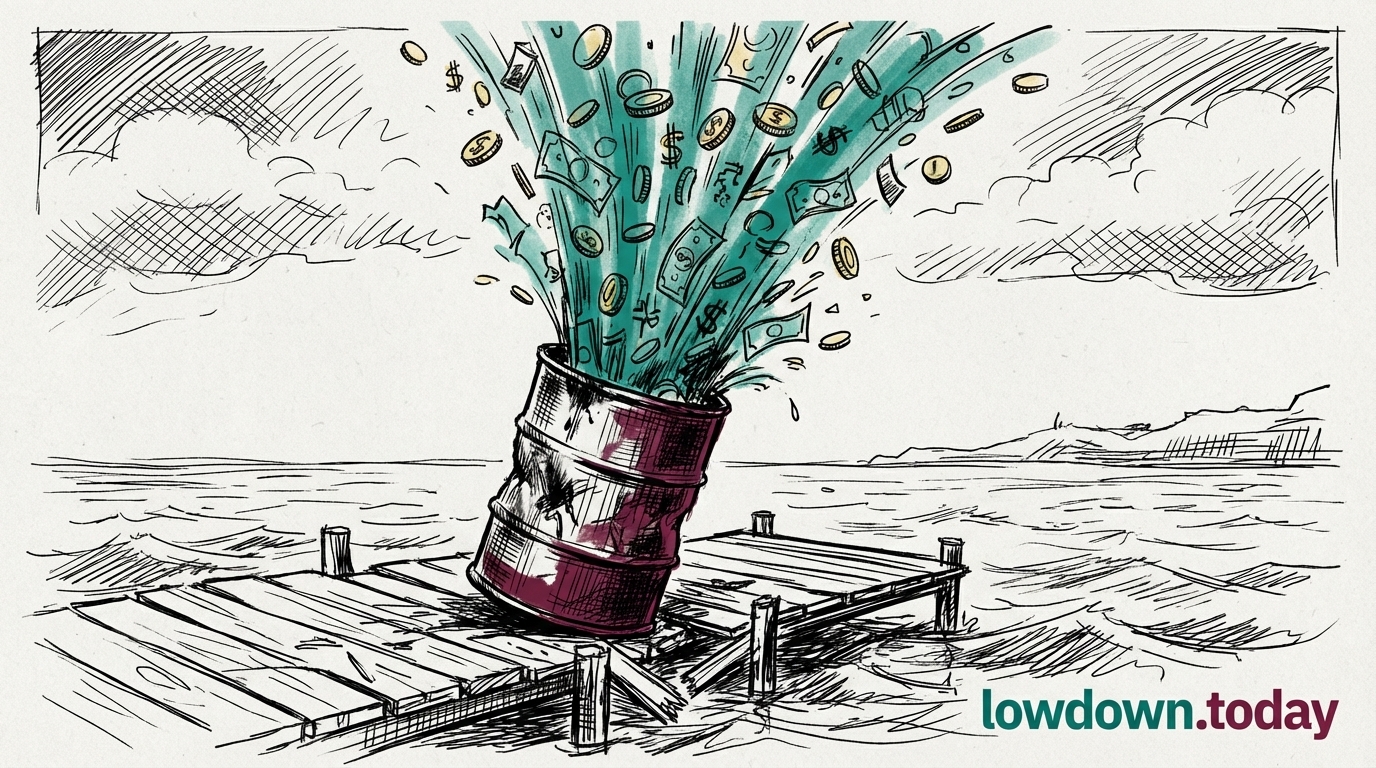
Rial hits 1.7m per dollar, down 43%

2 min read
19:51UTC

Iran's rial traded at 1,705,000 to the dollar on Sunday 31 May, a 43% devaluation over six months, with the brief deal-optimism rally already unwound.

ConflictDeveloping
Key takeaway

Ordinary Iranians face a 43% currency collapse and rising import costs even as the diplomatic track softened.

Iran's rial traded at 1,705,000 to the dollar on Sunday 31 May, a 43% devaluation over six months 1. The brief rally that deal optimism produced has already unwound, so the softer diplomatic mood has bought ordinary Iranians no lasting relief.

The slide tracks the cumulative weight of OFAC sanctions, including the designation of a port operator on Thursday 28 May , layered on top of wartime trade disruption. OFAC is the US Treasury's Office of Foreign Assets Control, which administers the sanctions that throttle Iran's access to hard currency. For households, a rial worth less each month means imported food and medicine keep climbing in price regardless of what Trump signs or refuses to sign. The squeeze is structural rather than a passing shock, and a signed ceasefire would not reverse it quickly.

Deep Analysis

In plain English

When a currency loses 43% of its value against the dollar in six months, imported goods cost 43% more in local currency terms. For Iranians, that means food items bought with dollars on global markets (wheat, cooking oil, medicine) have become dramatically more expensive. Iran imports a significant share of its pharmaceuticals and wheat. The rial's decline is not primarily caused by the war's oil-price swings; it reflects accumulated sanctions that prevent Iran's government from repatriating oil revenues earned in foreign currencies. Iran earns dollars selling oil to China and others, but cannot convert or access those revenues freely because of OFAC designations. The result is a currency that falls not because trade stops but because the earnings from trade are frozen abroad.

What could happen next?
  • Consequence

    Pharmaceutical import costs are the most acute humanitarian pressure; at 1.705m/USD, European API suppliers pricing in euros have effectively priced out Iranian public-sector procurement.

  • Risk

    A deal that reopens Hormuz but leaves OFAC's PGSA designation in place will not arrest the rial's decline, because the primary driver is sanctions on revenue repatriation, not the physical blockade.

First Reported In

Update #113 · Trump signs nothing as a Hellfire hits a hull

Alanchand· 31 May 2026
Read original
Different Perspectives
North Korea / DPRK
North Korea / DPRK
ISW confirmed the first mounting of DPRK Type-75 MLRS on Russian autonomous UGVs near Kharkiv on 7 June, the latest step in a supply axis that escalated from shells in 2023 to troops in 2024. Pyongyang gains live battlefield data on its ordnance and on Russia's uncrewed-systems programme.
IAEA / Rafael Grossi
Grossi confirmed Chornobyl structural damage with nuclear material metres away and could not attribute the ZNPP 15-hour blackout during the agreed repair window. Six ceasefires brokered and broken at ZNPP, compounded by Rosatom's May attack on IAEA neutrality, have eroded his ability to enforce the windows he negotiates.
Emmanuel Macron / France
Macron co-signed the E3 framework whose line-of-contact baseline marks Europe's first formal acceptance that 1991 borders are not the opening position. France's role carries weight because Macron had previously proposed a European force for Ukraine, and the framework's multinational force point is the vehicle for that.
Keir Starmer / E3
Keir Starmer / E3
Starmer, Macron and Merz met Zelenskyy on 7 June and backed a five-point framework taking the line of contact as the talks baseline, conceding roughly one fifth of Ukraine in exchange for a multinational force and frozen assets. With US mediation ended, the NATO Ankara summit on 7-8 July is the next test.
Vladimir Putin / Kremlin
Putin used SPIEF to reject Zelenskyy's summit letter, citing 'elements of rudeness', and repeated the pre-agreed treaty precondition that has frozen every diplomatic round since May. The SPIEF platform's message of investor confidence was punctured by naval fires visible from St Petersburg, which Moscow declined to dispute in scale.
Ukraine / Unmanned Systems Forces
Commander Brovdi confirmed USF units tracked and set fire to Boikyi at Kronstadt, while Code 9.2 struck the Chonhar Bridge the following day. Ukraine is sequencing strikes for rear-area interdiction and political timing rather than ground gains, trading the Baltic Fleet's home base for the logistics squeeze Russia cannot absorb without rationing its own occupied territory.
