Skip to content
You can now search across every topic, entity and event.What's new
Nomads & Communities
2JUL

Mexico City registry opens, clock running

4 min read
10:49UTC

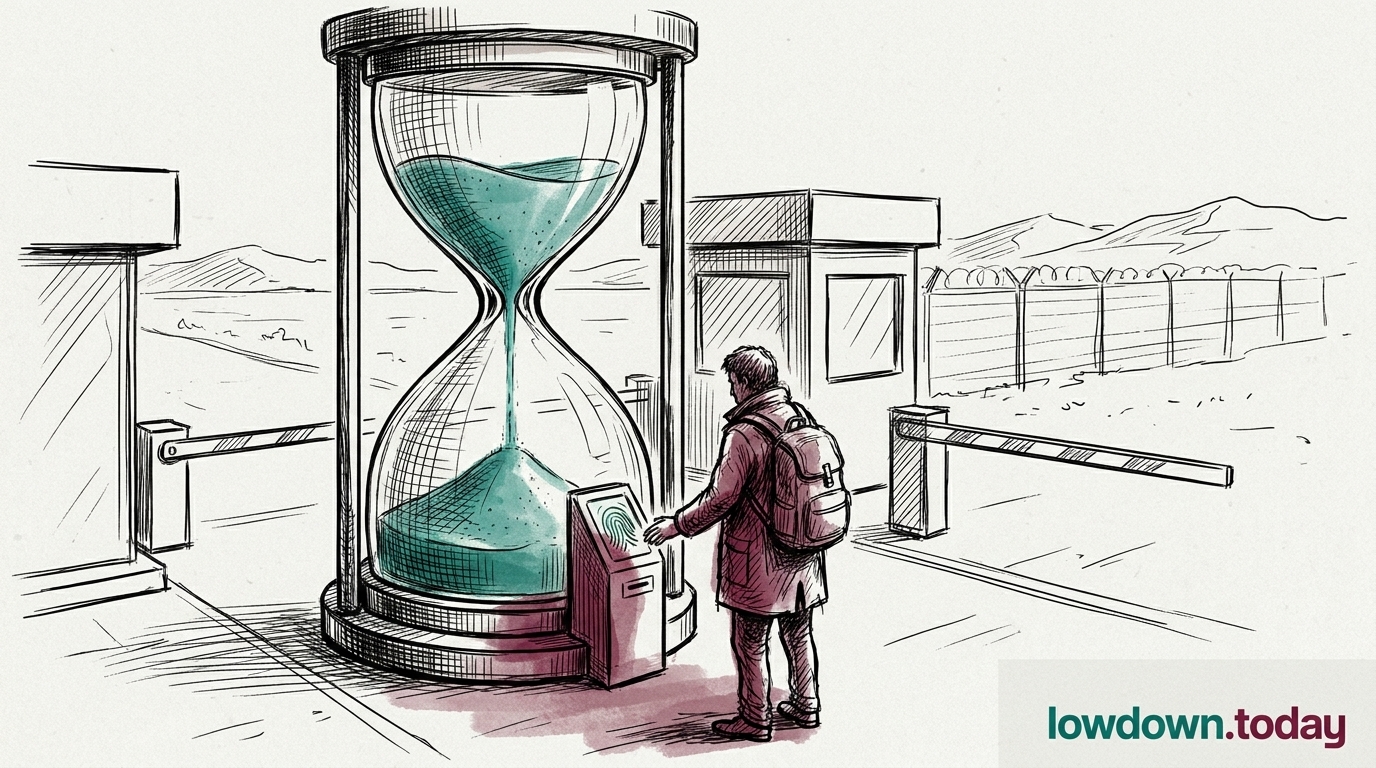
Mexico City opened its short-let registry on 22 May at estanciaeventual.cdmx.gob.mx, giving hosts roughly 30 days to register before a deadline that lands mid-tournament. A host who misses it can be pulled offline during the year's most lucrative weeks.

SocietyDeveloping
Key takeaway

Mexico City's short-let registration deadline lands mid-tournament, putting unregistered hosts' peak revenue at risk.

Ayuntamiento CDMX, Mexico City's municipal government, opened the short-let registry on 22 May at estanciaeventual.CDMX.gob.mx, with a roughly 30-day window that closes around 21 June 1. The registry had sat unbuilt three weeks before kickoff ; now the three-property-per-host limit and the 183-night annual cap have a working enforcement mechanism behind them. For a host renting flats in Condesa or Roma, the abstract cap has become an administrative deadline with a date.

The roughly 21 June deadline lands inside the World Cup window, the same weeks the cap was suspended in practice to accommodate . Tournament logistics and match scheduling sit with the World Cup desk; the housing and displacement consequence is the one that matters here. A host who misses the roughly 21 June deadline can be deregistered precisely when demand peaks, losing the single most lucrative month of the year while a registered competitor trades on. With about 274,000 short-let nights projected across the tournament, the revenue at risk per delisted host is concentrated, not spread.

The enforcement claim deserves a check. Mexico City has published no count of hosts registered before the deadline, so the registry's existence is established while its take-up is not. The mechanism is live; whether the city has the will or capacity to delist non-compliant hosts mid-tournament, against an Airbnb that filed an injunction earlier in the cycle, is untested. Ayuntamiento CDMX opening the registry is the reportable development; any compliance count would be the next story, and the city has published none.

Deep Analysis

In plain English

Mexico City opened a website on 22 May 2026 where people renting out short-term accommodation on Airbnb and similar platforms must register. The deadline to register is around 21 June 2026. If a host misses that deadline, the city can remove their listings from Airbnb while the World Cup is still running, which is the period when short-term rentals make the most money. Before 22 May, this registry did not exist despite being promised for years. Mexico City's housing rules already say hosts can only rent out up to three properties and no property can be rented out for more than 183 nights a year, but those rules had no working enforcement mechanism. The new registry is supposed to change that. Mexico City's housing rules apply to individual hosts, not companies. Around 1,400 operators who hold four or more properties and control roughly half of the city's short-let supply are registered as companies and sit outside the three-property limit. Those large operators can keep all their listings active without registering.

What could happen next?
  • Risk

    Hosts who miss the roughly 21 June 2026 registration deadline face potential delisting from Airbnb during the highest-revenue World Cup window, with no published grace-period mechanism.

    Immediate · Reported
  • Consequence

    Commercial STR operators registered as companies, including the largest CDMX operators by unit count, sit outside the three-property individual-host cap and face no registry obligation under the current ordinance language.

    Immediate · Assessed
  • Precedent

    The estanciaeventual.cdmx.gob.mx portal is the first operational registry mechanism CDMX has built since the Tourism Law's three-property cap was enacted. Whether it survives post-World Cup enforcement pressure or is suspended again by injunction after the tournament will determine whether any future CDMX STR regulation has credibility.

    Medium term · Assessed
First Reported In

Update #7 · Spain's top court voids its STR registry

Rio Times Online· 14 Jun 2026
Read original
Different Perspectives
Mobile nomad cohort
Mobile nomad cohort
Long-stay remote workers face a diverging map this fortnight: Korea widens its door, Greece and Spain narrow theirs by locality and contract type, and Portugal's citizenship timeline still hinges on a regulation not yet published. None of the four moves resolves the temporada loophole nomads have used to sidestep rent caps.
Portugal government / AIMA
Assistant secretary of state Rui Armindo Freitas said on 1 July that AIMA has cut its inherited caseload of roughly one million to 30,000 complex cases, with no visa-type breakdown or new deadline given. The nationality regulation implementing Lei Organica 1/2026 remains unpublished ahead of its mid-August drafting deadline.
Thessaloniki municipality
The 1st Municipal Community froze new AMAD registrations from 1 July to 31 December and will strike off registered flats on sale, gift or inheritance, backed by fines up to EUR 40,000 on repeat offences. The ordinance needed no national vote and took effect within days.
South Korea government
Justice Minister Jung Sung-ho made the F-1-D workation visa permanent on 30 June 2026, extending the maximum stay from two to three years and cutting the income floor for under-35s who settle outside Seoul, Incheon and Gyeonggi. The redesign channels remote workers into depopulating provinces rather than the capital region.
Podemos / Spanish left
Secretary-general Ione Belarra said on 8 July that Podemos will not back the housing decree if it grants landlords IRPF deductions for cutting rents, the exact concession Junts wants for its seven-seat majority vote. That veto pushed Spain's decree from a July target to an end-August window with no guaranteed majority.
Non-EU nomad community (Georgia reset-base users)
Nomads who reset their Schengen clock via Georgia now watch a narrowing window: ordinary access holds only until the Commission's pre-March-2027 review, and the MIA's 2,000 GEL fine ladder has run since 1 May with no published enforcement data. Many are shifting toward Bulgaria's EUR 27,533-a-year permit instead.