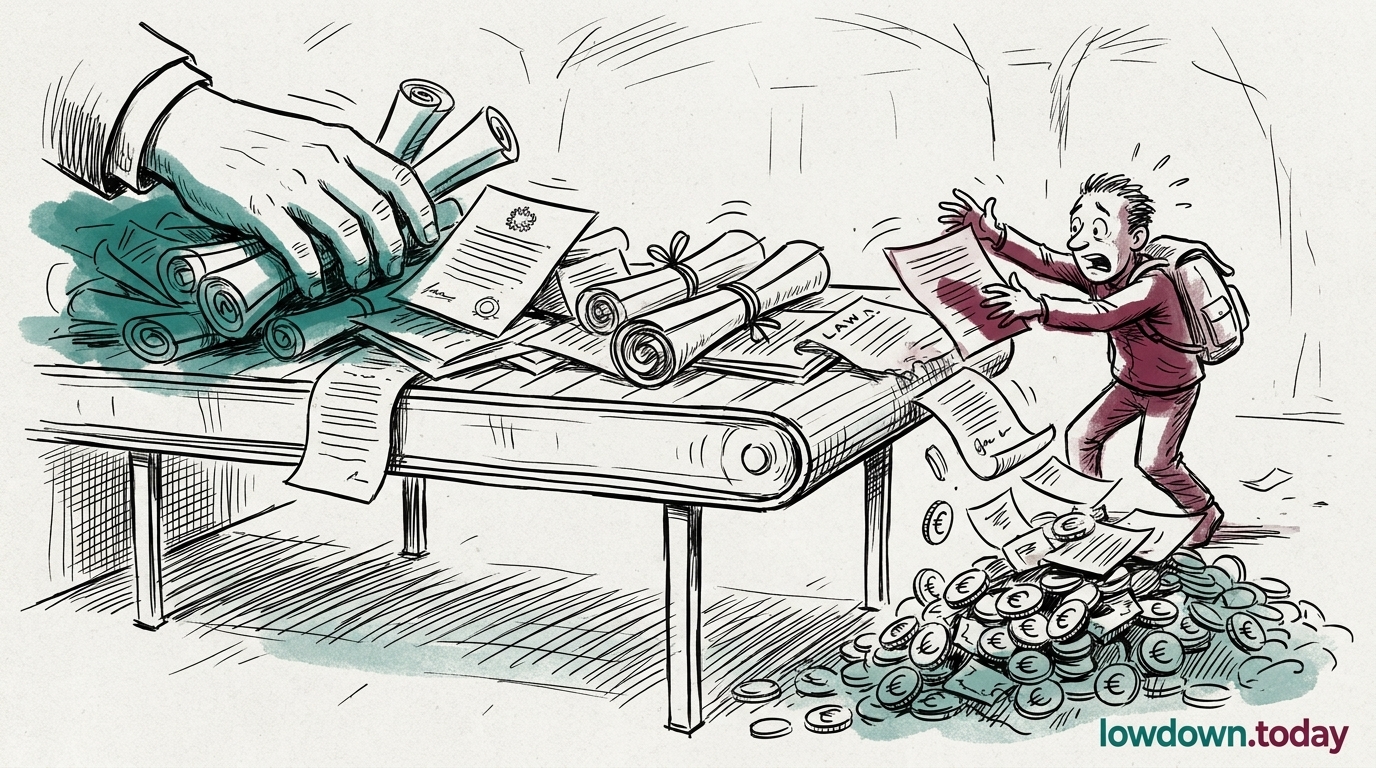
Mexico City's 180-day annual cap on short-term rentals, enacted in October 2024 to contain displacement, is being suspended in practice as accommodation demand for the 2026 FIFA World Cup builds. Airbnb has filed an injunction against the cap that the city government has yet to answer. Short-let hosts are lobbying to have the 180-day limit formally suspended for the tournament window. The proposed rent-cap legislation that was meant to follow the STR cap has been formally delayed until after the tournament ends1. None of this is a repeal. All of it has the same effect. The tournament's accommodation economics are tracked in.
Argue with the arithmetic at street level and you lose quickly. Mexico City has 61,500 hotel rooms against an anticipated 5.5 million tournament visitors between 11 June and 19 July 20262. Jorge Balderrama, Airbnb's Mexico director, has told local press that without platform listings the city cannot meet capacity. The displacement figure the housing coalition Frente Anti-Gentrificación CDMX points to runs the other way: roughly 23,000 families, about 100,000 people, have already left central neighbourhoods as rents rose. The coalition characterised the reversal as the predictable outcome of municipal promises made during a year of campaigning.
Look at the mechanism. A FIFA host city agreement commits the municipality to accommodation capacity it cannot separately legislate against, and the 61,500-room hotel base is the result of twenty years of underinvestment that no city government can solve in a tournament window. Platforms filled the gap, which is what makes the cap politically expensive to enforce the moment the tournament arrives. The choice in front of Ayuntamiento CDMX, the municipal government, was to suspend the cap openly or leave it formally in place and unenforced. Officials have chosen the second option.
The counter-reading, from Balderrama and the short-let hosts' lobby, is that the STR market is the only functional reserve of tournament-period capacity, and that enforcing a cap during the World Cup would push demand into informal accommodation with fewer safeguards for either visitors or neighbourhoods. That is a coherent argument on tournament logistics. It also concedes the housing movement's underlying point: the cap that was meant to protect residents cannot survive its first encounter with an external accommodation event at scale. What happens to the rent-cap legislation after the final whistle on 19 July is the question the coalition is already pre-positioning for.


