Skip to content
Briefings are running a touch slower this week while we rebuild the foundations.See roadmap
Iran Conflict 2026
16MAY

Brent at $73: oil forecast of $150 fails

1 min read
12:41UTC

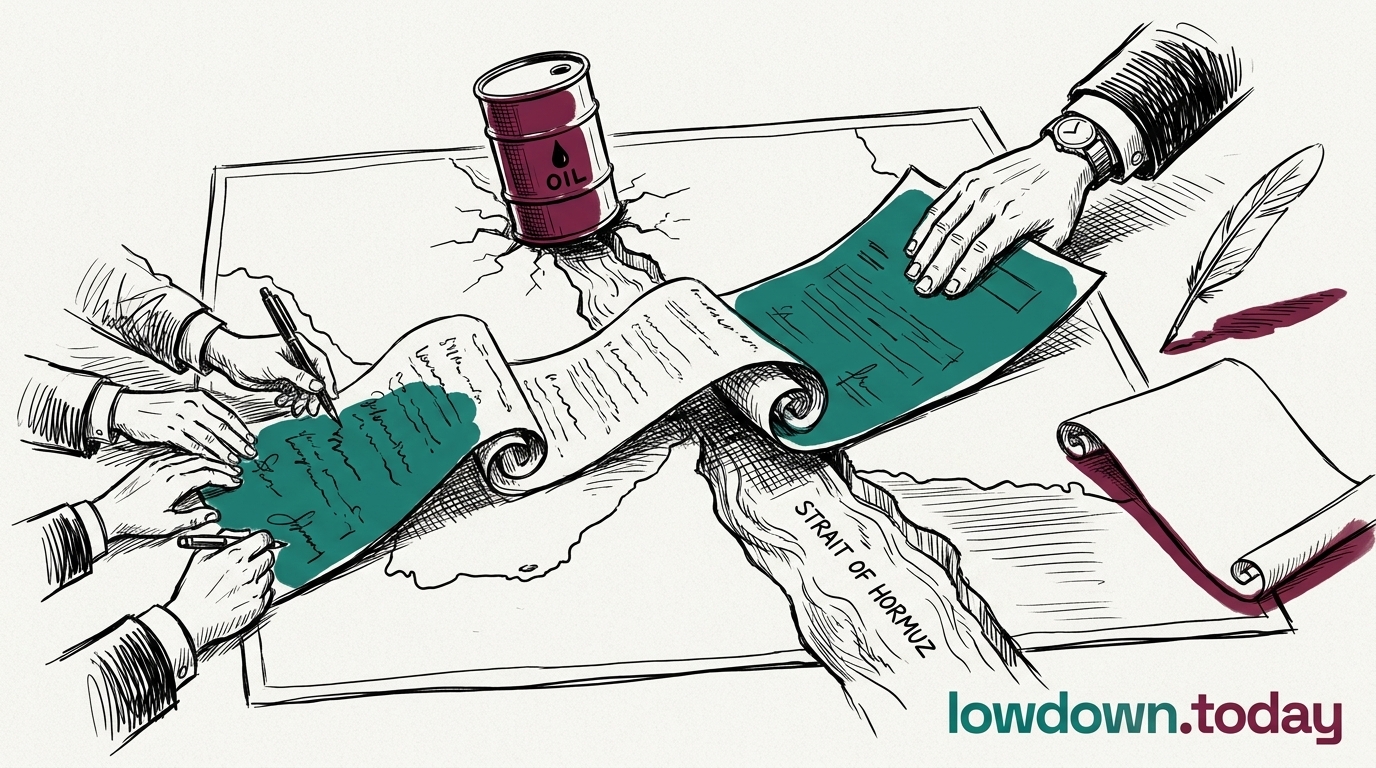
Brent crude stood at approximately $73 per barrel immediately before the 28 February 2026 strikes, with analysts forecasting a rise to $80–100 — well below the $150–200 predicted in earlier modelling — as markets priced partial, reversible Hormuz disruption rather than a formal blockade.

ConflictDeveloping
Key takeaway

Markets priced an $80–100 oil range on 28 February because they assessed Hormuz disruption as partial and reversible — the $150–200 scenario remains a live tail risk conditional on Iranian naval interdiction or prolonged conflict.

The pre-strike $150–200 oil price forecast rested on two assumptions: that Iran would execute a formal Hormuz blockade using mining and naval interdiction, and that the conflict would persist long enough for physical supply to be severely constrained. Neither condition materialised on 28 February. Iran's response comprised ballistic missile strikes, not naval interdiction; tanker avoidance is voluntary and reversible; and Saudi Arabia retains spare production capacity to partially offset any Gulf supply disruption.

A rise from $73 to $80 represents a 10% increase. At $100, the increase is 37% — still inflationary but below the recession-triggering threshold implied by $150–200 modelling. At $100, European economies already managing the energy cost legacy of the Russia-Ukraine war face additional pressure, as do emerging markets with dollar-denominated energy import bills. The Bloomberg tanker-avoidance reporting and Euronews analyst consensus both point to the $80–100 range as the February 28 baseline estimate.

The $150–200 scenario remains a live tail risk rather than a falsified prediction. It materialises if the conflict extends to include Iranian naval action in Hormuz, prolonged tanker avoidance beyond two to three weeks, or destruction of Saudi or UAE production infrastructure. Markets are pricing a shorter and more contained conflict than the worst-case scenario assumed — not ruling out further escalation.

What could happen next?
  • Meaning

  • Meaning

First Reported In

Update #2 · Five cities struck on opening night

GOV.UK· 28 Feb 2026
Read original
Causes and effects
This Event
Brent at $73: oil forecast of $150 fails
The more modest oil price forecast relative to pre-strike predictions suggests markets assessed Iranian oil infrastructure damage and Hormuz risk as manageable in the short term.
Different Perspectives
India (BRICS meeting host, grey-market beneficiary)
New Delhi hosted the BRICS foreign ministers' meeting on 14 May that Araghchi attended under the Minab168 designation, giving India a front-row seat to Iran's diplomatic positioning. India's state refiners have been absorbing discounted Iranian crude through grey-market routing since April; Brent at $109.30 means every barrel sourced outside the formal market generates a structural saving.
Hengaw / Kurdish human rights monitors
Hengaw's daily reports from Iran's Kurdish provinces remain the sole independent cross-check on Iran's judicial activity during the conflict. Two executions across Qom and Karaj Central prisons on 15 May and five Kurdish detentions on 15-16 May indicate the wartime judicial pipeline is operating independently of military tempo.
Pakistan (mediator and bilateral partner)
Islamabad spent its diplomatic capital as the US-Iran MOU carrier to secure LNG passage for two Qatari vessels through a bilateral Pakistan-Iran agreement, spending its mediation credit for direct economic gain. China's public endorsement of Pakistan's mediatory role on 13 May is the structural reward.
China and BRICS bloc
Beijing endorsed Pakistan's mediatory role on 13 May, one day after the BRICS foreign ministers' meeting in New Delhi. Chinese state banks are processing PGSA yuan toll payments; China has not commented on its vessels' continued Hormuz passage, but benefits structurally from a non-dollar toll system it did not design.
Iraq (bilateral passage partner)
Baghdad negotiated a 2-million-barrel VLCC transit without paying PGSA yuan tolls, offering political alignment in lieu of cash. Iraq's position inside Iran's adjacent bloc makes it the natural first bilateral partner and a template for how Tehran structures passage deals with states that cannot afford Western coalition membership.
Bahrain and Qatar (Gulf signatories)
Both signed the Western coalition paper while hosting US Fifth Fleet and CENTCOM's Al Udeid base, respectively. Qatar occupies the sharpest contradiction: it is on coalition paper while simultaneously receiving LNG passage through the bilateral Iran-Pakistan track, a position Doha has tacitly accepted from both sides.