Skip to content
Briefings are running a touch slower this week while we rebuild the foundations.See roadmap
Iran Conflict 2026
15MAY

EC issues first Chips Act fab designations

2 min read
13:51UTC

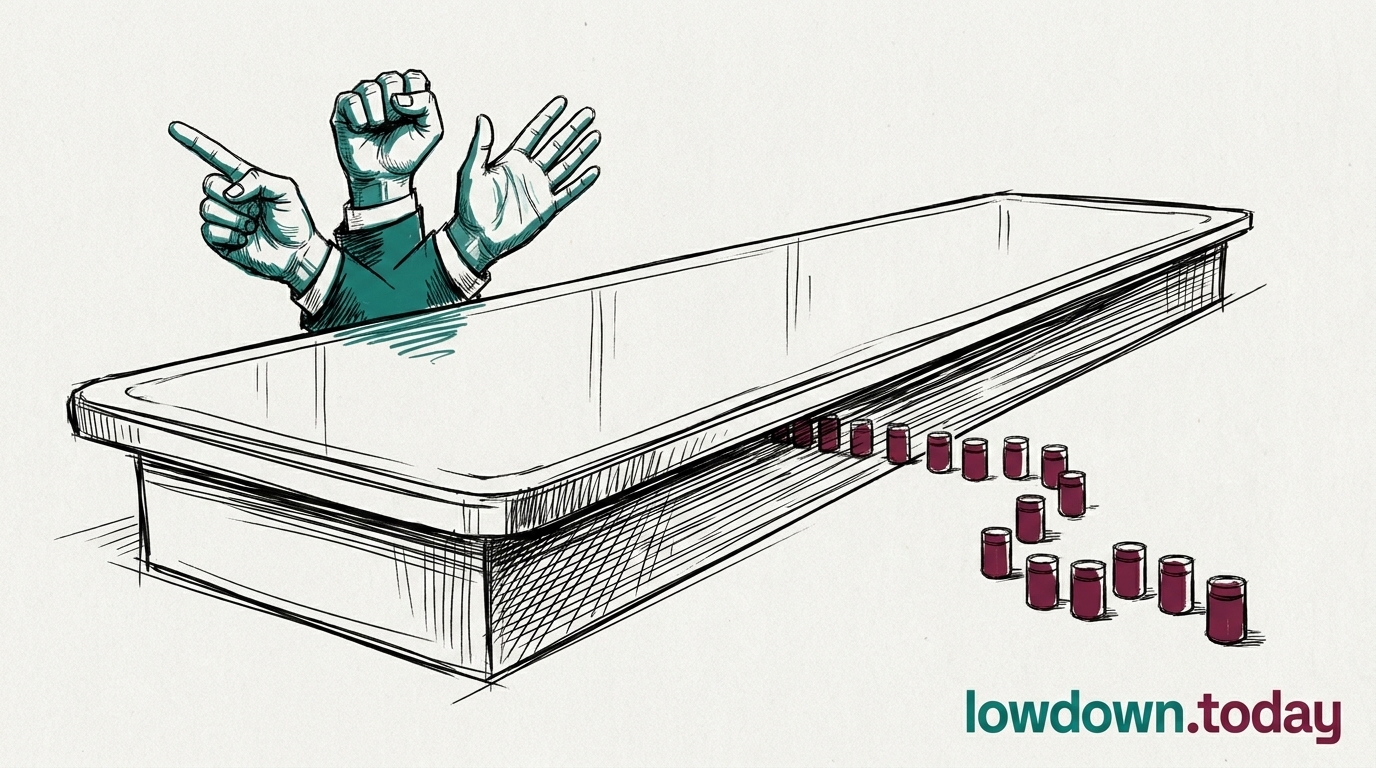
Brussels granted its first formal semiconductor facility statuses under the Chips Act. The 20% market share target went unmentioned.

ConflictDeveloping
Key takeaway

Brussels issued its first Chips Act designations but dropped its 20% market share target from the announcement.

The European Commission made its first EU Chips Act designations in October 2025, granting ESMC Open EU Foundry status and awarding Integrated Production Facility status to Ams-OSRAM, Infineon Dresden, and STMicroelectronics Italy 1. The designations are the formal recognition that triggers state aid approval and operational obligations, including third-party access requirements for Open EU Foundries.

The official press release made no mention of the Act's headline commitment: 20% of global semiconductor market share by 2030. Europe currently produces roughly 8% of the world's chips, overwhelmingly for automotive end-markets 2. Reaching 20% would have required all three flagship fabs plus substantial brownfield expansion. With Intel's Magdeburg cancelled and the Crolles facility suspended, the arithmetic no longer supports the target.

The omission is a diplomatic manoeuvre rather than an oversight. Formally abandoning the 20% target would invite political embarrassment; repeating it would invite ridicule. the Commission appears to be letting the figure lapse without acknowledgement, a pattern familiar from earlier EU industrial targets that quietly disappeared when delivery fell short.

Deep Analysis

In plain English

The EU Chips Act is Europe's plan to manufacture more of its own semiconductors. When the law was passed in 2023, it set an ambitious goal: by 2030, European factories should make 20% of the world's chips, up from about 9% at the time. In October 2025, the European Commission made its first official designations under this law; naming specific factories as officially recognised under the programme, which unlocks access to state funding and streamlined permits. Three types of designation exist: Integrated Production Facilities (factories that design and make their own chips), Open EU Foundries (factories that make chips for external customers), and Research and Innovation Facilities. The notable thing is what the announcement did not say: it made no mention of the 20% target. After Intel cancelled its planned €30 billion German factory and another major project in France was suspended, that target looks increasingly unrealistic. The Commission's silence on the target may signal a quiet retreat.

Deep Analysis
Root Causes

The Chips Act's 20% production share target was never supported by a commissioned demand-side feasibility study. It was adopted as a political ambition signal, calibrated to mirror the US CHIPS Act's headline framing, rather than derived from an analysis of what European customer demand could anchor.

When Intel cancelled Magdeburg and GlobalFoundries suspended Crolles, the two projects that would have collectively delivered approximately 6 percentage points of additional global chip production share were eliminated.

The designations announcement's silence on the 20% target reflects a second structural cause: DG CNECT's legal counsel determined that restating an unachievable target in a legally binding instrument creates liability exposure. Omitting the target from a regulatory designation notice is legally defensible; reaffirming it in an official capacity when it is demonstrably unreachable creates grounds for challenge from companies that relied on that target in their investment decisions.

What could happen next?
  • Meaning

    The first Chips Act designations establish the IPF/OEF framework as operational, creating a regulatory foundation even as the 20% production target recedes.

  • Risk

    The omission of the 20% target from official communications may reduce political pressure to attract additional fab investment, removing an accountability metric for the programme's designers.

First Reported In

Update #1 · Europe's chip ambitions meet reality

European Commission DG CNECT· 13 Apr 2026
Read original
Different Perspectives
Markets
Markets
Brent crude rose 2.2 per cent to $96.34 on 10 June, reversing a 7 per cent weekly decline built on deal optimism, as the overnight exchange repriced the Strait of Hormuz risk premium in a single session. The move reflects transit-risk repricing rather than supply shock: Iran's exports had already collapsed to below 300,000 barrels per day.
Pakistan
Pakistan
Pakistan's Naqvi channel, the only mediation track carrying both civilian and military buy-in, was stress-tested by live ordnance within 48 hours of the 6-7 June Tehran visit. Whether Washington informed Islamabad of the imminent strike plan while Naqvi was in Tehran remains undisclosed, putting the channel's neutrality under scrutiny.
Kuwait
Kuwait
Kuwait hosted the third Iranian strike on its soil since the 3 June airport drone attack, with Ali Al Salem airbase targeted in the three-country salvo. Its recent $1.98 billion Anduril Anvil counter-drone purchase signals it is rearming rather than reconsidering its hosting posture.
Bahrain
Bahrain
Bahrain absorbed the IRGC barrage via PAC-3 intercepts with its magazine already at 87 per cent depletion and no resupply before 2027. Sounding air-raid sirens over Manama, it faced the intercept burden with the thinnest defensive stack in the Gulf coalition.
Jordan
Jordan
Jordan reported all five incoming missiles intercepted with no injuries and no damage, a clean defensive performance that strengthens Amman's case for staying in the Western coalition without escalating its own posture. It now sits on Iran's target list for the first time despite not being a party to the Abraham Accords confrontation.
Iran / IRGC
Iran / IRGC
Foreign Minister Araghchi posted on X that US forces should 'leave our region if you want to be safe' and framed the exchange as a US defeat, while the IRGC claimed 21 targets hit and an F-35 hangar destroyed. The claims serve a domestic and Arab-audience framing rather than a verified battle-damage assessment.