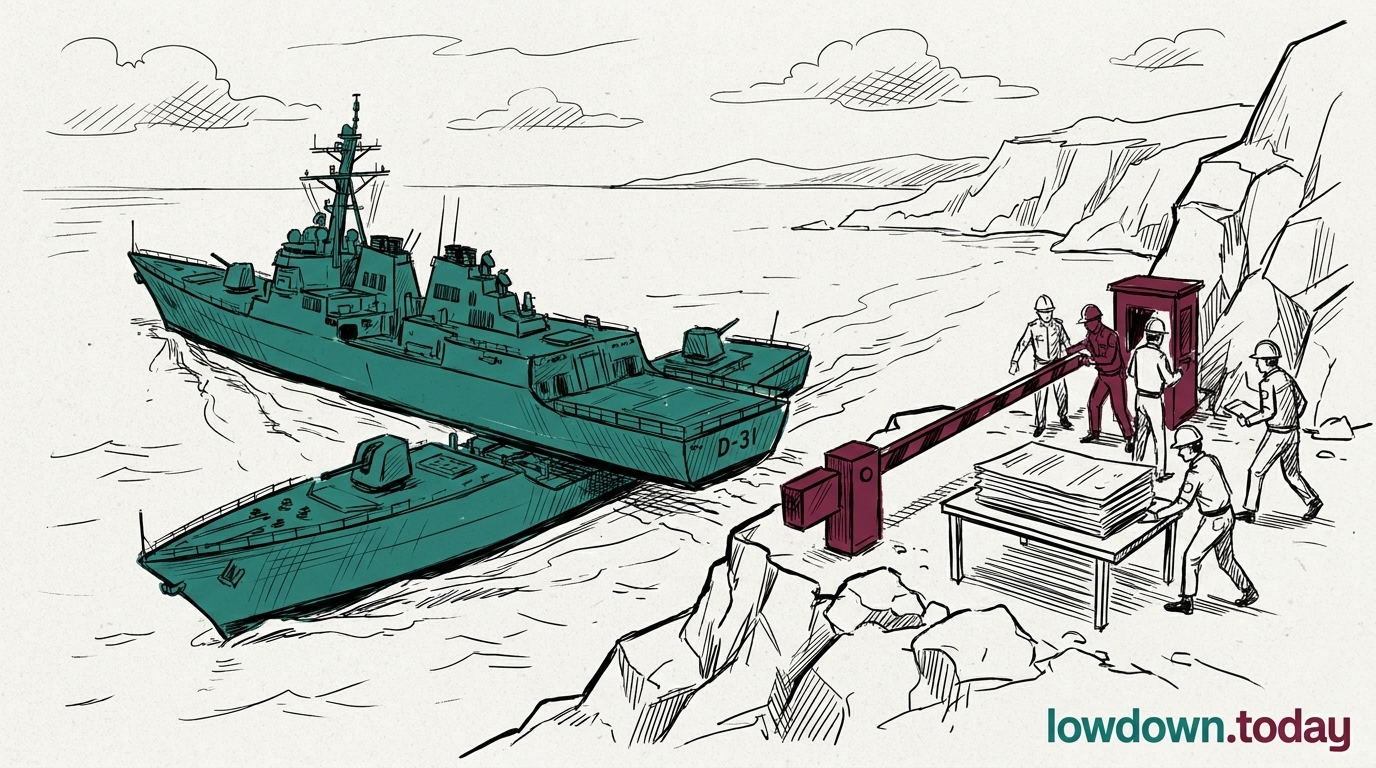
CENTCOM's cumulative count of vessels redirected under the Hormuz blockade held at 33 ships through Saturday 25 April, the first two-day pause since enforcement began. The pace had been climbing in step-twos and threes since early April; the flatline is the first quantitative signal that the intercept curve has either stopped finding fresh targets or that CENTCOM has tightened its definition of what counts. CENTCOM is the United States Central Command, the combatant command running the Hormuz enforcement.
The pause sits inside a verbal escalation on the Iranian side. The Islamic Revolutionary Guard Corps declaration on Friday 24 April that its "self-restraint is over" was a public lifting of the constraint that had governed IRGC small-craft behaviour through the indefinite ceasefire. Two trajectories now run alongside each other: an enforcement count that has stopped rising and a threat posture that has verbally escalated.
The likeliest mechanical explanation is that the population of ships approaching the strait under insured-tonnage rules has collapsed. The dark-fleet baseline means the only remaining Hormuz transits run without insurance and often without AIS, narrowing the candidate pool CENTCOM can credibly intercept. A static count against an invisible denominator does not measure deterrence; it measures the absence of legal traffic.


