Skip to content
Briefings are running a touch slower this week while we rebuild the foundations.See roadmap
Iran Conflict 2026
2MAR

Outdated map likely caused Minab strike

3 min read
08:00UTC

A preliminary US military investigation found the school was hit because targeting data was outdated. The intended target was a nearby naval facility.

ConflictDeveloping
Key takeaway

'Outdated intelligence' invokes a specific IHL defence that the preliminary investigation itself cannot adjudicate.

AP reported on Wednesday, citing sources familiar with the matter, that a preliminary US military investigation found outdated intelligence likely caused the strike on the Shajareh Tayyebeh girls' school in Minab. The intended target was a nearby naval facility. The school was hit because targeting data did not reflect current ground conditions. Between 165 and 180 people were killed — mostly primary school girls, along with teachers and parents.

The finding aligns with three independent investigations published on Day 8, which used satellite imagery, crater analysis, and debris identification to reach the same conclusion: the strike was a US weapon aimed at a misidentified target . The military investigation adds institutional confirmation. This was not collateral damage from a nearby military hit. The targeting chain itself pointed at the wrong building.

Outdated intelligence in a targeting chain means one of several specific failures: the database was not updated before the strike package was approved, the update existed but was not propagated to the firing unit, or the approval process did not include verification against current imagery. Each failure sits at a different point in the kill chain and implies different accountability. The preliminary investigation reportedly identifies the proximate cause — stale data — without yet addressing which layer failed to catch it. In modern precision strike doctrine, every target passes through multiple review stages before release authority is granted. The question is not whether a map was old. The question is how many people looked at the old map and approved the strike anyway.

The investigation remains preliminary and classified. Defence Secretary Hegseth, whose "no stupid rules of engagement" language the 46 senators cited in their letter, has made no public statement on the findings. Iran's UN ambassador Amir Saeid Iravani has called the school strike evidence of deliberate targeting. The dead — 165 to 180 primary school girls, teachers, and parents — are beyond the reach of any finding. Whether the finding changes the conduct of the air campaign depends on decisions that have not been made and may never be made public.

Deep Analysis

In plain English

A US military investigation says its forces accidentally struck a school because they were using old maps or targeting data that didn't show the school was there. The real target was a naval facility nearby. But the explanation raises a further question the preliminary report does not answer: how was a school building positively identified as a naval facility in the targeting process? Saying the intended target was nearby is not the same as explaining why the school was struck instead. The investigation is preliminary and classified — meaning the public version may never address that gap.

Deep Analysis
Synthesis

The explanatory gap in the preliminary finding is analytically significant. 'Intended target was a nearby naval facility' and 'school was hit because targeting data was outdated' are not a complete causal chain. A coordinates error and a visual misidentification are distinct failure modes with different accountability implications under the Uniform Code of Military Justice. The preliminary report's public framing does not specify which failure occurred — a distinction the investigation controls by managing what it releases.

Root Causes

The US has not ratified Additional Protocol I to the Geneva Conventions, which imposes explicit obligations on target verification. The applicable standard reverts to customary IHL — which is less precisely codified and more susceptible to self-assessment by the striking party. This legal architecture was not created for this conflict but consistently advantages the non-ratifying party.

Escalation

The administration controlling both the investigation timeline and classification is a domestic de-escalation mechanism. It removes the forcing function that would require accountability decisions before the conflict ends. International escalation is structurally constrained: no body with jurisdiction over this matter has authority the US has accepted.

What could happen next?
  • Precedent

    If the Kunduz pattern repeats — operational accountability only, no senior command prosecution — it confirms targeting system failures producing mass child casualties do not trigger senior responsibility under US military justice.

    Long term · Assessed
  • Risk

    The 46-senator letter creates political pressure with an effective expiry: if findings are not released before the conflict ends or attention shifts, classification holds indefinitely.

    Short term · Assessed
  • Consequence

    Iran and its allies will use the 'outdated intelligence' finding as evidence of deliberate targeting in international forums, regardless of the finding's intended legal framing.

    Medium term · Suggested
  • Meaning

    Three independent investigations and the military's own preliminary finding converging on the same conclusion substantially narrows the administration's factual deniability, even as it retains procedural control over disclosure.

    Immediate · Reported
First Reported In

Update #32 · UN condemns Iran 13-0; ceasefire blocked

AP· 12 Mar 2026
Read original
Causes and effects
This Event
Outdated map likely caused Minab strike
The finding is the first official US acknowledgement of a targeting failure in Operation Epic Fury. It confirms what three independent investigations established: this was not collateral damage but a weapon aimed at the wrong building. Whether institutional accountability follows depends on decisions the administration has not yet made.
Different Perspectives
Markets
Markets
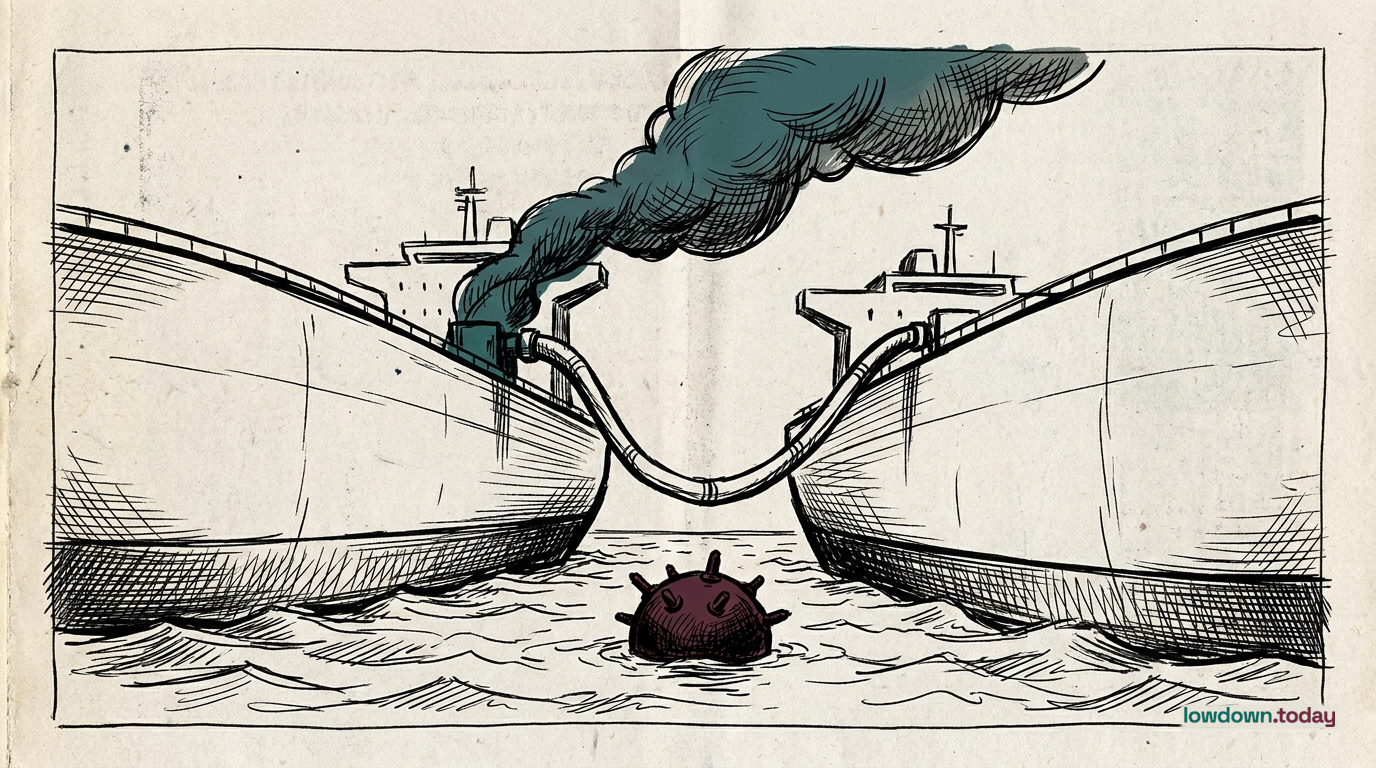
Brent crude rose 2.2 per cent to $96.34 on 10 June, reversing a 7 per cent weekly decline built on deal optimism, as the overnight exchange repriced the Strait of Hormuz risk premium in a single session. The move reflects transit-risk repricing rather than supply shock: Iran's exports had already collapsed to below 300,000 barrels per day.
Pakistan
Pakistan
Pakistan's Naqvi channel, the only mediation track carrying both civilian and military buy-in, was stress-tested by live ordnance within 48 hours of the 6-7 June Tehran visit. Whether Washington informed Islamabad of the imminent strike plan while Naqvi was in Tehran remains undisclosed, putting the channel's neutrality under scrutiny.
Kuwait
Kuwait
Kuwait hosted the third Iranian strike on its soil since the 3 June airport drone attack, with Ali Al Salem airbase targeted in the three-country salvo. Its recent $1.98 billion Anduril Anvil counter-drone purchase signals it is rearming rather than reconsidering its hosting posture.
Bahrain
Bahrain
Bahrain absorbed the IRGC barrage via PAC-3 intercepts with its magazine already at 87 per cent depletion and no resupply before 2027. Sounding air-raid sirens over Manama, it faced the intercept burden with the thinnest defensive stack in the Gulf coalition.
Jordan
Jordan
Jordan reported all five incoming missiles intercepted with no injuries and no damage, a clean defensive performance that strengthens Amman's case for staying in the Western coalition without escalating its own posture. It now sits on Iran's target list for the first time despite not being a party to the Abraham Accords confrontation.
Iran / IRGC
Iran / IRGC
Foreign Minister Araghchi posted on X that US forces should 'leave our region if you want to be safe' and framed the exchange as a US defeat, while the IRGC claimed 21 targets hit and an F-35 hangar destroyed. The claims serve a domestic and Arab-audience framing rather than a verified battle-damage assessment.