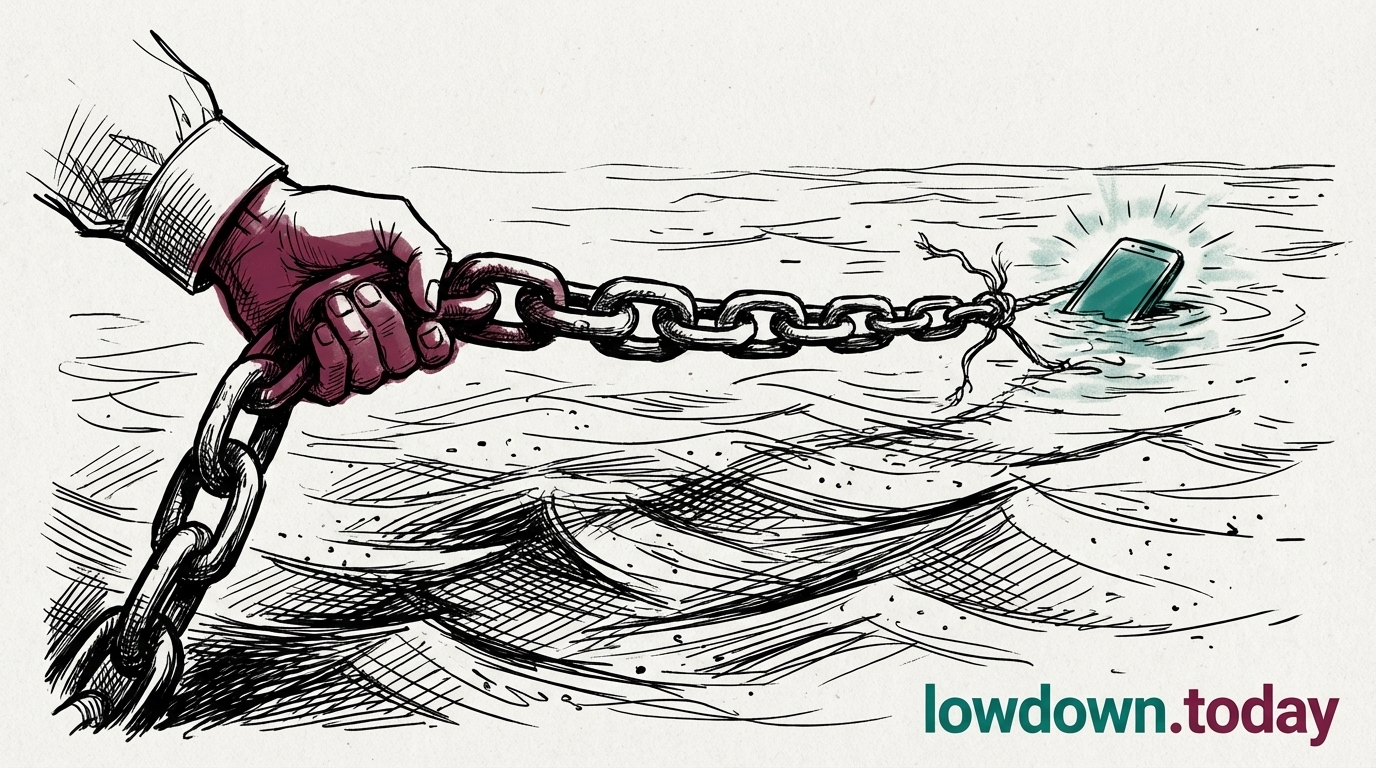
The calendar from 19 April to 29 April is not four events. It is one stack. GL-U lapses on Saturday. The Iran two-week ceasefire expires on Tuesday. Regional officials told Bloomberg and the Associated Press that the sides reached an in-principle two-week extension; Karoline Leavitt said the US has not formally requested one, and no signed text has been published. The Lebanon truce announced on Truth Social runs out around Sunday 26 April. The War Powers Resolution 60-day clock, triggered by the 28 February start of hostilities, runs out on Wednesday 29 April following the House 213-214 defeat and the Senate 47-52 defeat.
Leavitt's line is the cleanest evidence the method documented across this briefing is still live: "The US has not formally requested a ceasefire extension." An in-principle agreement reported by two wires has not produced a signed disclosure from the podium that would normally carry it. The Iran ceasefire will therefore either receive a public text before the ceasefire clock running out, or it will converge in a single week with three other unsigned deadlines, each of which behaves differently when it meets an institution that responds to paper rather than posts.
Those institutions are distinct. OFAC is a Treasury function; its clock is mechanical and cannot be argued with. Congress is a political function; the WPR 60-day mark creates leverage for a third floor vote but does not compel one. The Iran and Lebanon ceasefires are foreign-policy instruments; they rely on verbal assurance, spokesperson statements and the operational posture of military forces retaining unilateral self-defence rights. The four deadlines are therefore not uniform pressure on a single actor. They are uniform pressure on the method, applied through four different institutional surfaces at once.
Every prior administration that ran a war past day 48 had produced signed paper by this point. The Trump administration has produced Enbridge Pipeline permits and a budget sequestration order. The topic-specific silence on Iran means the 19-29 April window is not a tempo pinch. It is a deliberate test of whether rhetoric can carry legal weight when the instruments it substitutes for start demanding their documented form. Base case is that GL-U lapses cold, the Iran ceasefire gets a verbal extension, Lebanon holds to 26 April and the WPR runs out without a third floor vote. The upside risk is Hawley forcing an AUMF vote at day 60, which would produce the first signed Iran instrument of the war under the most adversarial conditions available.


