Skip to content
Briefings are running a touch slower this week while we rebuild the foundations.See roadmap
Iran Conflict 2026
1MAR

Shamkhani dead; thousands of IRGC killed

3 min read
19:00UTC

Ali Shamkhani joins the confirmed dead alongside Nasirzadeh and Pakpour, while thousands of IRGC personnel are reported killed or wounded — the entire senior command tier eliminated in a single night.

ConflictDeveloping
Key takeaway

The confirmed deaths of Iran's defence minister, IRGC commander, and Ali Shamkhani eliminate the entire senior security command, opening a power contest with no arbiter.

Iranian state television and Al Jazeera confirmed that Defence Minister Nasirzadeh, IRGC Ground Forces Commander Pakpour, and Ali Shamkhani were killed in the US-Israeli strikes. Their deaths had been reported as probable in the immediate aftermath of the strikes ; the confirmation, along with reports of thousands of IRGC personnel killed or wounded, establishes the scale of the leadership destruction.

Shamkhani was among the most politically connected figures in Iran's security establishment. A former secretary of the Supreme National Security Council and former defence minister, he was one of the few figures who maintained relationships across factional lines — hardliners, reformists, and the military. His death removes a potential interlocutor for any future negotiation. Nasirzadeh commanded the conventional military apparatus; Pakpour commanded the IRGC ground forces. Together with Khamenei, they constituted the decision-making core of the Iranian state.

The IRGC is not a conventional military. It is a parallel state with its own navy, air force, ground forces, intelligence arm, and the Quds Force for external operations. The simultaneous loss of its commander, the defence minister, and a senior political-military figure like Shamkhani does not just degrade military capability — it opens a contest over who inherits command of both the coercive apparatus and the economic empire. Mid-ranking IRGC commanders now face a choice between loyalty to a chain of command that no longer exists and positioning themselves within a power structure that does not yet exist.

Deep Analysis

In plain English

The three most senior military and security officials in Iran have been confirmed dead, along with thousands of lower-ranking soldiers. The Revolutionary Guards function as both a military force and a massive business empire worth an estimated $100 billion. With no top leadership, mid-level commanders must decide who they answer to. That contest — between different branches, between hardliners and pragmatists — will determine whether Iran can fight a coherent war or fragments into competing factions.

Deep Analysis
Synthesis

Iran's security establishment has lost its entire senior tier in a single night. The question is no longer who commands Iran's military but whether Iran has a unified military to command. The IRGC's parallel-state structure — with its own branches, economic empire, and intelligence arm — means the answer depends on factional dynamics that are opaque to outside observers and possibly to the Iranians themselves.

Root Causes

The targeting of the entire senior command — not just Khamenei but the defence minister, the IRGC commander, and a senior political-military figure — reflects a comprehensive decapitation strategy designed to prevent Iran from mounting an organised response. The target set went beyond any single individual to eliminate the command relationships between them.

Escalation

The destruction of the senior command tier has paradoxical escalation effects. It degrades Iran's ability to mount a coordinated conventional military campaign — which is de-escalatory in narrow military terms. But it increases the risk of uncoordinated, autonomous actions by surviving mid-tier commanders and proxy forces operating without central direction — which is escalatory in broader regional terms. A unified IRGC command could decide to stand down; a fragmented one cannot.

What could happen next?
  • Consequence

    Iran's ability to sustain a coherent military response depends on whether a single commander consolidates authority over the IRGC's competing branches within days.

    Immediate · Assessed
  • Risk

    IRGC factional competition for control of the $100 billion economic portfolio could produce incoherent or contradictory military actions from different branches.

    Short term · Suggested
  • Meaning

    The elimination of Shamkhani specifically removes the figure most likely to serve as a negotiating counterpart for Western governments, reducing the probability of a diplomatic off-ramp.

    Short term · Assessed
First Reported In

Update #3 · Khamenei killed; Iran fires on 7 countries

Al Jazeera· 1 Mar 2026
Read original
How this affects the world
  • Iraq

    Iranian-backed Shia militias in Iraq lose their command link to Tehran's senior leadership; militia commanders may act more autonomously, increasing unpredictability.

  • Lebanon and Syria

    Quds Force coordination with Hezbollah and Syrian-based militias depends on a functioning command chain that no longer has a top. Hezbollah's decision not to activate may partly reflect this disruption.

  • Yemen

    Houthi forces, which have already resumed Red Sea shipping attacks, may operate more independently without IRGC senior command guidance.

Causes and effects
This Event
Shamkhani dead; thousands of IRGC killed
The simultaneous elimination of the defence minister, the IRGC ground forces commander, and a senior political-military figure like Shamkhani removes the entire top tier of Iran's security establishment, opening a contest over both military command and the IRGC's $100 billion economic portfolio.
Different Perspectives
Gulf shipping and insurance markets
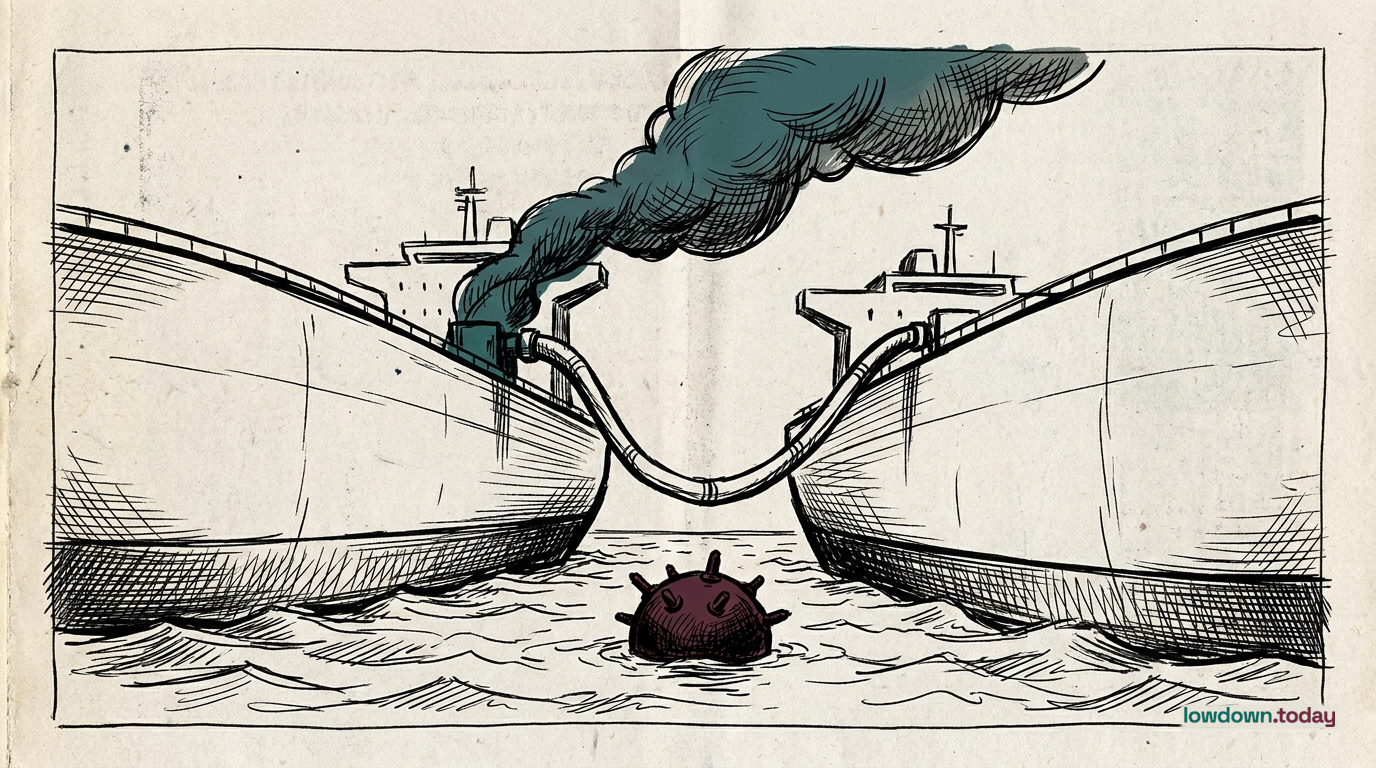
With Hormuz and Bab el-Mandeb both hostile at once, war-risk underwriters face their first dual-chokepoint pricing problem; the rerouting hedge that absorbed one closure is gone for Israeli-linked hulls. Any deal that reopens Hormuz without a Houthi stand-down clause delivers only partial shipping relief.
Russia and China
Russia and China
Russia and China met IAEA chief Grossi jointly in Geneva on 5 June to coordinate an advance blocking position against Washington's censure resolution, the first documented instance of proactive pre-session obstruction rather than reactive post-vote dissent. Beijing's move came four days after OFAC designated Shanghai Qianye Energy under Iran energy sanctions.
Saudi Arabia
Saudi Arabia
Saudi Arabia was left out of the emergency $4.01 billion Patriot waiver Qatar received on 2 May as its own PAC-3 stocks ran near-empty from intercepting Iranian salvoes over Aramco facilities. Riyadh is on a standard 18-month FMS queue behind a production line booked through 2030, with no equivalent priority to Qatar's Al Udeid basing role.
Houthis (Ansar Allah)
The Houthis declared a complete ban on Israeli Red Sea navigation on 8 June and struck Jaffa, their first attack on Israeli territory since April, seven days after the Tasnim authorisation to activate other fronts including Bab el-Mandeb. The declaration put both chokepoints under hostile authority simultaneously.
Iran
Iran
Iran agreed the 9 June mutual halt after the Mahshahr exchange and coordinated with Russia and China to block Washington's IAEA censure resolution, using the Board as a second front while the bilateral pause held on the military one. Tehran's acceptance of the Lebanon carve-out contradicts the linkage position it stated on 1 June.
Benjamin Netanyahu and the IDF
Israel struck the Karun Petrochemical plant at Mahshahr on 8 June over Trump's explicit objection, then agreed a halt with Iran the following day scoped on Israeli terms with Lebanon carved out. Netanyahu's posture is that the IDF will not accept Iranian missile factories as off-limits regardless of US diplomatic timelines.