Skip to content
Briefings are running a touch slower this week while we rebuild the foundations.See roadmap
Iran Conflict 2026
28MAR

59% of Americans say Iran war was wrong

1 min read
17:06UTC

Pew finds 59% opposition, 29% Republican dissent, and a public expecting the war to last at least six months.

ConflictAssessed
Key takeaway

The American public reached supermajority opposition in under a month; 54% expect at least six more months.

Pew Research Center surveyed 3,524 American adults between 16 and 22 March 1. 59% said striking Iran was the wrong decision. 61% disapprove of Donald Trump's handling of the conflict. The partisan split: 88% of Democrats call it wrong; 71% of Republicans call it right. But 29% of Republicans, nearly a third, disagree with their own president.

The Heritage Foundation's Kevin Roberts publicly broke with Trump on war policy last week . That break now has a measurable constituency: nearly one in three Republican voters.

54% expect the conflict to last at least six more months. Only 8% believe it will end within a month. Trump says it is nearly over . Most Americans do not believe him.

Deep Analysis

In plain English

A large majority of Americans, including nearly a third of Republicans, think the war was a mistake. Most expect it to last at least six more months. This matters because public opposition constrains what the government can do; it becomes harder to approve spending or send ground troops when most voters say the whole thing was wrong.

Deep Analysis
Escalation

59% opposition constrains escalation options, particularly ground operations that could produce US casualties.

What could happen next?
  • Consequence

    War funding faces increasing congressional headwinds

  • Risk

    Duration expectations create credibility gap with Trump's victory claims

First Reported In

Update #48 · Iran rejects ceasefire; Kharg fortified

Pew Research Center· 26 Mar 2026
Read original
Causes and effects
This Event
59% of Americans say Iran war was wrong
Supermajority opposition reached in under a month, including nearly a third of the president's own party, constraining escalation options.
Different Perspectives
Gulf shipping and insurance markets
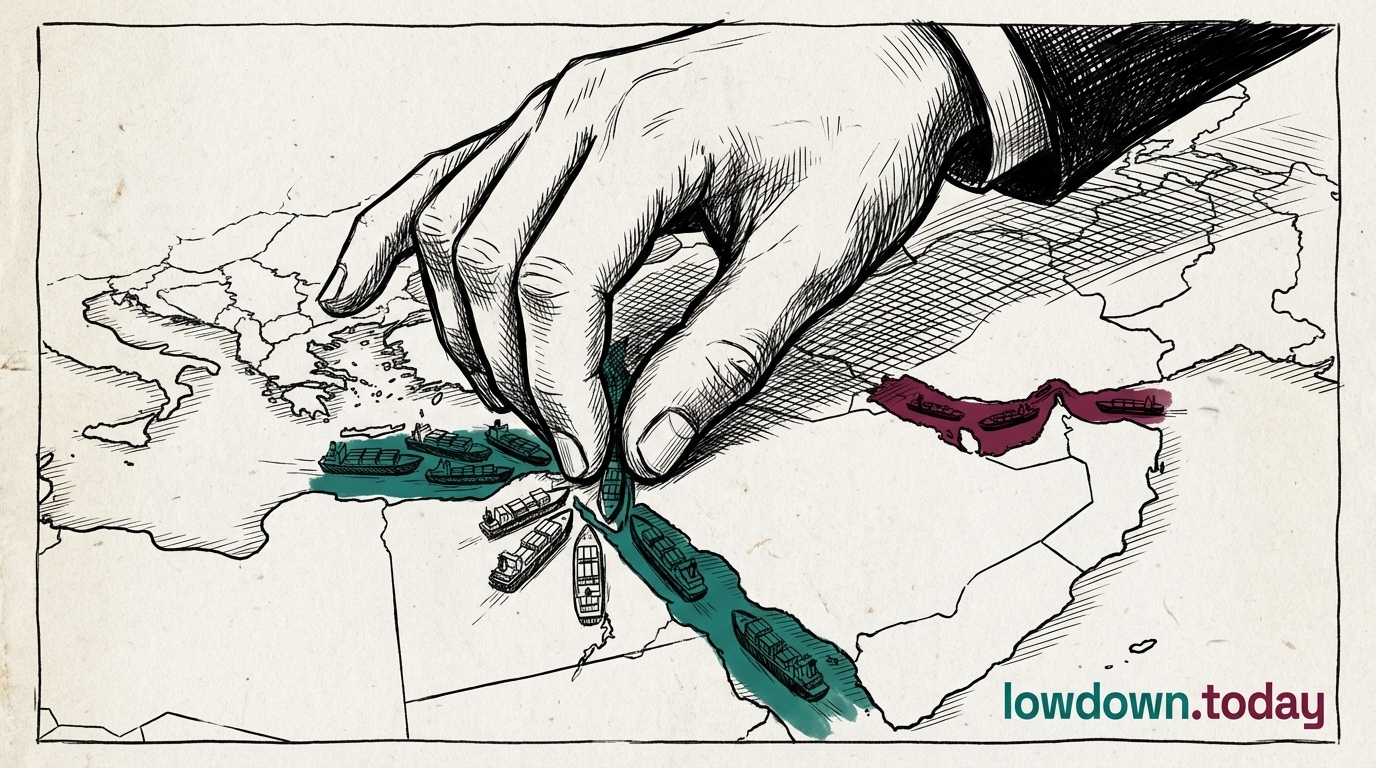
With Hormuz and Bab el-Mandeb both hostile at once, war-risk underwriters face their first dual-chokepoint pricing problem; the rerouting hedge that absorbed one closure is gone for Israeli-linked hulls. Any deal that reopens Hormuz without a Houthi stand-down clause delivers only partial shipping relief.
Russia and China
Russia and China
Russia and China met IAEA chief Grossi jointly in Geneva on 5 June to coordinate an advance blocking position against Washington's censure resolution, the first documented instance of proactive pre-session obstruction rather than reactive post-vote dissent. Beijing's move came four days after OFAC designated Shanghai Qianye Energy under Iran energy sanctions.
Saudi Arabia
Saudi Arabia
Saudi Arabia was left out of the emergency $4.01 billion Patriot waiver Qatar received on 2 May as its own PAC-3 stocks ran near-empty from intercepting Iranian salvoes over Aramco facilities. Riyadh is on a standard 18-month FMS queue behind a production line booked through 2030, with no equivalent priority to Qatar's Al Udeid basing role.
Houthis (Ansar Allah)
The Houthis declared a complete ban on Israeli Red Sea navigation on 8 June and struck Jaffa, their first attack on Israeli territory since April, seven days after the Tasnim authorisation to activate other fronts including Bab el-Mandeb. The declaration put both chokepoints under hostile authority simultaneously.
Iran
Iran
Iran agreed the 9 June mutual halt after the Mahshahr exchange and coordinated with Russia and China to block Washington's IAEA censure resolution, using the Board as a second front while the bilateral pause held on the military one. Tehran's acceptance of the Lebanon carve-out contradicts the linkage position it stated on 1 June.
Benjamin Netanyahu and the IDF
Israel struck the Karun Petrochemical plant at Mahshahr on 8 June over Trump's explicit objection, then agreed a halt with Iran the following day scoped on Israeli terms with Lebanon carved out. Netanyahu's posture is that the IDF will not accept Iranian missile factories as off-limits regardless of US diplomatic timelines.