Skip to content
Welcome, thoughtbot's Giant Robots listeners!Start here
Iran Conflict 2026
27MAR

Tankers self-impose Hormuz blockade

1 min read
14:13UTC

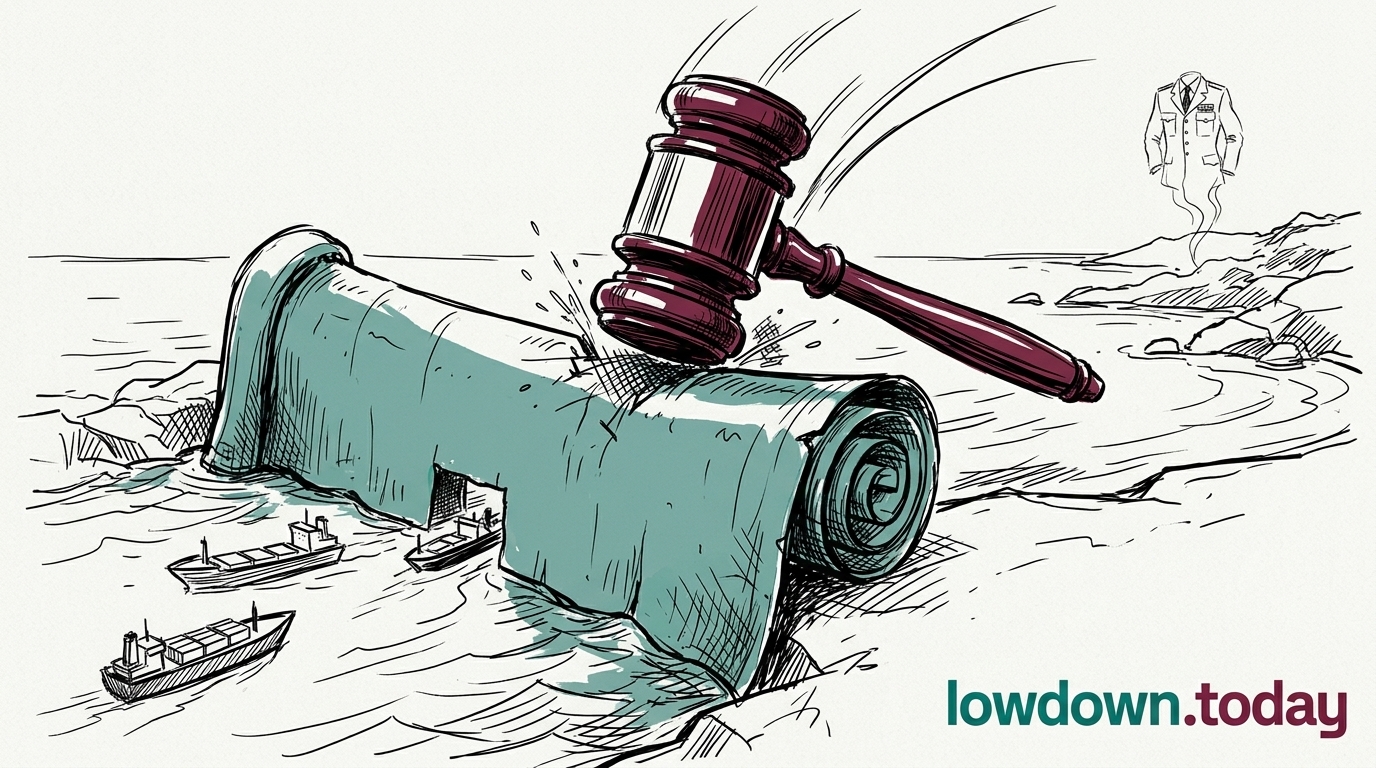
Oil tankers began voluntarily avoiding the Strait of Hormuz following the 28 February 2026 strikes on Iran, achieving a partial chokepoint effect through commercial risk calculation rather than Iranian military interdiction.

ConflictDeveloping
Key takeaway

Commercial tanker avoidance of Hormuz achieves partial supply disruption without requiring Iranian military action, and will reverse rapidly once a credible de-escalation signal appears.

Voluntary avoidance of Hormuz by tanker operators achieves, in functional terms, some of the same supply-disruption effects as an Iranian blockade — without requiring Iran to take the naval action that would have constituted a direct casus belli for further US military response.

Approximately 20 million barrels per day transited Hormuz in 2025 — around 20% of global oil supply and 30% of global liquefied natural gas. Voluntary tanker avoidance does not halt all transit, but it reduces throughput and drives insurance premiums on vessels that do proceed to prohibitive levels. Lloyd's of London and other marine war-risk insurers will reclassify the Gulf as a war-risk zone within hours of the strikes, adding several hundred percentage points to insurance costs and making many voyages commercially unviable even if the physical route remains open.

The difference between voluntary avoidance and a formal Iranian blockade is reversibility. Commercial tanker operators are risk-averse but economically rational: if the military situation stabilises or a credible de-escalation signal emerges, traffic will resume within days. A formal Iranian blockade would require negotiated lifting and military verification, potentially taking weeks or months. Voluntary avoidance is therefore a more moderate and more reversible disruption than the worst-case scenario — which is precisely why markets are pricing $80–100 rather than $150–200.

What could happen next?
  • Meaning

    Short term · Assessed
  • Meaning

    Short term · Assessed
  • Meaning

    Short term · Assessed
First Reported In

Update #2 · Five cities struck on opening night

Al Arabiya· 28 Feb 2026
Read original →
Causes and effects
This Event
Tankers self-impose Hormuz blockade
Tanker avoidance of Hormuz, through which approximately 20% of global oil transits, creates immediate supply disruption risks and freight cost spikes.
Different Perspectives
International Energy Agency
G7 members agreed on 2 October to release up to 100 million barrels through the IEA over four months, front-loading diesel.
China
China
China signed the 15 October text reaffirming the Resolution 2216 arms embargo on the Houthis. The Wall Street Journal reported that Conflict Armament Research found Chinese parts in a Houthi copy of Iran's Kheibarshekan missile.
Russia
Russia
Russia joined the 15 October consensus condemning the Houthis, a month after vetoing a mandate for a UN panel of experts on Iran sanctions on 17 September. One Western official told Bloomberg that Moscow is providing Iran with missiles, and the White House rejected the assessment.
India
India
National Security Adviser Ajit Doval raised seafarer safety with Mohsen Rezaei on 12 October, after a drone hit the Petro Dolphin with 11 Indians aboard at Sohar. External Affairs Minister S. Jaishankar urged that attacks on commercial shipping and seafarers be avoided.
Lebanon
Lebanon
President Joseph Aoun met UN peacekeeping chief Jean-Pierre Lacroix in Beirut on 14 October as UNIFIL winds down before its mandate ends on 31 December. Two days later Qatar's prime minister pledged in Beirut to fund a solar plant for Lebanon.
Kataib Hezbollah
Kataib Hezbollah
The militia announced a halt to operations except against "hostile aircraft" and denied any disarmament deal with Prime Minister Ali al-Zaidi. A day later Quds Force chief Esmail Qaani urged eliminating "remaining traces of the US presence in other arenas".

Written with AI from Lowdown's published reporting. Not individually reviewed by an editor. Editorial standards.