Skip to content
You can now search across every topic, entity and event.What's new
Iran Conflict 2026
26MAR

Philippines declares energy emergency

1 min read
09:36UTC

Manila has 45 days of fuel left and may buy sanctioned Iranian or Venezuelan oil to survive.

ConflictAssessed
Key takeaway

The war's first non-belligerent economic casualty is a US treaty ally, creating a sanctions paradox Washington cannot resolve.

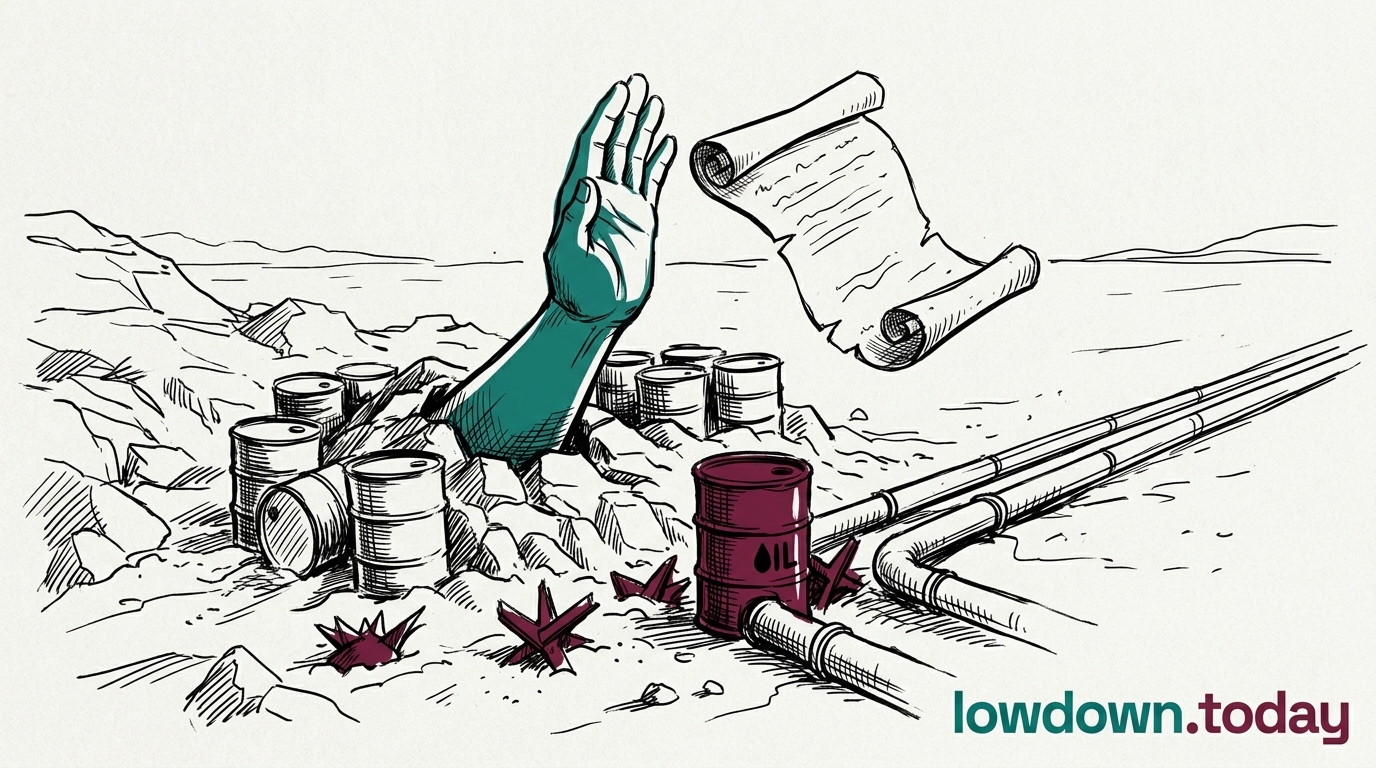
President Ferdinand Marcos Jr. declared a national energy emergency on Tuesday, making the Philippines the first country to invoke emergency powers over the Iran war 1. The Philippines has 45 days of fuel reserves remaining and imports 90% of its oil from the Middle East. The Strait of Hormuz closure has cut that supply line.

The emergency declaration gives Manila power to control fuel prices and fast-track alternative imports. Philippine Ambassador Jose Manuel Romualdez told Reuters: "All options are being considered," including Iranian and Venezuelan crude, both under US sanctions 2. The Philippines is a US mutual defence treaty ally. If it breaks Donald Trump's sanctions to keep its economy running, it does so because of an American war.

Sri Lanka has ordered 25% energy consumption cuts and switched off street lighting. Slovenia introduced fuel rationing, the first EU country to do so. South Korea is encouraging voluntary conservation. US gasoline hit $3.98 per gallon last week , up 36% from pre-war levels.

Deep Analysis

In plain English

A country with nothing to do with this war is about to run out of fuel because the fighting shut down the shipping lane that carries its oil. The Philippines has 45 days left and is considering buying from Iran or Venezuela, both under US sanctions. A US ally may have to break US rules to survive a US war.

What could happen next?
  • Consequence

    US sanctions framework may become unenforceable as allies seek exemptions

  • Risk

    Asian economies face cascading shutdowns if Hormuz stays closed

First Reported In

Update #48 · Iran rejects ceasefire; Kharg fortified

Rappler· 26 Mar 2026
Read original
Different Perspectives
Oil market and P&I insurers
Brent cleared $87 intraday only once CENTCOM's blockade became physical rather than declared, even though P&I Clubs had already excluded Hormuz war risk a week earlier on 7 July: capital hedged ahead of enforcement, but prices moved only after it.
UAE reporting
UAE reporting
UAE reporting placed the Omani tanker deaths at one seafarer against the International Maritime Agency's count of two, the first time in this war that a Gulf state's casualty figures have diverged from an international monitor's.
Jordan
Jordan
Iranian strikes reached Jordan again on 14 July as part of the Gulf-wide retaliation for the Hormuz blockade, extending the conflict's geographic footprint to a state with no direct stake in the strait itself.
Bahrain
Bahrain
Bahrain sounded air-raid sirens on 14 July during Iran's Gulf-wide retaliation, the same day CENTCOM's blockade order and fourth night of strikes pushed the conflict's physical reach into the wider Gulf littoral.
Kuwait
Kuwait
Kuwait intercepted Iranian missiles and drones on 14 July as Tehran's blockade retaliation reached Gulf states beyond Iran's immediate shoreline, confirming Kuwaiti airspace now sits inside Iran's retaliatory envelope.
Oman
Oman
Oman absorbed the war's first tanker casualties in its own waters on 14 July, with two supertankers disabled and seafarers killed, putting the sultanate's shipping lanes directly in the path of the blockade fight for the first time.