Skip to content
Briefings are running a touch slower this week while we rebuild the foundations.See roadmap
Iran Conflict 2026
5MAR

Seven children killed in Lebanon

2 min read
15:17UTC

Lebanon's Health Ministry reported seven children killed in twenty-four hours as thirty thousand people fled their homes in four days of Israeli operations.

ConflictDeveloping
Key takeaway

Current casualty and displacement figures are a humanitarian baseline, not a plateau — the Dahiyeh evacuation order signals an imminent escalation that could produce Lebanon's worst displacement crisis since 2006 within days.

Lebanon's Health Ministry reported seven children killed in the preceding 24 hours. Approximately 30,000 people have been displaced since Israeli operations resumed on 2 March.

The cumulative toll since 2 March now exceeds 52 dead and 154 wounded , with two-thirds of fatalities in southern Lebanon. The IDF's shift on 5 March from building-specific warnings to a blanket evacuation order covering the entire Dahiyeh district — home to hundreds of thousands — has accelerated the displacement. Highways north are congested with families. Schools have been converted to shelters.

Many of those now fleeing were already displaced during Israeli operations in Lebanon in June 2025, uprooted for a second time in under a year. Repeated displacement strips the resources — savings, housing, employment continuity — that enable recovery. Each cycle leaves families with less to return to. The July 2006 war displaced approximately one million Lebanese over 34 days; four days into this operation, the IDF's escalation from targeted warnings to district-wide evacuation orders indicates the displacement has not peaked.

Children are dying on every front of this conflict. An 11-year-old girl died from interceptor shrapnel in Kuwait . An estimated 165 schoolgirls were killed in the Minab strike in Iran . The Iranian Red Crescent reported 168 of its 787 confirmed dead inside Iran were children . No party to this conflict has demonstrated the capacity to prevent child casualties.

Deep Analysis

In plain English

In 2006, one million Lebanese fled their homes in just over a month. Right now, 30,000 have been displaced in under two weeks — smaller, but Israel has just ordered the entire Dahiyeh district — home to hundreds of thousands — to evacuate. Seven children were killed in just 24 hours. What makes this particularly alarming is that Lebanon's healthcare system has been in crisis since the country's economic collapse in 2019: hospitals are short of medicine and staff, and would struggle to cope with the casualties that large-scale urban strikes would produce.

Deep Analysis
Synthesis

The WHO Dubai hub suspension (event 26) and Lebanon's degraded healthcare system create a compounding failure: the primary regional logistics pipeline for emergency medical supplies is suspended precisely when Lebanon's overwhelmed health system would most require external resupply. This intersection of military, economic, and logistical failures is the key structural vulnerability the raw casualty figures do not convey.

Root Causes

Lebanon's civilian vulnerability is structurally compounded by the post-2019 economic collapse: WHO documented a 30-40% reduction in functional hospital beds by 2023, with critical medicine stockouts affecting the majority of Lebanese hospitals. This pre-existing fragility converts military activity into humanitarian crisis faster and more severely than in prior conflicts.

Escalation

Lebanon's healthcare system has operated at an estimated 40-60% capacity since 2019 due to medicine shortages, staff emigration, and fuel cuts. A mass casualty event from Dahiyeh-scale strikes would produce a higher mortality rate than equivalent strikes against a functioning health system — civilian deaths would exceed what the strike intensity alone would predict. This systemic vulnerability is not factored into standard casualty projections.

What could happen next?
1 meaning2 risk2 consequence
  • Meaning

    Current displacement and casualty figures represent a humanitarian baseline before Dahiyeh-scale operations — the crisis trajectory is sharply upward.

    Immediate · Assessed
  • Risk

    Lebanon's collapsed healthcare system cannot absorb mass casualty overflow from urban strikes, creating a mortality multiplier beyond the direct strike toll.

    Immediate · Assessed
  • Consequence

    The WHO Dubai hub suspension removes the primary regional logistics pipeline for emergency medical goods precisely when Lebanon's healthcare system faces its greatest stress.

    Immediate · Assessed
  • Risk

    Child casualty documentation at scale creates IHL accountability exposure and will accelerate international pressure for ceasefire negotiations.

    Short term · Suggested
  • Consequence

    A Dahiyeh-scale displacement event would exceed Lebanon's remaining absorption capacity, potentially triggering secondary refugee flows to Cyprus, Turkey, and Europe.

    Medium term · Suggested
First Reported In

Update #22 · IRGC drones hit Azerbaijan; CIA link cut

Al Jazeera· 5 Mar 2026
Read original
Different Perspectives
Gulf shipping and insurance markets
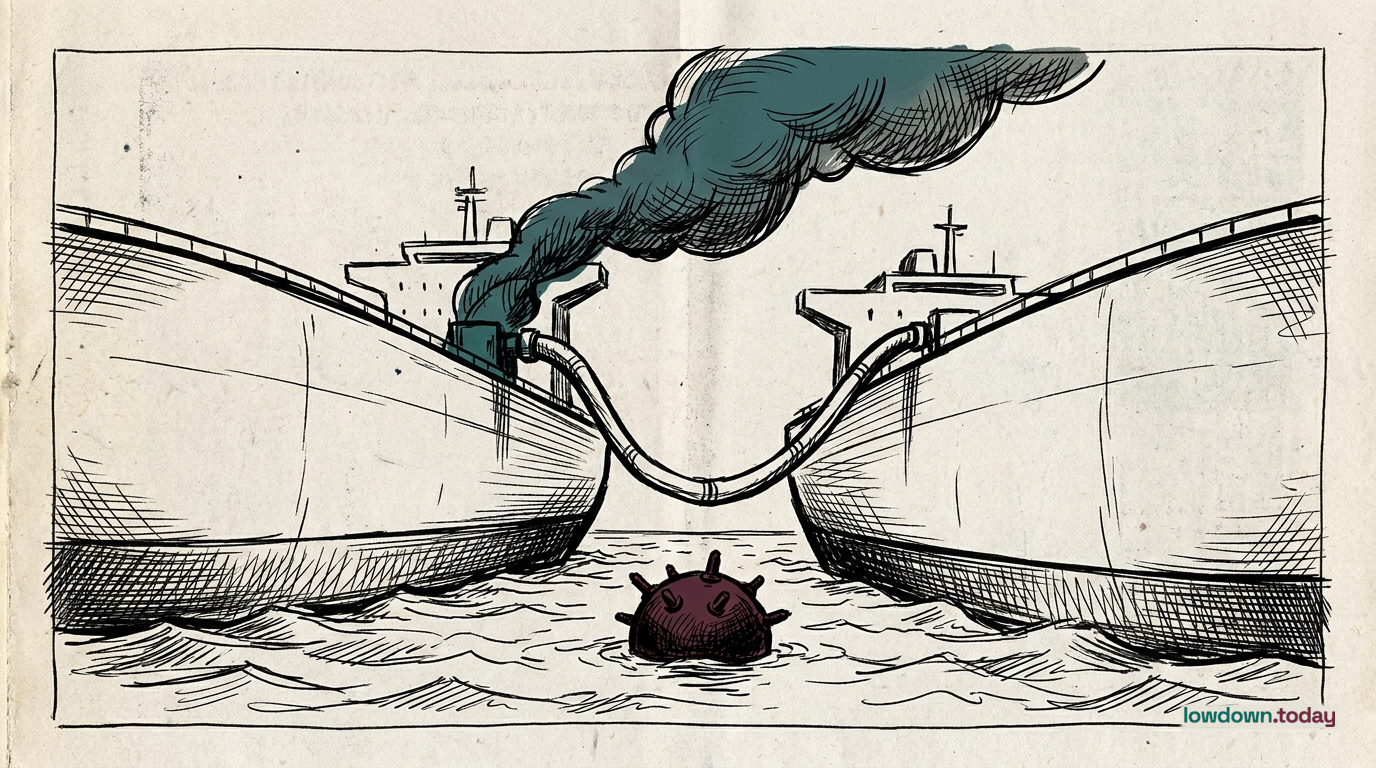
With Hormuz and Bab el-Mandeb both hostile at once, war-risk underwriters face their first dual-chokepoint pricing problem; the rerouting hedge that absorbed one closure is gone for Israeli-linked hulls. Any deal that reopens Hormuz without a Houthi stand-down clause delivers only partial shipping relief.
Russia and China
Russia and China
Russia and China met IAEA chief Grossi jointly in Geneva on 5 June to coordinate an advance blocking position against Washington's censure resolution, the first documented instance of proactive pre-session obstruction rather than reactive post-vote dissent. Beijing's move came four days after OFAC designated Shanghai Qianye Energy under Iran energy sanctions.
Saudi Arabia
Saudi Arabia
Saudi Arabia was left out of the emergency $4.01 billion Patriot waiver Qatar received on 2 May as its own PAC-3 stocks ran near-empty from intercepting Iranian salvoes over Aramco facilities. Riyadh is on a standard 18-month FMS queue behind a production line booked through 2030, with no equivalent priority to Qatar's Al Udeid basing role.
Houthis (Ansar Allah)
The Houthis declared a complete ban on Israeli Red Sea navigation on 8 June and struck Jaffa, their first attack on Israeli territory since April, seven days after the Tasnim authorisation to activate other fronts including Bab el-Mandeb. The declaration put both chokepoints under hostile authority simultaneously.
Iran
Iran
Iran agreed the 9 June mutual halt after the Mahshahr exchange and coordinated with Russia and China to block Washington's IAEA censure resolution, using the Board as a second front while the bilateral pause held on the military one. Tehran's acceptance of the Lebanon carve-out contradicts the linkage position it stated on 1 June.
Benjamin Netanyahu and the IDF
Israel struck the Karun Petrochemical plant at Mahshahr on 8 June over Trump's explicit objection, then agreed a halt with Iran the following day scoped on Israeli terms with Lebanon carved out. Netanyahu's posture is that the IDF will not accept Iranian missile factories as off-limits regardless of US diplomatic timelines.