Skip to content
Welcome, thoughtbot's Giant Robots listeners!Start here
Iran Conflict 2026
8NOV

CENTCOM turns more ships, breaks fewer

2 min read
19:56UTC

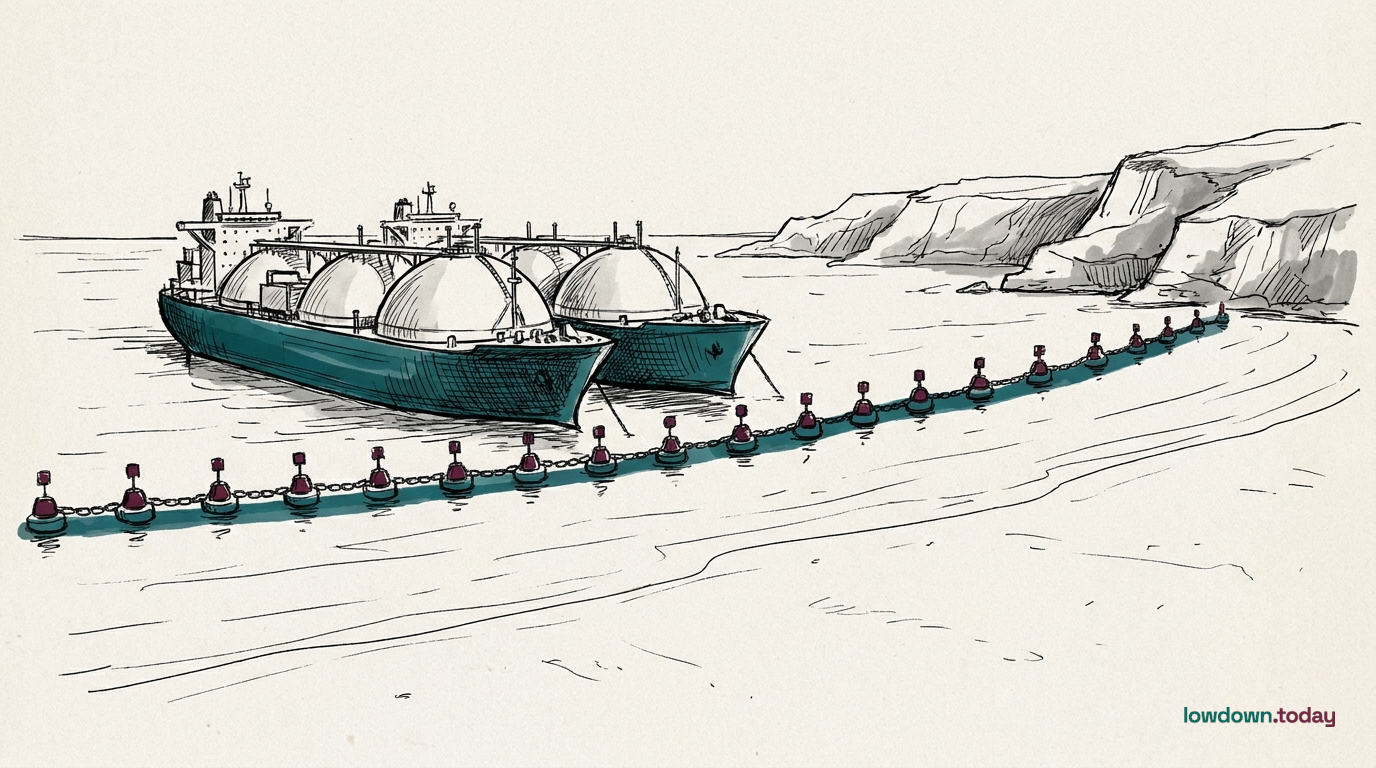
US Central Command put its Iranian port blockade at 49 redirected vessels, two disabled and two boarded, a mix that turns merchant traffic around without wrecking it.

ConflictDeveloping
Key takeaway

CENTCOM is running interdiction as traffic management, keeping escalation in reserve rather than spending it.

CENTCOM (United States Central Command), the American military command covering the Middle East, posted at 17:23 UTC on Thursday 6 August that since its blockade of Iranian ports resumed on Tuesday 14 July it has redirected 49 commercial vessels, disabled two and boarded two⁠1⁠2⁠3. The command has published no vessel names, flags or cargoes.

The count itself, and the presidential promise of a reopening that followed it, already sit on this record. Two campaigns now sit close enough to compare by shape rather than size. Across roughly 24 days, 49 redirections works out at about two ships turned around a day, and the April to June operation ran at much the same daily tempo. The two campaigns part company in the kinetic column. That earlier operation disabled roughly one vessel for every 15 it redirected. This one has disabled one for every 25, and the boarding figure has not moved since it was first disclosed.

So comparable numbers of merchant ships are being turned around each day at a little over half the force per hull. Redirecting a vessel costs its charterer a delay and its owner some fuel. Disabling one costs a hull, a crew and an incident no negotiation easily survives. The current mix therefore keeps the pressure inside charterparty economics, the contract between shipowner and cargo hirer, rather than inside hull losses. That is a choice about method, not a limit of capability, and every day the ratio holds is a day Washington can release the pressure with a signature instead of a settlement.

Deep Analysis

In plain English

The US military's Central Command said its blockade of Iranian ports, which resumed on 14 July, has now redirected 49 commercial ships away from Iran, disabled two and boarded two. 'Redirected' means a ship changed course rather than trying to reach an Iranian port. 'Disabled' means the US Navy stopped a ship from moving. The low number of disabled ships compared with redirected ones shows most vessels are choosing to avoid the area rather than being forced to stop.

Deep Analysis
Root Causes

CENTCOM's interdiction runs on its own military timeline, independent of the Oman-mediated Hormuz corridor talks. The blockade resumed on 14 July and its tally keeps accumulating regardless of diplomatic progress, which is why the redirected-vessel count rose again in the same week Trump promised a reopening.

A low disable rate against a high redirect rate, two of 49, suggests the interdiction is designed to reroute traffic rather than physically stop it, keeping pressure on shipping economics without escalating to the kind of confrontation a rising disabled-vessel count would represent.

What could happen next?
  • Consequence

    A rising redirect count without a rising disable count signals CENTCOM is achieving compliance through deterrence rather than force, which keeps the blockade's political cost lower than a series of forced boardings would.

First Reported In

Update #167 · Riyadh names its next targets; Najran is hit

Shafaq News· 7 Aug 2026
Read original →
Different Perspectives
Office for Budget Responsibility
The OBR's 28 October forecast assumed $82 oil for 2026 and 2027, from market prices for the ten working days to 19 August, and blamed dearer wholesale energy on the war without naming Iran. It expects CPI inflation close to 4% in early 2027 even at that price.
Hengaw, Kurdish rights group
Hengaw reported the 3 November hangings of Amirhossein Maleki and Amirhossein Ebrahimi in Isfahan, saying Ebrahimi was tortured into confessing and that nine of 12 people sentenced to death in the case have now been hanged. Iran's judiciary holds that the defendants killed members of the security forces.
FINTRAC, Canada's financial intelligence unit
FINTRAC worked with the US Treasury on the 6 November designation of eight money services businesses in British Columbia, Ontario and Quebec. Treasury says the businesses still operate, some under new names, so closing them falls to Ottawa.
Abdul Qadir al-Dakhil, Governor of Nineveh
Al-Dakhil cancelled three Mosul International Airport contracts on 7 November over alleged links to armed groups, after meeting Prime Minister Ali al-Zaidi in Baghdad. He named no group or company, and said the contracts will go to international companies.
Kuwait
Kuwait
Kuwait condemned the Houthi missile fired towards the Madinah region on 5 November and restated its support for Saudi Arabia, the Qatar News Agency reported. Its state tanker company, Kuwait Oil Tankers Company, is among the Gulf state fleets on Iran's expanded Hormuz list.
Scott Bessent, US Treasury Secretary
Treasury designated an alleged Chandigarh false-flag network on 4 November and eight Canadian exchangers on 6 November, while State sanctioned alleged MANPADS intermediaries. None of the actions touches an oil buyer; they target the paper, cash and procurement around Iran's trade.

Written with AI from Lowdown's published reporting. Not individually reviewed by an editor. Editorial standards.
