Skip to content
You can now search across every topic, entity and event.What's new
Iran Conflict 2026
3SEP

Federal Register dockets sb0465 on schedule

2 min read
16:40UTC

The Federal Register published OFAC sb0465 as document 2026-07994 on 24 April, three days inside the Watch For window from update #78. Treasury produces signed paper while the White House does not.

ConflictDeveloping
Key takeaway

OFAC dockets paper on schedule; the President's Iran signature record across 56 days remains zero.

The Federal Register published document 2026-07994 on 24 April, the on-time docketing of OFAC press release sb0465 from earlier in the week 1. The publication landed three days inside the WATCH FOR window flagged in update #78. The pattern across Treasury and the White House is now consistent over two months: OFAC produces instruments and dockets them on a published cadence; the President does not.

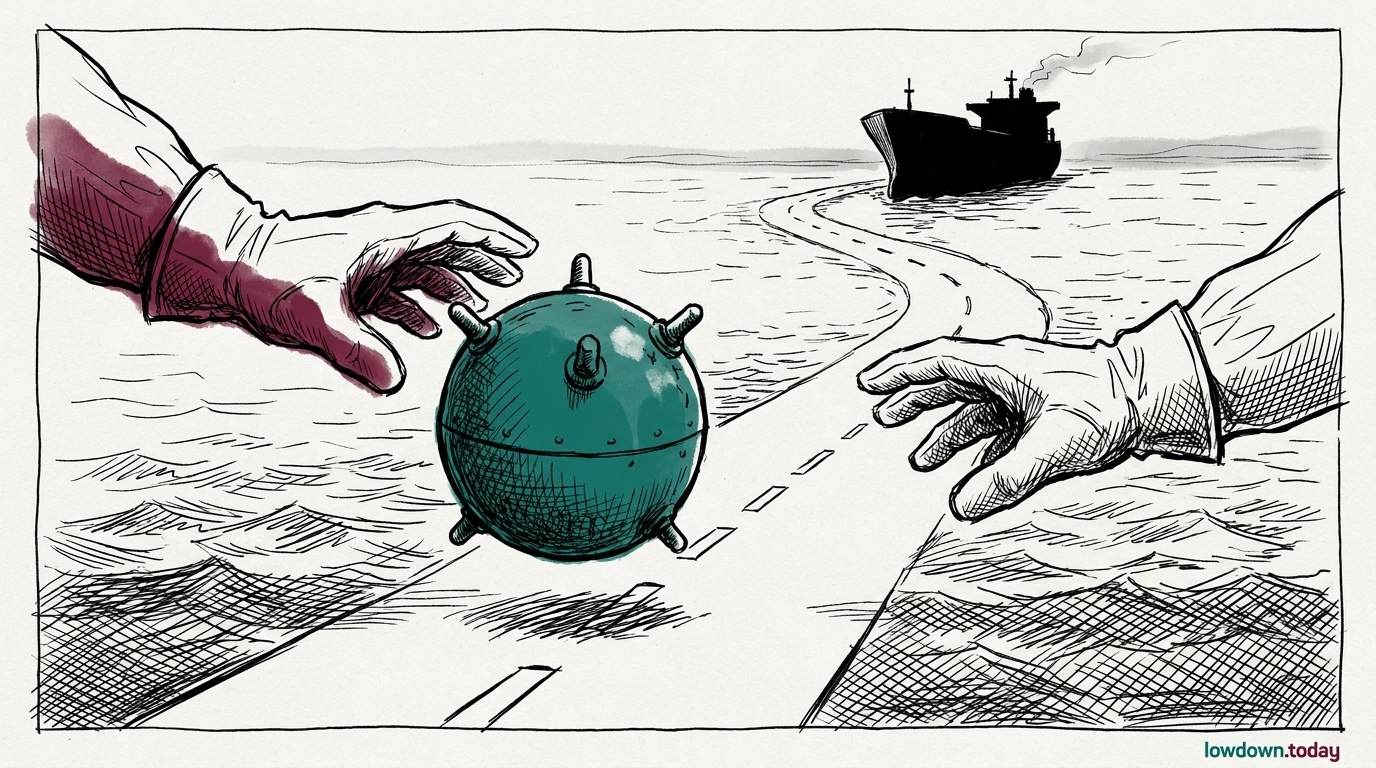
The most recent Iran-adjacent signed paper from the whitehouse.gov presidential-actions page remains the 18 April executive order on mental-illness treatment 2. The verbal shoot-kill order Trump issued on 23 April for Iranian mine-layers has not been put to paper . On Day 56, OFAC has produced more signed Iran instruments inside 24 hours, sb0465 docketed and sb0472 issued the same day, than the President has signed across the entire war.

Treasury's clerk-of-court rhythm now operates as the institutional fact: paperwork moves on its own cadence, and the executive branch's silence is not a constraint on it. Congressional hawks gain a stronger procedural argument when the executive has no active negotiation track to protect, which is the same argument Lisa Murkowski's pre-committee AUMF draft is built to address before 1 May.

Deep Analysis

In plain English

The Federal Register is the US government's official daily bulletin. Every law, regulation, and executive action that takes legal effect must appear in it. When OFAC sanctions someone, the Federal Register docketing is the moment the legal effect kicks in publicly. The significance here is the contrast: OFAC sanctions are being published on schedule in the Federal Register, while the White House presidential-actions page has recorded zero Iran-specific executive orders, proclamations or memoranda across the entire war. Two parts of the US government are moving at different speeds on the same conflict. This matters because sanctions can be issued under existing authorities (executive orders from prior administrations) without new presidential signatures. The war has been fought largely under this legacy authority, which gives Trump political flexibility to de-escalate without reversing a signed instrument, but also means Iran cannot point to a formal US commitment to test in court.

Deep Analysis
Root Causes

Trump signed nine non-Iran presidential documents between 15 and 17 April alone: Enbridge pipeline permits, a budget sequestration order, and a mental-illness treatment executive order.

OFAC's Iran actions operate under the September 2025 UNSC snapback authority and NSPM-2, both put in place before the war began, requiring no new presidential signature for each designation round. The White House has simply not submitted any Iran instruments during a period when it routinely submitted instruments on other topics.

This gives the administration an enforcement capacity without the political commitment of a signed executive instrument, which would create a paper trail any negotiated exit would need to address.

What could happen next?
  • Consequence

    If a ceasefire agreement is eventually signed, the absence of any Trump-signed Iran executive instruments means there is no single document to revoke; unwinding the sanctions architecture would require individual OFAC actions on each designation, a multi-year process.

First Reported In

Update #79 · Islamabad 3 collapses; Witkoff grounded, talks stall

US Department of the Treasury· 25 Apr 2026
Read original
Causes and effects
This Event
Federal Register dockets sb0465 on schedule
OFAC's instrument cadence is now demonstrably independent of the President's signature activity, which has produced no Iran executive instrument in 56 days.
Different Perspectives
China's foreign ministry
Spokesman Lin Jian rejected Treasury Secretary Scott Bessent's 25 August warning that Iranian oil buyers face an "economic D-Day", saying sanctions do not help and that Beijing would safeguard its own rights and interests. China's Iranian crude imports had already halved for unrelated reasons.
Iraq's government and Erbil authorities
Erbil authorities said 10 explosive-laden drones were shot down over the city on 1-2 September with no casualties. Iraq's government condemned the attacks without naming Iran as their source, and neither Washington nor Baghdad confirmed the IRGC's claim to have hit US bases there.
Bahrain Defence Force
The General Command said air defences intercepted several Iranian missiles and drones on 1-2 September and called the use of such weapons against civilians and private property a flagrant violation of international humanitarian law.
Kuwait's Fire Force and foreign ministry
KUNA reported a hostile Iranian drone struck a residential complex in Kuwait City on 2 September; Fire Force spokesman Brigadier General Mohammad Al-Gharib said losses were confined to property. Kuwait's foreign ministry called the attack a clear breach of its sovereignty.
Jordan's Armed Forces
Petra carried a statement that air defences intercepted eight missiles violating Jordanian airspace early on 31 August and 10 of 13 fired on 1 September. The statement named no target and did not address the IRGC's claim to have struck Camp Titin and killed US personnel.
CENTCOM
CENTCOM
CENTCOM's 1 September target list named IRGC air defence, radar, maritime and mine-laying sites in Iran but no tanker, after Axios reported anonymous officials describing a Trump-approved "tanker for tanker" drone policy. A CENTCOM spokesman declined to confirm the policy and referred questions to policymakers.