Skip to content
You can now search across every topic, entity and event.What's new
Iran Conflict 2026
20AUG

Carbon sits still as gas and power dive

2 min read
16:36UTC

EUA December-2026 allowances closed at EUR 83.51/tonne on 27 July against EUR 83.40 on the 24th, a move of 0.01 per cent, through the sharpest four sessions of the cycle.

ConflictDeveloping
Key takeaway

Carbon moved a hundredth of a per cent while gas and power collapsed around it.

EUA December-2026 carbon allowances closed at EUR 83.51/tonne on Monday 27 July against EUR 83.40 on Friday the 24th, a change of 0.01 per cent. 1 2 Both prints are aggregator quotes on the EEX December-2026 contract rather than exchange settlement prints, and the aggregators disagree with each other: one secondary report gave EUR 83.88 for the 24 July session, another a EUR 80.01 to EUR 81.07 range for the same day. 3 The two dedicated data services agree; the rest do not. Carbon has been range-bound for a fortnight, having drifted back under EUR 81 in mid-July before recovering .

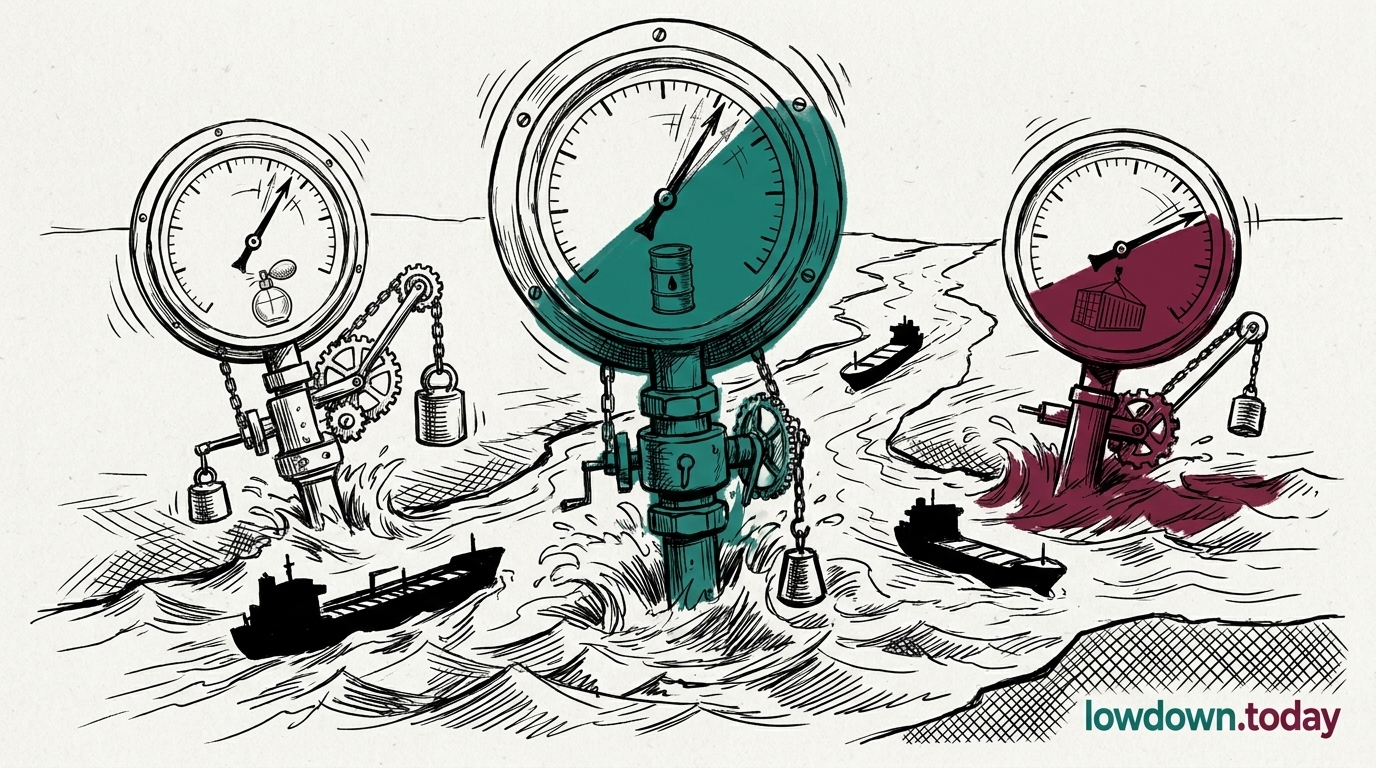
Hold that still print against what the other two spark inputs did across the identical four sessions. Gas handed back the war premium it had built on Gulf risk. German power lost more than two fifths of its value on a wind surge. Carbon moved by a hundredth of a per cent. This desk asked last week whether the carbon leg might ease the pressure on the spark . It did not, and it did not add to it either.

That flatness is doing analytical work. A single de-escalation trade would have pulled carbon with it, because a cheaper-gas world implies more coal-to-gas switching and firmer allowance demand at the margin. Carbon not moving says the market did not process the week as one story. It processed a geopolitical unwind in the fuel leg and a weather event in the revenue leg, and it correctly declined to price either as a change in Europe's emissions trajectory. For anyone modelling the spark, carbon is the input that has held still through every shock this cycle, which makes it the one whose eventual move will not be priced in advance.

Deep Analysis

In plain English

Companies that burn fossil fuels in Europe have to buy a permit for every tonne of carbon dioxide they release. The price of that permit, called EUA carbon, barely moved this week even though the price of gas and the price of electricity both swung hard. That is because the carbon permit market runs on its own separate calendar, tied to European Union rules about how many permits exist each year, not to the day-to-day news that moves gas and power prices.

Deep Analysis
Root Causes

EUA's own supply schedule, auction calendars and free-allocation cuts, is fixed months in advance, so the price only moves on new regulatory news rather than on daily gas or power prints; that is a structurally different price-formation process from TTF, which reacts to real-time flow data and geopolitical risk.

With no cap revision, auction change or CBAM announcement landing in this four-session window, carbon had no input to react to, which is why it held flat while two inputs that do react to daily news, gas and power, moved 8 and 41 per cent respectively.

What could happen next?
  • Meaning

    Carbon's inertia through both directions of this week's gas and power swing shows the ETS cap, not fuel news, is currently the dominant input on the allowance price.

First Reported In

Update #30 · Wind, not peace, sank the German spark

TradingEconomics· 27 Jul 2026
Read original
Causes and effects
This Event
Carbon sits still as gas and power dive
Carbon holding flat while both other spark inputs collapsed is the cleanest evidence that two separate shocks hit, not one de-escalation trade.
Different Perspectives
UK Maritime Trade Operations
UKMTO logged six armed men boarding a tanker 136 nautical miles east of Al Mukalla on 20 August and redirecting it toward Somalia. A vessel steered toward the Somali coast reads as an attempted seizure, a distinct hazard from the stand-off strikes the same lane has seen before.
Mohammad Bagher Ghalibaf
Iran's Majlis speaker received Iraq's Hormuz carve-out request in Baghdad on 19 August, a request that treats passage as Tehran's to grant. Ghalibaf's authority over that grant sits alongside the Revolutionary Guard's separate transit rules, which have moved independently of Iran's foreign ministry before.
Haibat al-Halbousi
Haibat al-Halbousi
Iraq's parliament speaker asked Iran for special consideration on Iraqi Hormuz oil exports during Ghalibaf's 19 August Baghdad visit. Iraq presses the request from a weak position: Iran's central bank is simultaneously demanding Baghdad release Iranian reserves parked in Iraqi accounts.
Federal Department of Economic Affairs, Education and Research
Switzerland's economics ministry updated the Article 21 forms governing lawful Iran money transfers on 19 August, with only the revised forms accepted from 26 August. Bern operates one of the few remaining legal Iran payment channels and has just set a hard cutover on its control point.
Motegi Toshimitsu
Motegi Toshimitsu
Japan's foreign minister said in Muscat on 20 August that Tokyo wants closer coordination with Oman on safe Hormuz and Bab el-Mandeb passage. Japan has no naval presence of its own in the strait, so it is routing the ask through the state negotiating with Iran instead.
Badr bin Hamad Al Busaidi
Oman's foreign minister joined Japan's in Muscat on 20 August to call for intensified coordination on Hormuz and Bab el-Mandeb navigation. Oman also runs the mediation track with Tehran, so the appeal travels through the same channel as the negotiation.