Skip to content
You can now search across every topic, entity and event.What's new
Iran Conflict 2026
31JUL

Slovakia loses CJEU stay on ban

2 min read
09:24UTC

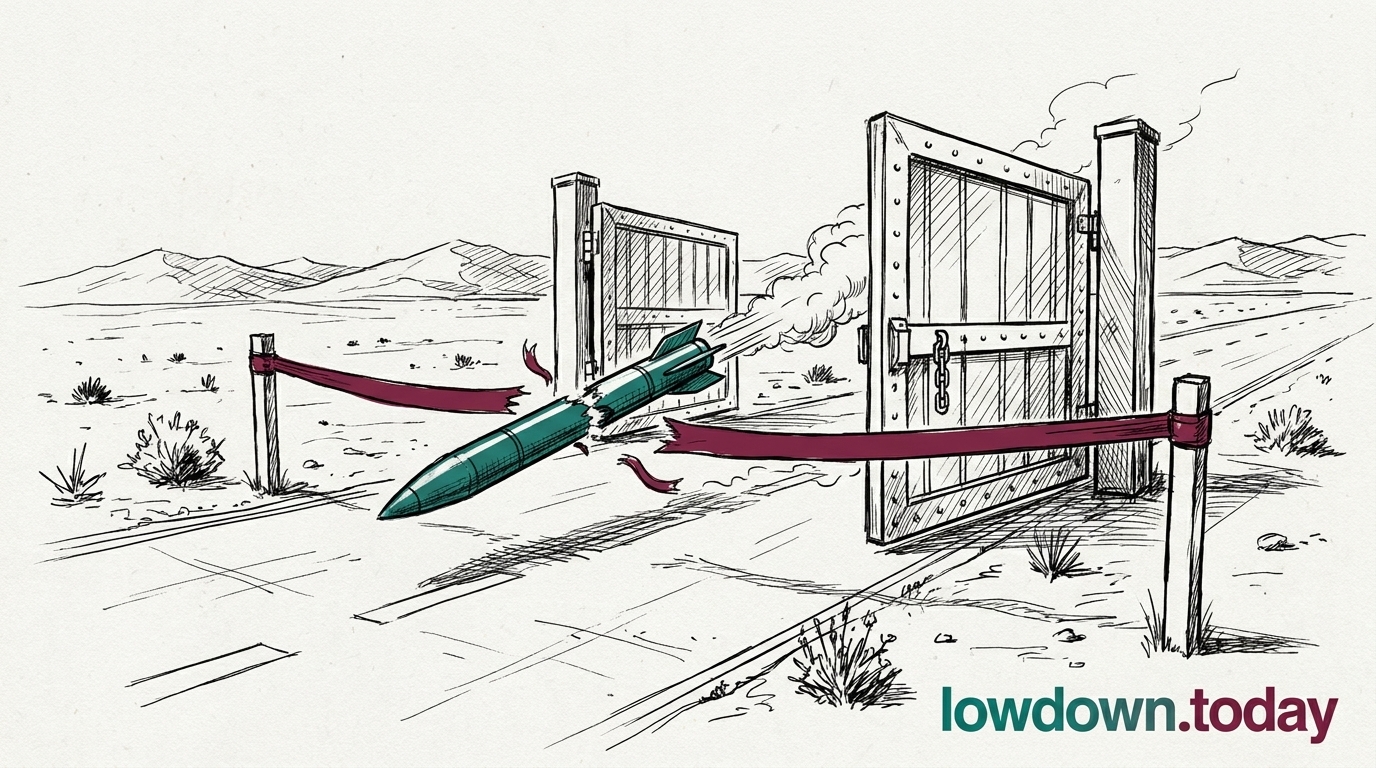
Slovakia secured no interim stay at the Court of Justice of the EU, so the pipeline import ban bound on 17 June with no judicial relief, leaving Robert Fico's government the sole live annulment challenger.

ConflictDeveloping
Key takeaway

Slovakia won no CJEU stay, so the pipeline ban binds with Fico as the sole remaining annulment challenger.

Slovakia secured no interim stay at the Court of Justice of the EU (CJEU), the bloc's supreme court in Luxembourg, so the Regulation 2026/261 pipeline ban covered in event 2 bound on 17 June with no judicial relief 1. An interim stay would have suspended the regulation while the courts heard the underlying challenge; without one, the ban is enforceable now regardless of how the annulment case eventually resolves.

That leaves Robert Fico's government as the sole live annulment challenger, after Hungary's Tisza-led administration dropped its CJEU relief application on 15 June . A standalone annulment action on the merits runs for years and does not pause enforcement in the meantime, so the legal track no longer carries a near-term price signal for the gas curve. The challenge persists as a political marker rather than a market one: the molecules the ban touches are limited by the long-term contract exemptions, and the court will not rule before the regulation has shaped a full injection season.


Deep Analysis

In plain English

Slovakia was trying to pause a new EU rule banning imports of short-term Russian gas pipeline contracts before it took effect on 17 June. To do this, Slovakia asked the EU's highest court, the Court of Justice of the European Union, to grant an emergency freeze called an interim stay. The court said no. The court requires very strong reasons to freeze a law before hearing the full case, and Slovakia's legal argument, that the EU used the wrong voting procedure to pass the ban, is a procedural dispute rather than an emergency claim. Hungary had been making a similar argument but its new government dropped the case in June after deciding that reliance on Russian gas was more of a risk than the ban itself. Slovakia's full legal challenge continues, but court cases of this kind take years. In the meantime, the ban stands.

Deep Analysis
Root Causes

Slovakia's failure to secure an interim stay arises from two structural constraints. First, the CJEU requires applicants for interim stays to demonstrate that without the stay, they will suffer serious and irreparable harm before the final judgment. Slovakia's primary economic harm, loss of transit fee revenue and forced spot-market replacement for short-term contract volumes, is in principle quantifiable and compensable in damages, which the CJEU does not typically treat as irreparable.

Second, the political weight behind Slovakia's challenge collapsed when Hungary's Tisza dropped its application: a two-member state bloc challenging an energy regulation carries more procedural weight in CJEU scheduling and political visibility than a single small member state filing. Fico now advances an annulment challenge in a political environment where the EU consensus on Russian gas dependency reduction has hardened, reducing any off-court settlement incentive.

What could happen next?
  • Precedent

    The failure to secure a CJEU stay on a QMV-competence argument against an energy-security regulation sets a precedent that future pipeline bans can be adopted by qualified majority without the risk of interim judicial reversal, removing legal uncertainty from the EU's energy-decoupling toolkit.

  • Risk

    Slovakia's ongoing annulment case, even without an interim stay, creates legal uncertainty over whether compensation claims against the EU are possible if annulment ultimately succeeds, a contingent liability that the Commission has not publicly acknowledged.

First Reported In

Update #19 · German spark spread flips +EUR 15 in 48hrs

OilPrice.com· 18 Jun 2026
Read original
Causes and effects
This Event
Slovakia loses CJEU stay on ban
With Hungary withdrawn and no interim relief granted, the regulation now stands enforceable while a single member state pursues annulment on the merits, a years-long process that does not pause the ban.
Different Perspectives
Shipping and insurance underwriters
Underwriters can price Houthi strikes because the group announces its targets, but an unclaimed drone at Damietta and a mandatory Iranian insurance scheme both deny them a pattern to price against. War-risk premiums are increasingly being set by the absence of a claimant, not the scale of the damage.
Jordan
Jordan
Azraq absorbed its fourth Iranian strike in seven weeks, again drawing no direct Jordanian retaliation, only an American one. Amman's exposure, hosting US basing without the Patriot density of Gulf allies, has not changed even as the war around it widens.
Houthi movement
Houthi movement
The Houthis' 20 July blockade of Saudi-linked shipping is the injury Riyadh's new 43-nation coalition directly answers, yet the group itself was never asked to join and remains outside every proposal on the table. Sanaa-aligned commentators call the coalition a paper reassurance for insurers rather than a deployable force.
Egypt's Cabinet
Egypt's Cabinet
Egypt confirmed the Damietta blaze was an attack, not an accident, on soil the war had never touched before. Cairo now faces an unclaimed threat to a facility supplying roughly 7% of its domestic gas, with no author to hold accountable and no pattern yet to defend against.
Oman
Oman
Muscat is running the only channel Iran will use, a voluntary Hormuz fee modelled on Malacca, but stayed out of Saudi Arabia's new naval coalition entirely. Oman's mediating leverage depends on treating Hormuz as shared and non-exclusive, the opposite of what Tehran is now demanding of it.
Iraq's Prime Minister
Al-Zaidi cancelled his first official Riyadh visit and convened the Coordination Framework, the coalition that keeps him in power and whose factions sit inside the PMF that Saudi jets just struck. He is caught between a five-year Saudi investment relationship and armed groups inside his own state he does not fully control.



