Skip to content
You can now search across every topic, entity and event.What's new
Iran Conflict 2026
28JUL

Turkish court annuls CHP leadership vote

4 min read
09:28UTC

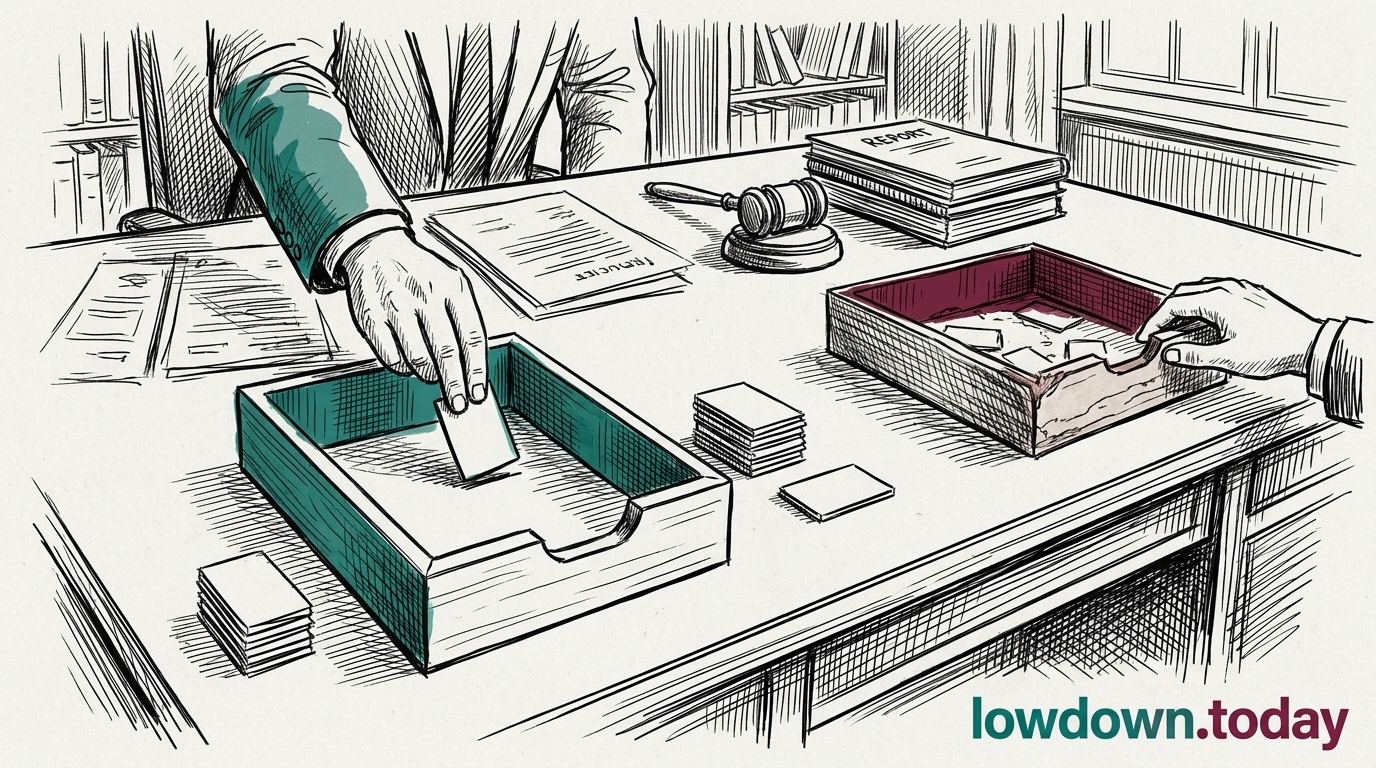
Turkey's Constitutional Court annulled the Republican People's Party leadership election on 21 May, opening a domestic constitutional crisis that removes Ankara's bandwidth to issue the kind of demarche a foreign-national execution would normally trigger.

ConflictDeveloping
Key takeaway

Ankara loses bandwidth for a Shakarab demarche as Iran extends its execution geography into the Kurdish northwest.

Turkey's Constitutional Court annulled the leadership election of the opposition Republican People's Party (CHP, Türkiye's principal centre-left opposition party) on Thursday 21 May, per Euronews and Hürriyet reporting 1. The annulment landed inside an already heated domestic dispute over party leadership and triggered an immediate constitutional crisis in Ankara: the opposition disputes the court's standing to intervene in internal party processes, and the ruling unsettles the electoral arithmetic the CHP had built around its current chair.

The Iran consequence runs through diplomatic bandwidth. Gholamreza Khani Shakarab, a Turkish national held at Ghezel Hesar Prison, remained alive as of 21 May and faces imminent execution risk . A foreign-national execution by Iran normally triggers a written demarche from the home government: summoning of the Iranian ambassador, a public statement, sometimes the recall of a chargé. None of those steps fit inside a constitutional crisis that consumes the foreign ministry's attention, the cabinet's working hours and the news cycle that would carry the protest.

Two timing coincidences combine on the same Thursday. Iran extended its execution geography into Naqadeh in the Kurdish northwest, signalling capacity for further dawn executions across the parallel charge tracks. Turkey lost the ministerial focus and political quiet that a demarche over a Turkish national would require. Shakarab's safety against execution has, historically, depended in part on the credibility of a Turkish response. The court's intervention narrows that credibility window at the moment the Iranian pipeline accelerates.

A CHP leadership ruling looks like internal Turkish politics; the concrete consequence sits in an Iranian solitary cell holding Shakarab. Ankara's machinery will return to Iran when the constitutional matter settles, but the wartime execution slots run on their own clock and do not pause for Turkey's calendar.

Deep Analysis

In plain English

Turkey's highest court, the Constitutional Court, ruled on 21 May that the opposition Republican People's Party; known as the CHP, Turkey's main centre-left party; held its recent leadership election improperly and cancelled the result. CHP is currently leading polls against President Erdogan's AKP party for the first time in years. For Turkey's domestic politics, this is a major crisis. The CHP leader whose election was cancelled faces a legal challenge to his authority to lead the party. The ruling opposition now has to hold a new leadership election while simultaneously managing the court ruling's legitimacy. The reason this matters for the Iran story: Turkey has been one of the active diplomatic players in the region during the Iran-Israel-US conflict. Ankara is also the home government of Gholamreza Khani Shakarab, a Turkish citizen currently held in an Iranian prison on death row. Normally, when a foreign national faces execution in Iran, Turkey's government issues a formal diplomatic protest. With a constitutional crisis absorbing Ankara's political attention, that protest is much less likely to happen; or to happen on a timeline that might influence Iran's decision.

What could happen next?
  • Consequence

    Turkey's bandwidth for foreign-policy demarches narrows while the constitutional crisis runs. Khani Shakarab's window for Turkish diplomatic intervention; the primary external check on his execution; shrinks in direct proportion to how long the CHP ruling dominates Ankara's political calendar.

    Immediate · Assessed
  • Risk

    If Khani Shakarab is executed while Turkey is consumed by the CHP crisis, Erdogan faces the difficult calculation of whether to issue a retroactive protest against Iran (which risks the mediation channel) or absorb the execution quietly (which creates domestic political costs when the crisis resolves). Neither option is clean.

    Short term · Assessed
  • Precedent

    The sequence of Constitutional Court interventions against opposition parties since 2016 sets a precedent that the AKP-era judicial architecture can neutralise opposition leadership at critical electoral moments without triggering EU-level sanctions; a toolkit that will be available to any future Turkish government.

    Long term · Assessed
First Reported In

Update #105 · Khamenei keeps the uranium; House pulls the vote

Euronews· 22 May 2026
Read original
Different Perspectives
Iran's Supreme Leader's office and Iranian households
A letter published through state media named Lebanon's territorial integrity and an end to Israeli operations there as the war's ending condition; the same week, spokesperson Mohajerani cut the subsidised petrol ration from 70 to 50 litres a month. Iranian agencies still disagree on who inside the office signed the letter.
Oman
Oman
Muscat proposed a voluntary-funded coalition to police Hormuz, the corridor its own coastline gives it standing to manage, while Iran wants control and toll rights over shipping and Washington insists on free navigation. Oman's remit stops at the strait; it has no comparable claim over Iraq, the Caspian, or Lebanon.
Kyiv
Kyiv
President Volodymyr Zelenskyy confirmed the Caspian strike on an Iranian vessel carrying military cargo from Russia's Astrakhan region, opening a front that ties Iran's war to its supply relationship with Moscow rather than to anything the Gulf mediators are discussing.
Riyadh
Riyadh
Maj Gen Turki Al Malki named Iraq as the launch point for drones intercepted over the Eastern Province and Riyadh, the first time this war has reached Saudi Arabia from that direction rather than from Yemen. Nothing landed, but a second launch geography aimed at Saudi oil now exists alongside the Houthi front.
Baghdad
Baghdad
Iraq's Foreign Ministry summoned its own ambassador in Riyadh after Saudi Arabia's Defence Ministry said the drones came from Iraqi territory, while the same day drones struck Iranian-Kurdish opposition camps inside Iraq. Baghdad is disowning attacks it did not launch from territory it does not fully control.
The Pentagon and Congress
Acting press secretary Joel Valdez attributed the toll's reversal to site anomalies, the same explanation the department gave for the opposite cut on 24 July; Representative Thomas Massie called the category change an absurd ruse designed to reset the war's legal clock. Neither side agrees on which explanation, or which war, is real.